
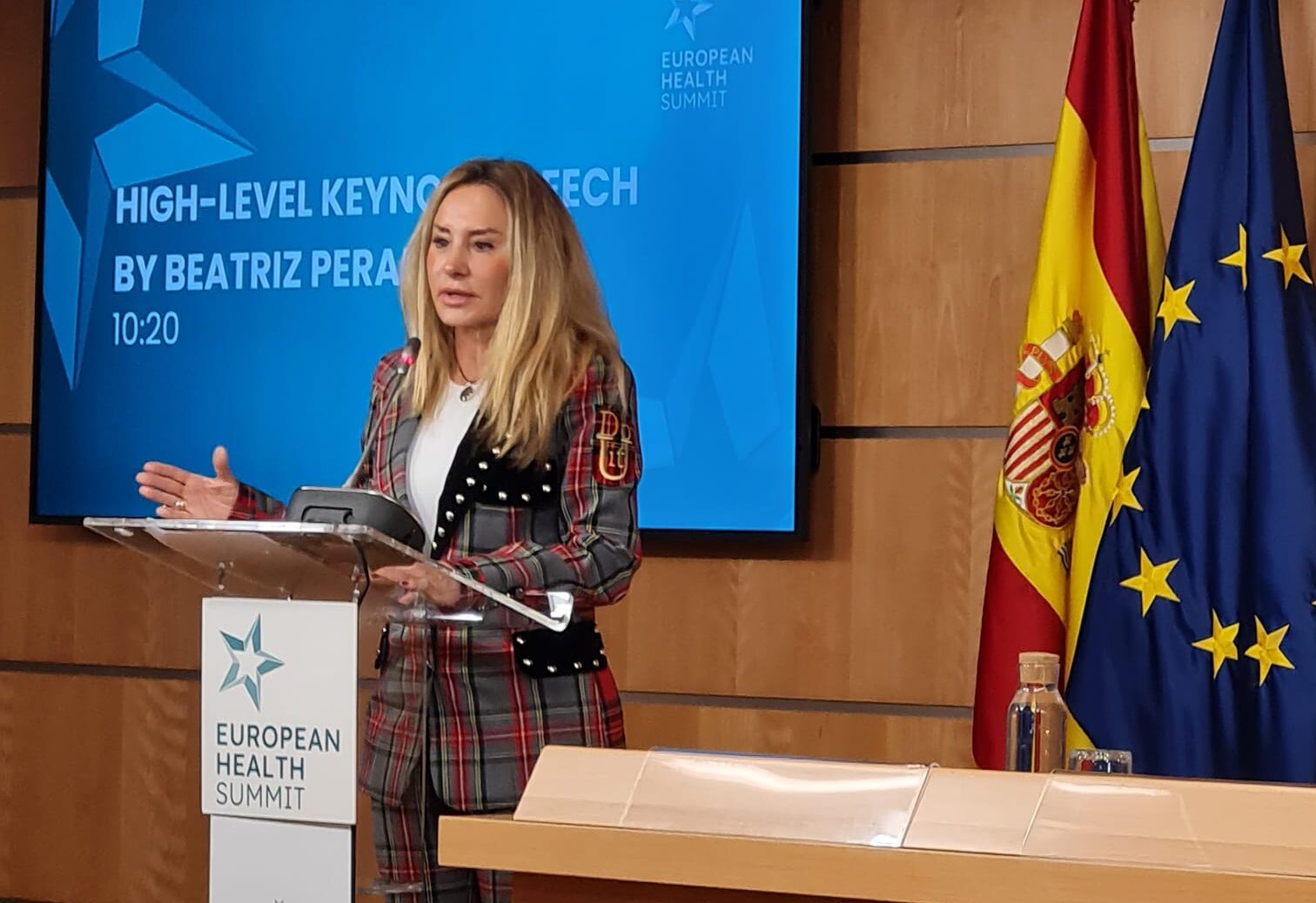
The president of the Spanish Association of Orphan and Ultra-Orphan Drug Laboratories (AELMHU), Beatriz Perales, participated in the European Health Summit: Rare Diseases Edition held in Madrid on November 10, where she advocated for the need to move toward a framework that promotes research, expedites access to treatments, and ensures equity for people with rare diseases.
This event, organized by the European Health Summit in collaboration with the Ministry of Health, brought together European and Spanish health authorities, representatives of patient organizations, and representatives of the pharmaceutical industry to address the main challenges related to rare diseases in Europe, with a particular focus on innovation, access to treatments, and health governance.
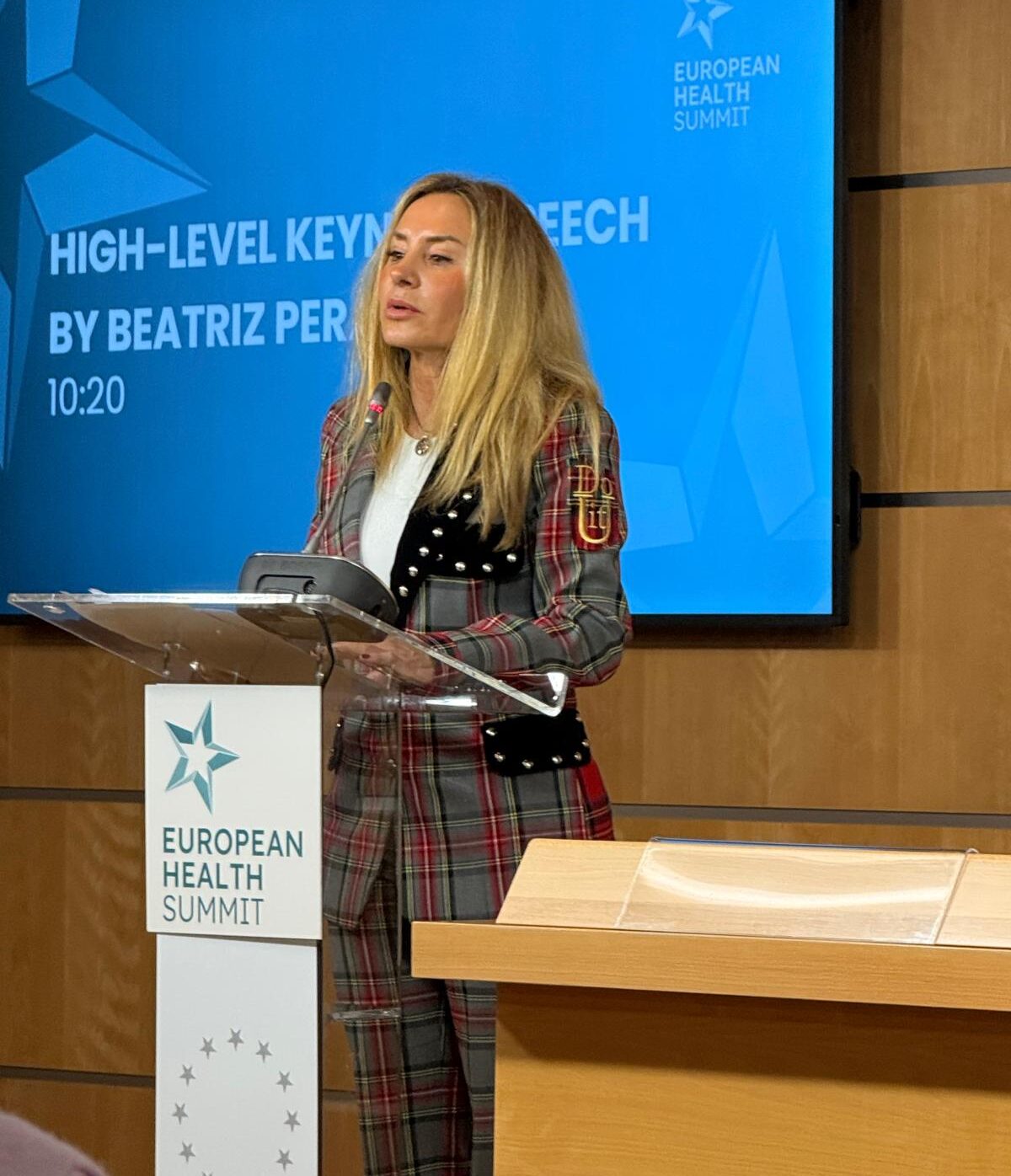
During her remarks, Beatriz Perales highlighted the progress Spain has made in clinical research and access to orphan drugs, while also pointing out the challenges that still remain. In this regard, she noted that, according to the latest data from AELMHU, 216 clinical trials for rare diseases were authorized in 2025—nearly 22% of all trials authorized in Spain—involving more than 4,000 participants.
Regarding access, he noted that, of the 164 orphan drugs authorized in Europe, 105 are covered by the National Health System. However, he cautioned that the average time from obtaining the National Code to receiving coverage is 34 months, while 62% of the covered drugs are subject to some form of restriction. In addition, 36 orphan drugs with a National Code are still awaiting reimbursement in Spain.
In light of this reality, the president of AELMHU has advocated for the need to promote concrete measures that will enable scientific advances to be transformed into therapeutic options available to patients. This approach aligns with the ten priorities that the Association recently presented for the upcoming legislative term, which are centered on innovation, access, and governance.
First, he called for a stable and predictable regulatory framework that protects innovation and recognizes the strategic importance of orphan and ultra-orphan drugs in industrial and competitiveness policies. In this regard, he emphasized the importance of applying the principle of regulatory proportionality and of strengthening Spain’s competitiveness in clinical research by reducing the time required to launch clinical trials and improving patient identification and referral processes.
Second, he has advocated for faster and more equitable access to treatments through stable early-access mechanisms, with provisional or conditional funding for medications that address unmet medical needs and for which there are no therapeutic alternatives. He has also called for evaluation methods tailored to the specific characteristics of rare diseases, which adequately incorporate real-world evidence, social value, and the participation of patients and experts.
In this regard, Beatriz Perales stated that “we need flexible funding models, such as performance-based agreements, with clear and predictable criteria,” and emphasized the importance of ensuring regional equity so that publicly funded medications reach patients in all autonomous communities without undue delays or additional requirements.
The president of AELMHU also emphasized that innovation and sustainability must go hand in hand. “There will be no innovation without sustainability, nor sustainability without innovation,” she said, highlighting the health and social value of treatments for rare diseases.
As a third priority, he has advocated for health governance based on coordination and data collection, which integrates access to orphan drugs into the national policy on rare diseases, with clear indicators on equity, access times, and health outcomes. He has also highlighted the need to promote interoperable registries among autonomous communities and specific funding and coordination mechanisms for advanced therapies.
“Spain is on the cusp of a new political cycle, and Europe is defining the rules that will shape the next decade of innovation in healthcare. Now is the time to recognize the unique characteristics of orphan drugs and of those who research and develop them, ”Beatriz Perales emphasized.
Finally, he reaffirmed AELMHU’s commitment to collaboration among government agencies, industry, healthcare professionals, and patients as a necessary condition for improving access to treatments and strengthening Spain’s ability to attract investment and innovation.
“Our commitment is clear: that scientific advances translate into new treatment options, and that those options reach all patients who need them, no matter where they live,”he concluded.
The conference was opened by Sandra Gallina, Director-General for Food Safety and Health at the European Commission, and Javier Padilla, Secretary of State for Health. Other participants included members of the Ministry of Health, such as Minister Mónica García, European officials, and representatives of patient associations such as FEDER.