
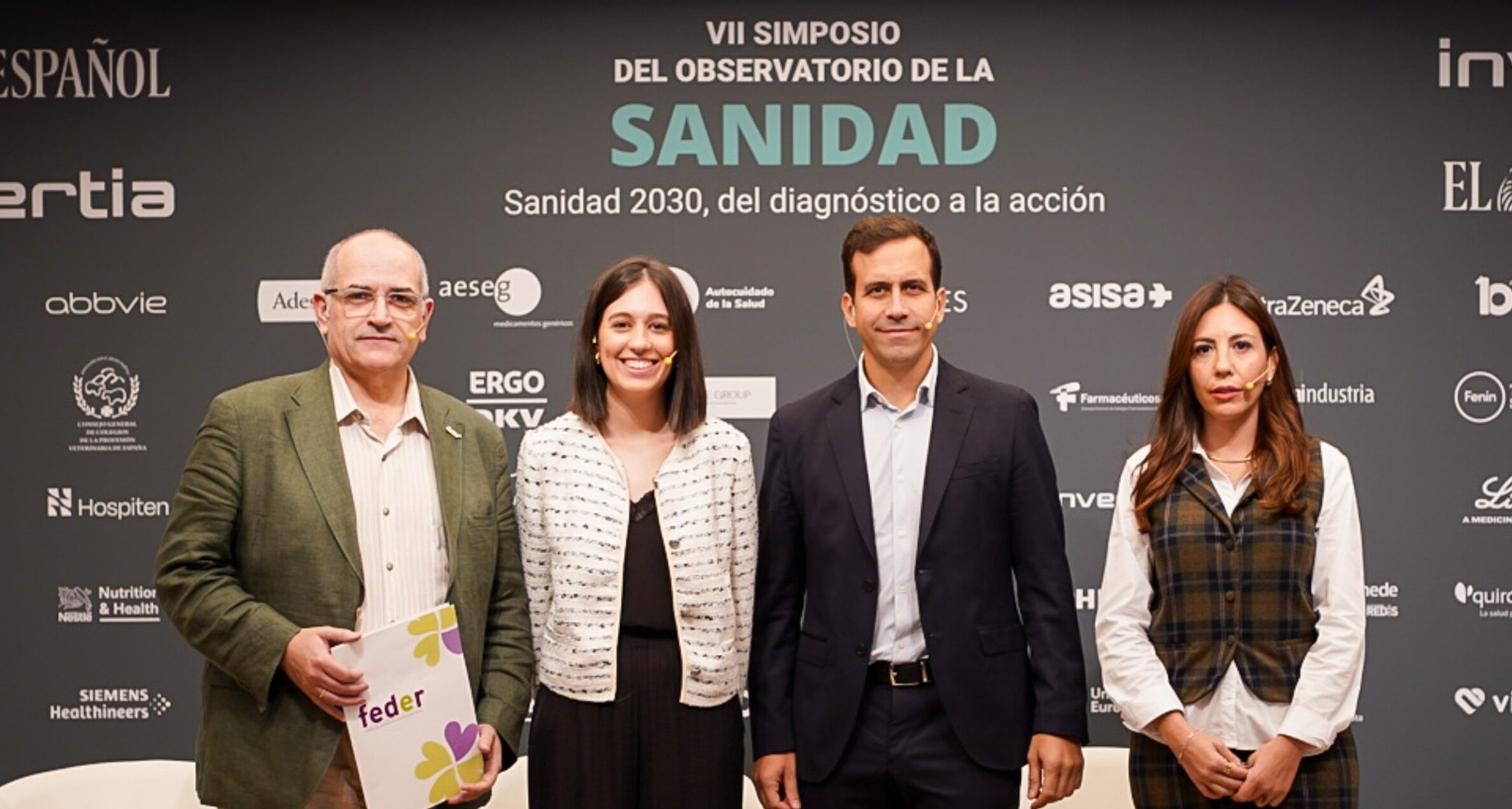
AELMHU participated in the 7th Symposium of EL ESPAÑOL’s Health Observatory, held in Madrid from October 5 to 8 under the title “Healthcare 2030: From Diagnosis to Action.”
Patricia San Segundo, Head of Institutional Relations at AELMHU, participated in the roundtable discussion “Rare Diseases: Innovation, Advances, and Remaining Challenges” alongside Román Latorre, CEO of Sobi, and Ángel García-Bravo López-Tofiño, a member of the Board of Directors of the Spanish Federation for Rare Diseases (FEDER), in a discussion that addressed the main challenges from the perspectives of both the specialized industry and patients.
Speaking on behalf of AELMHU, Patricia San Segundo has advocated for the need to move toward more streamlined evaluation and funding procedures that are tailored to the unique nature of orphan drugs—procedures capable of managing uncertainty without turning it into a barrier to access.
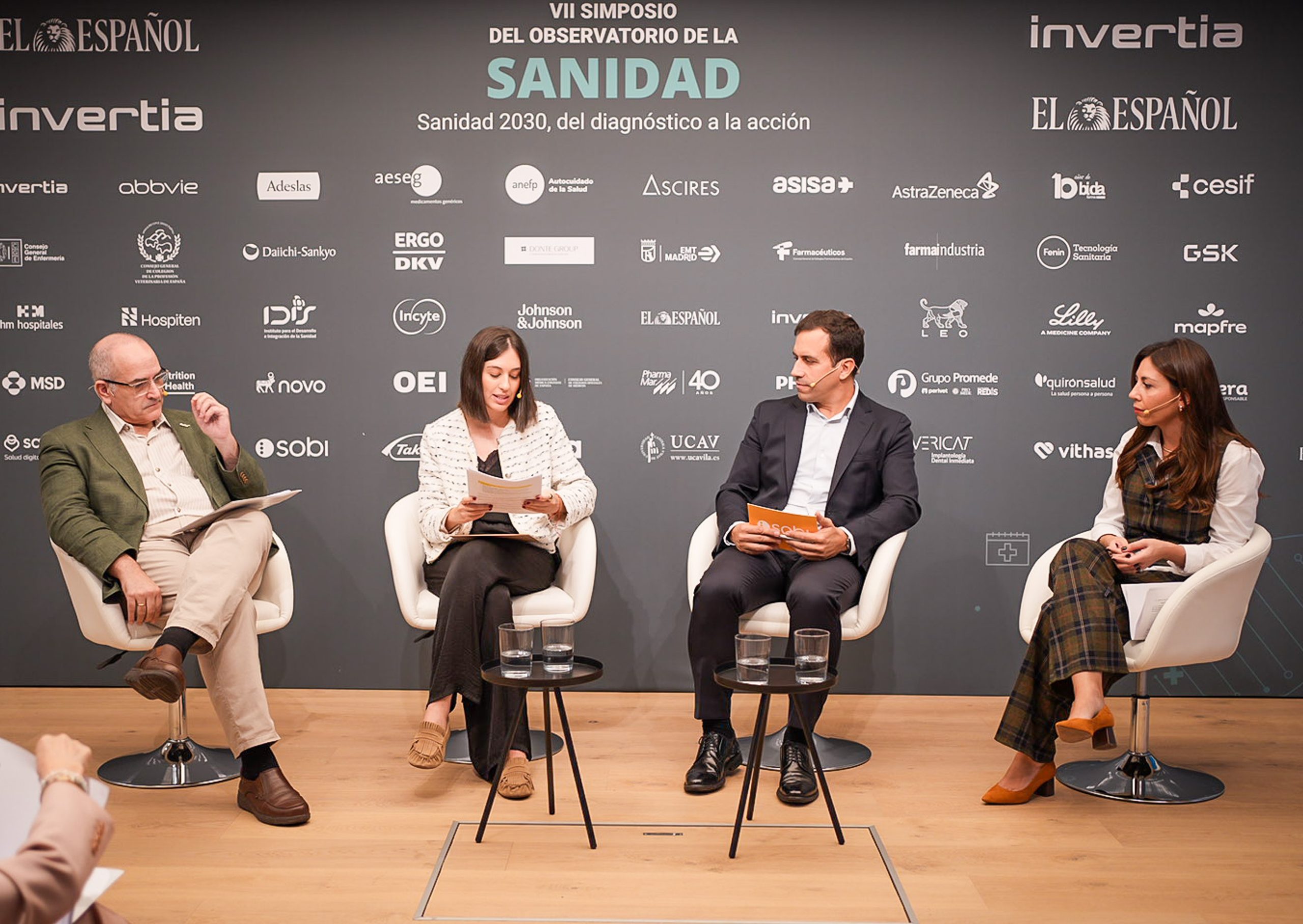
Uncertainty is also a major obstacle when it comes to attracting investment, as Román Latorre has pointed out; he noted that the government is willing to make improvements and is open to cooperation.
The AELMHU representative also emphasized that sustainability and access should not be viewed as conflicting goals.
“We need to move toward value-based financing models and broaden our understanding of that value by incorporating clinical, functional, and social outcomes that are relevant to patients,” Patricia San Segundo emphasized.
All of this should make it possible to manage resources appropriately and ensure that funding decisions result in effective and equitable access.
In light of the new political landscape, Patricia San Segundo has emphasized the importance of preserving the progress made and building on what has worked, within a stable, predictable framework tailored to the specific characteristics of rare diseases—one that allows specialized companies to continue researching, investing in, and developing new therapeutic options for unmet medical needs.
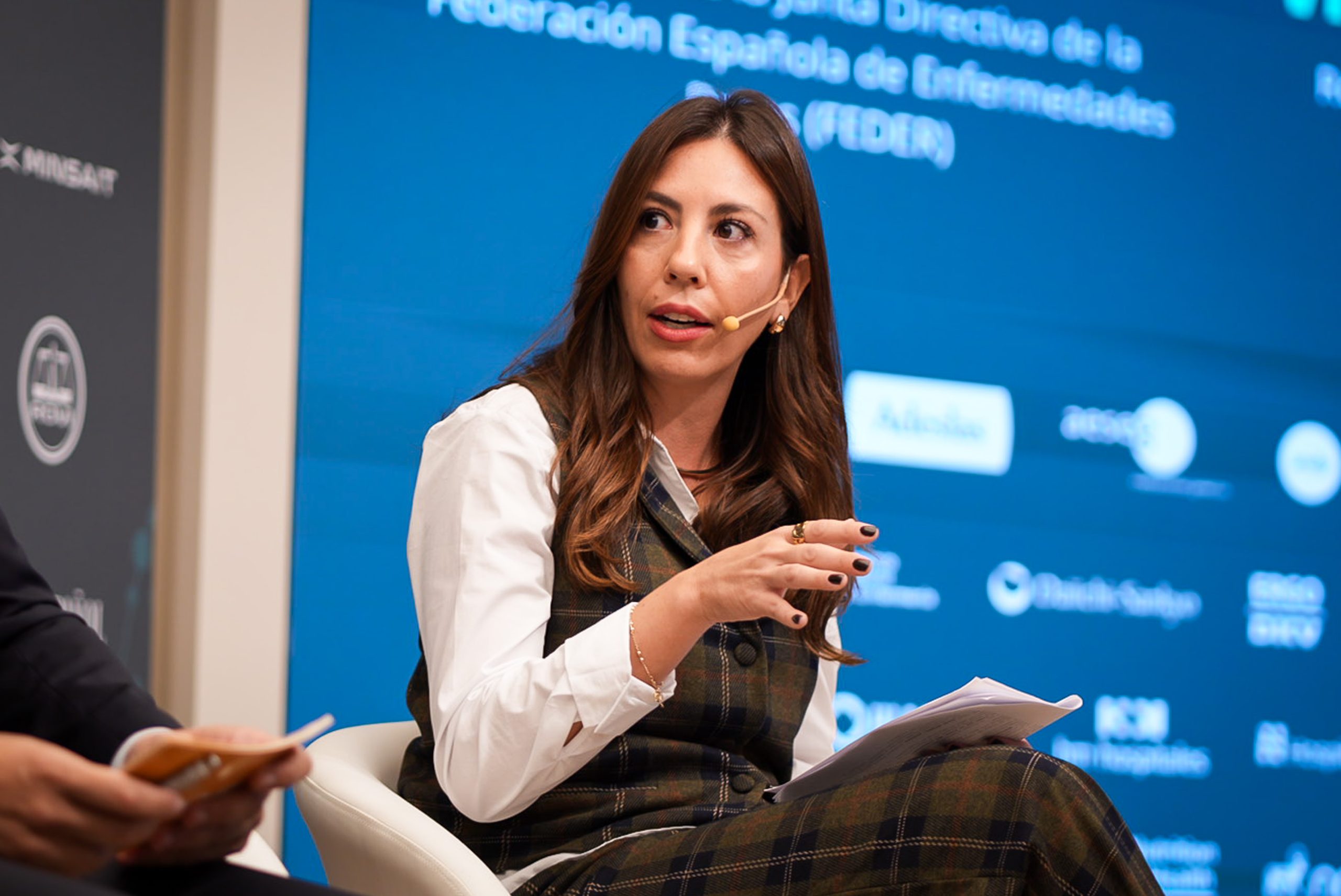
“A change in the legislature shouldn’t mean starting from scratch. Rare diseases require policies that ensure continuity, dialogue, and a long-term vision,” said Patricia San Segundo.
From the patients’ perspective, García-Bravo has pointed out that innovation is useless if it does not ultimately reach those affected. To achieve this,“models that streamline the process”are necessary, since “with rare diseases, time is of the essence.” In this regard, the member of the FEDER Board of Directors has called for the involvement of patient experts throughout the entire process.“It’s not all about the financial aspect. There is a psychosocial aspect surrounding the patient and their family that is key,” he noted.

Overall, the 7th edition of the Healthcare Observatory addressed the major challenges and opportunities facing the healthcare sector in Spain, with a view to transforming current healthcare systems into predictive, sustainable, and patient-centered models through the digital revolution and the introduction of artificial intelligence. The goal is to achieve full competitiveness as a key driver of development.
The event was attended by senior government officials, including Javier Padilla, Secretary of State for Health; César Hernández García, Director of the Common Portfolio of Services of the National Health System (SNS) and of Pharmacy at the Ministry of Health; and Pedro Gullón, Director General of Public Health and Health Equity at the Ministry of Health.
In addition, regional representatives from Andalusia, Madrid, Castile-La Mancha, Castile and León, the Valencian Community, and La Rioja participated, as well as spokespersons from Spain’s leading healthcare companies and associations and prominent specialists in the sector.