
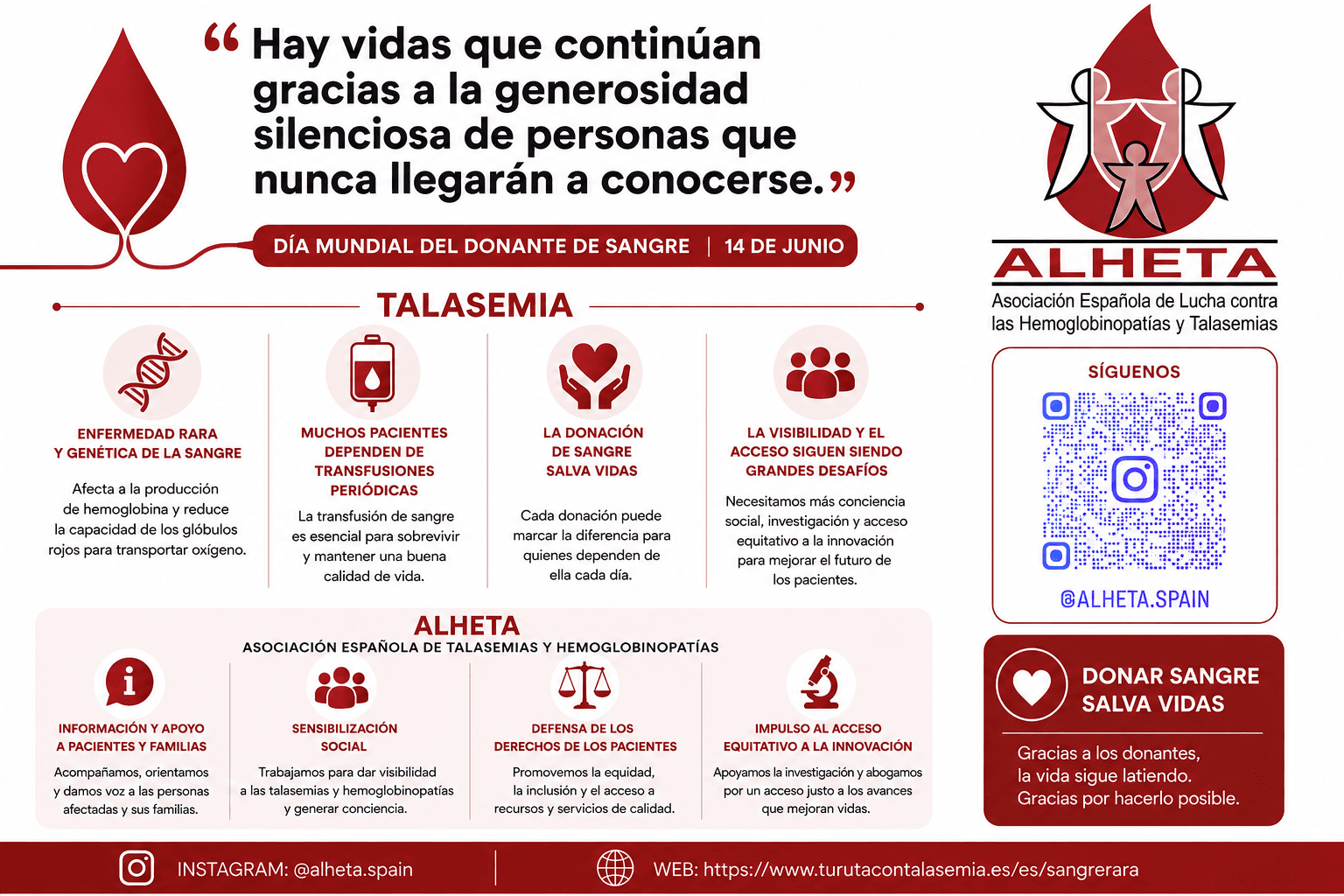
World Blood Donor Day is celebrated every June 14; this day is dedicated to recognizing the generosity of those who make altruistic donations and to raising awareness about the need to maintain sufficient blood supplies to ensure access to healthcare.
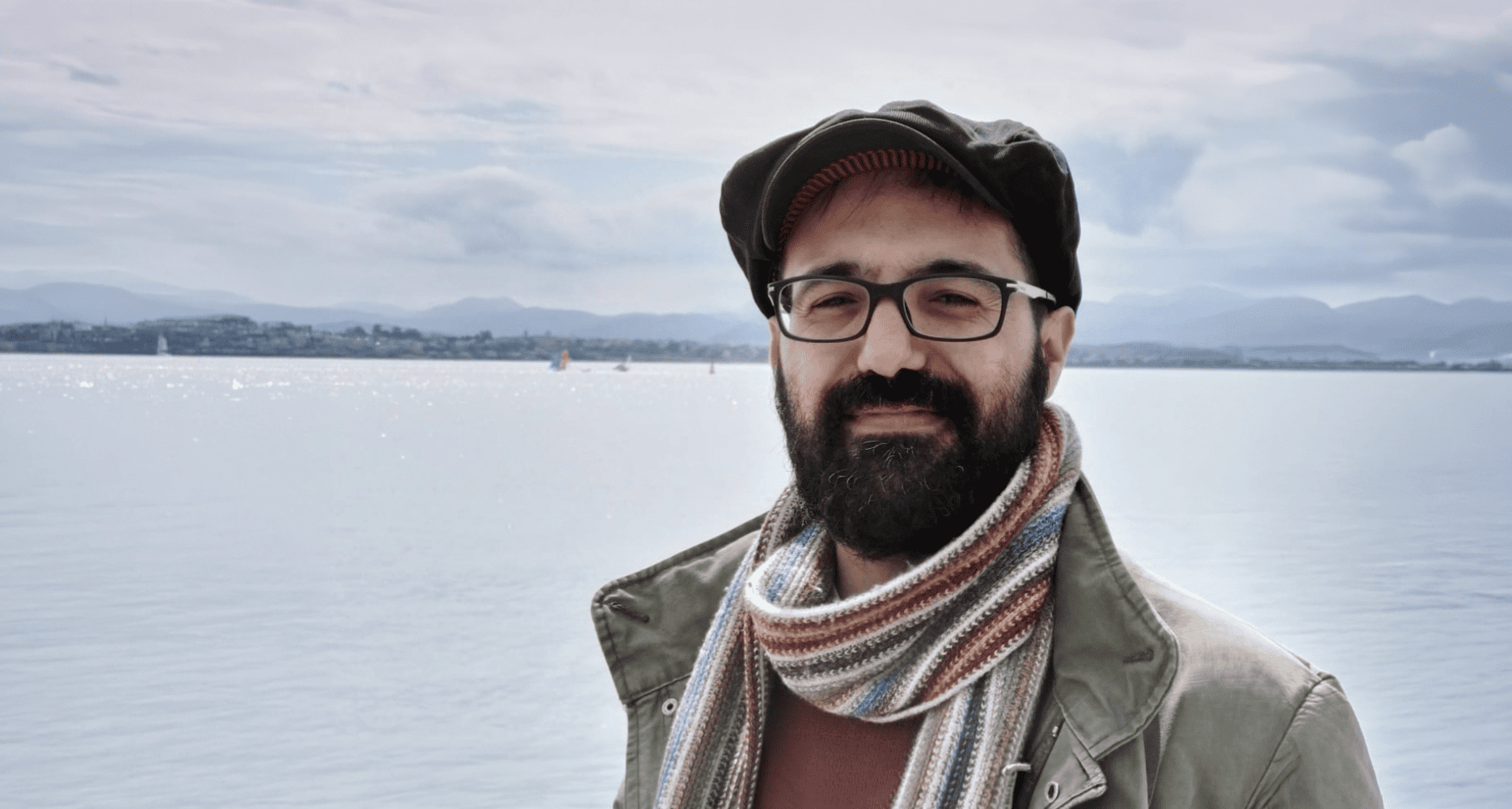
For many people, donating blood is an act of solidarity; for others, “it means life”, explains Massimo Lugas, president of the Spanish Association for the Fight Against Hemoglobinopathies and Thalassemias (ALHETA) in an interview with AELMHU on the occasion of World Blood Donor Day.
This is the case for people living with thalassemias, a group of rare genetic disorders that require regular blood transfusions throughout their lives. His 11-year-old daughter has beta-thalassemia, a specific type of this disorder, and that personal experience led him to become actively involved in the advocacy movement until he eventually became the organization’s president.
ALHETA was founded in 2003 with the goal of representing people affected by hemoglobinopathies and thalassemias. Over the years, the organization has evolved and currently focuses much of its work on providing care for and representing people with hemoglobinopathies and thalassemias.
Massimo Lugas joined the association about three and a half years ago, encouraged by healthcare professionals who believed it was necessary to strengthen the association’s activities at a particularly significant time for the disease, marked by advances in new treatments.
Why is donating blood so important?
Thalassemia is an inherited disorder that affects the production of hemoglobin, the protein responsible for transporting oxygen in the blood. In the most severe cases, such as beta-thalassemia major, the body is unable to produce functional hemoglobin, leading to severe anemia beginning in the first few months of life.
Lugas explains that once the fetal hemoglobin that protects the baby during the first few months disappears, patients begin to require regular transfusions to survive. “In the case of beta-thalassemia major, transfusions begin at four to six months of age and continue throughout life, ” he explains.
Dependence on blood transfusions shapes patients’ daily lives. In many cases, transfusions are given every three weeks, although some patients may require them more frequently. “These patients do not produce functional hemoglobin. That is why I say that for them, blood donation means life. Their condition is incompatible with life without blood, ” he says.
However, treatment does not end with transfusions. Transfused blood causes a progressive buildup of iron in organs such as the heart and liver, forcing patients to undergo chelation therapy to remove the excess iron and prevent serious complications.
Over the years, the disease can affect multiple organs and systems, requiring ongoing monitoring by various specialists. Cardiology, endocrinology, hepatology, and pulmonology are a regular part of the care pathway for many people with thalassemia.
“It’s a multi-organ disease. From a young age, patients have to deal with blood tests, MRIs, ultrasounds, and constant checkups, ” summarizes the president of ALHETA.
The Importance of Early Diagnosis
One of the areas that ALHETA considers a priority is the early detection of the disease. Currently, thalassemia is one of the conditions that can be identified through neonatal screening programs, which allows for medical follow-up to begin in the first days of life.
Massimo Lugas highlights the importance of these programs and explains that the association actively collaborates with other organizations to promote the expansion of newborn screening to include more rare diseases.
“We have experienced firsthand how important early detection is. That is why we advocate for expanding the number of diseases included in the heel prick test, ” he argues.
In addition, it considers it necessary to strengthen prenatal genetic counseling and information. Since this is a hereditary disease, carrier parents may pass it on to their children without being aware of the risk beforehand.
As she explains, greater awareness of carrier status would allow many families to have enough information to make informed reproductive decisions. “Often, parents were unaware that this risk existed. Information is also part of prevention, ” she notes.
Blood donation: an essential act
If there is one message that Massimo Lugas repeats throughout the interview, it is that blood donation is essential for people with thalassemia.
According to the president of ALHETA, many patients need several units of blood for each transfusion and rely on dozens of donations a year to maintain adequate hemoglobin levels. “When I say it’s a matter of life and death, I mean it literally, ” he reflects.
For this reason, the association has maintained close collaboration with other blood donor organizations throughout Spain since its inception. The organization regularly launches donation campaigns, participates in awareness-raising initiatives, and promotes efforts to express gratitude to those who make this selfless gesture.
“Virtually all of our members are involved in one way or another in activities related to blood donation. We always try to express our gratitude because we know exactly what it means, ” he says.
The Need for Greater Social Awareness
Despite the strategic importance of organ donation, Massimo Lugas believes there is still significant room for improvement in raising awareness. In his view, many people are unaware of the real impact of organ donation or the consequences that a shortage of organ supplies can have.
“I don’t think it’s a problem of a lack of solidarity. Often, it’s simply a lack of awareness. People aren’t aware of just how much our healthcare system depends on blood,” he reflects.
In addition to patients with hematological diseases, blood supplies are essential for surgical procedures, emergencies, childbirth, and cancer treatments, among many other clinical situations.
For this reason, it considers it necessary to launch “more ambitious and coordinated communication campaigns at the national level, capable of reaching the general public on an ongoing basis.”
“We need to find a way to raise awareness of the importance of organ donation more effectively. This is a challenge shared by institutions, healthcare professionals, patient associations, and donor organizations,” he says.
The Challenges Facing Blood Banks
Among the most pressing challenges, Massimo Lugas cites periodic drops in bookings during certain times of the year, especially in the summer and during vacation periods.
According to the president of ALHETA, these situations are “predictable” and “should be addressed through better planning and targeted campaigns aimed at boosting donations before the declines occur”.
It also highlights areas such as islands, where logistical challenges can lead to greater vulnerability in the supply chain. “These are situations we are aware of in advance and can take action on. Planning is an important part of the solution, ” he insists.
Even so, he remains confident that the advocacy work carried out by patient associations, together with healthcare professionals, the pharmaceutical industry, and government agencies, will lead to solutions that improve the lives of people who need a blood donation.
In the meantime, remember that the daily reality of many patients continues to depend on something as simple as taking the time to donate blood: “Every bag counts. Behind every donation are people who can carry on thanks to it. That’s a reality we should never forget.”