
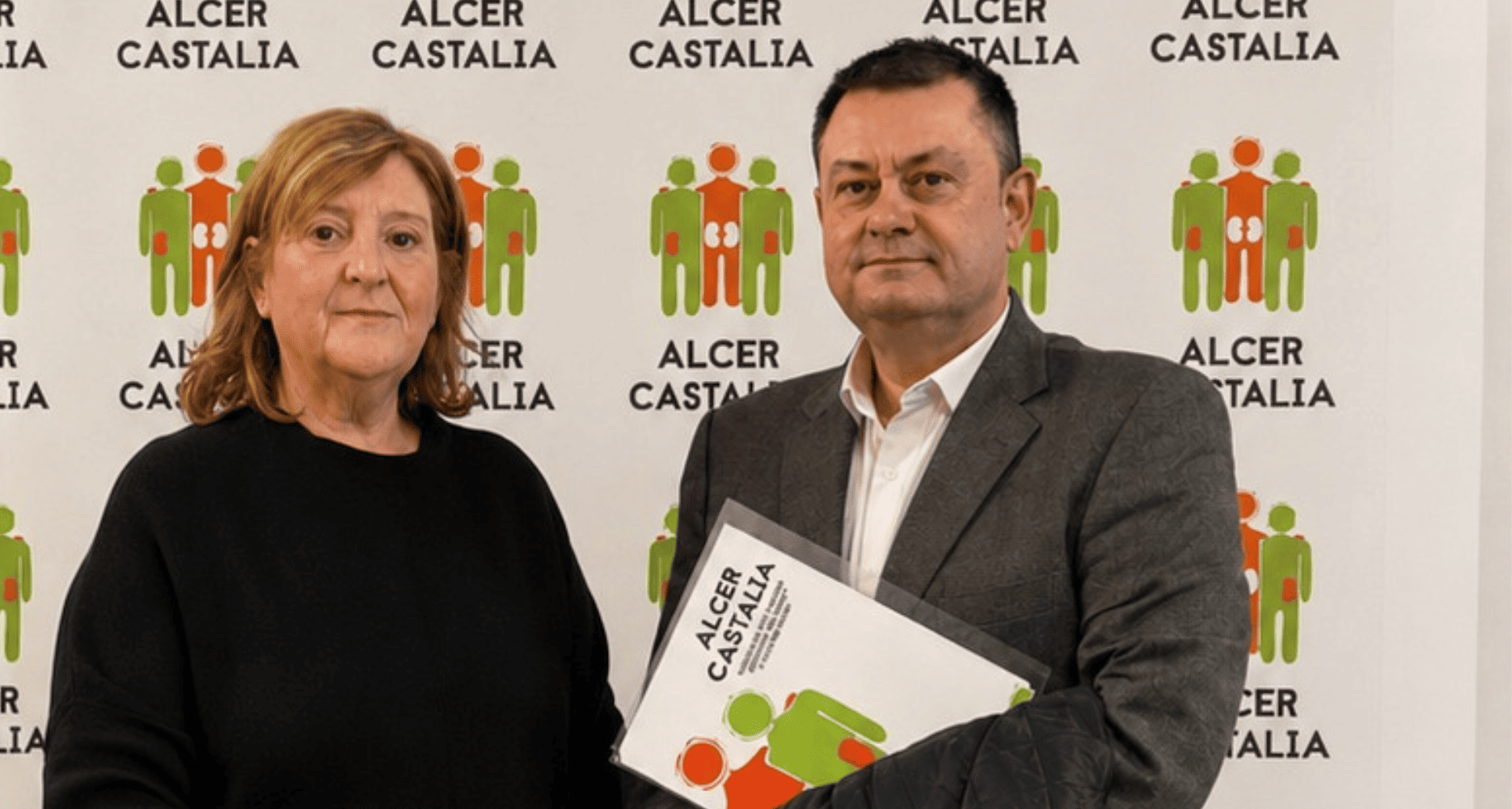
To mark World Atypical Hemolytic Uremic Syndrome (aHUS) Day, we at AELMHU interviewed Francisco Monfort, president of the patient association ASHUA, and Mireya Carratalá, the secretary, to gain a deeper understanding of the reality faced by people living with this rare disease.
Both highlight the progress made thanks to research and the development of new treatments, while emphasizing the need to continue promoting education, coordinated care, and the role of patient organizations as partners in the healthcare system.
HUS is a rare disease whose cause, in most cases, lies in genetic abnormalities related to the complement system, an essential component of the immune system. The condition causes uncontrolled activation of this defense system, which ends up attacking the body itself. As a result, red blood cells are destroyed, blood vessels are damaged, and the kidneys—which act as filters for the blood—are severely affected.
There is still much to learn about the triggers that cause HUS, although it is known that certain circumstances can trigger the disease in people with a genetic predisposition.
One of the main challenges is that the onset of the disease “is usually sudden and unexpected.” “Most people are unaware that they are at risk of developing the disease until the first episode occurs. They go from being perfectly fine to being admitted to the ICU in as little as 24 hours, ” explains Francisco Monfort.
Forecast Change
Despite the severity of the disease, ASHUA representatives emphasize that the current situation for patients is “radically different from what it was years ago.”
For example, the president of ASHUA notes that before 2010, diagnosing aHUS “could take several months—a period during which the disease continued to progress and cause irreversible damage”. “It used to take three, four, or five months to reach a diagnosis. Today, it has been demonstrated that aHUS can be diagnosed within 24 hours, ” he says.
“The main challenge is ensuring that diagnosis and medical treatment occur with the necessary speed, ”ASHUA insists
As a result, many patients are able to recover without any lasting effects and resume a completely normal life.“If the diagnosis is made quickly and the appropriate treatment is administered, the consequences can be virtually nonexistent,” he says.
For this reason, ASHUA emphasizes that the main challenge is no longer so much the lack of treatments, but rather ensuring that diagnosis and medical intervention occur with the necessary speed.
Education and Research: The Major Unresolved Issues
Despite the progress made, ASHUA believes there are still significant unmet needs. For Francisco Monfort, the priority is clear: “Training, training, and training”.
In his view, improved training for healthcare professionals has been one of the key reasons why Spain ranks among the countries with the best outcomes in the management of HUSa.
However, he warns that these training efforts must not be scaled back: “This is being lost. There is a lack of training for professionals and a lack of research.”
Furthermore, he argues that research not only makes it possible to develop new treatments, but also “to move toward increasingly personalized medicine, capable of better identifying each patient’s genetic abnormalities and predicting the risk of relapse.”
In their view, the progression of this disease is one of the best examples of the impact that innovation can have on patients’ survival and quality of life. “Research saves lives, and in the case of HUS, this has been clearly demonstrated, ” they say.

The Origin of ASHUA: Giving Back the Help We've Received
The founding of ASHUA is closely tied to her family’s personal experience. Her son was diagnosed with HUS in 2006, when he was just three years old. He underwent hemodialysis for four years and was eventually able to receive a kidney transplant thanks to the compassionate use of the first available complement inhibitor.
That experience allowed them to connect with national and international doctors and researchers and gain access to information that, at the time, “was very hard to find.”
“We realized that this valuable information didn’t belong to us and that there were other families who felt completely alone,”, they recall.
With that goal in mind, ASHUA was founded in 2011: to serve as a meeting place for patients, family members, healthcare professionals, and researchers. The association is based on a very specific idea: “Inform and educate. It’s the only way to manage this disease”.
They also explain that SHUa affects the entire family, especially since nearly half of all cases first appear during childhood or adolescence. “It’s not a disease that affects only the patient; it requires the involvement of the whole family, ” they say.
Visibility, yes, but accompanied by real change
ASHUA officials believe it is essential to continue raising awareness of rare diseases, but they call for that awareness to translate into concrete actions.
They acknowledge that progress has been made, but believe it is insufficient to meet patients’ actual needs: “I’m not saying what’s being done is bad, but it’s not enough. The progress is minimal.”
In his view, there are still too many administrative obstacles and significant regional disparities that “hinder equitable access to health care and therapeutic innovations.”
They also regret that the National Health System remains ill-equipped to meet the needs of people with chronic illnesses: “We don’t want a red-carpet treatment, but we do want patients to be able to balance their illness with their work, their studies, and their family life.”
“The patient must be at the center”
Another message that ASHUA strongly emphasizes is the need to build “truly multidisciplinary, patient-centered care”that “puts the patient at the center.” In their view, the current model forces patients to “constantly adapt to the system, when it should be exactly the opposite.”
He also highlights the role of patient organizations as allies of the healthcare system and as a source of specialized knowledge: “We are not doctors, but in many cases we may know more about the disease than many professionals.”
The patient must be at the center; there must be a multidisciplinary, patient-centered approach; and patient organizations must be viewed as allies of the healthcare system and a source of specialized knowledge.
As possible solutions, among other measures, they call for making it easier to obtain second opinions, strengthening collaboration among centers, and leveraging new technologies to share knowledge.
“An association available seven days a week”
In this daily work, Mireya Carratalá plays a key role in supporting patients and their families. The ASHUA secretary coordinates various support groups and maintains constant contact with affected individuals not only in Spain but also in other Spanish-speaking countries.
The association maintains WhatsApp groups, shares up-to-date scientific information, and refers families to psychological support and social work resources, in collaboration with the Association for the Fight Against Kidney Disease (ALCER).
For Mireya Carratalá, a well-informed patient also helps improve health outcomes: “An informed and educated patient who understands their condition will have fewer hospital admissions”.
Finally, ASHUA representatives issued a message of unity and collaboration among patients, healthcare professionals, government agencies, and society. “Strength in unity”, concludes Francisco Monfort. And Carratalá adds a thought that sums up ASHUA’s philosophy: “Anything that benefits the patient and helps them better understand their condition will always lead to a better quality of life.”
“Unity is strength”, concludes Francisco Monfort.