
Reaching a diagnosis can become an obstacle course for people with ultra-rare diseases. This is the case with acid sphingomyelinase deficiency ( ASMD), an ultra-rare genetic disease that affects approximately one in every 250,000 live births.
ASMD belongs to the group of lysosomal storage disorders, which are characterized by the accumulation of certain substances in cells and organs. In this case, mutations in the SMPD1 gene prevent the body from producing sufficient amounts of an enzyme, acid sphingomyelinase (ASM), which is responsible for helping to break down sphingomyelin. When this enzyme is lacking, sphingomyelin accumulates and can affect various organs, with the course of the disease varying greatly from person to person.
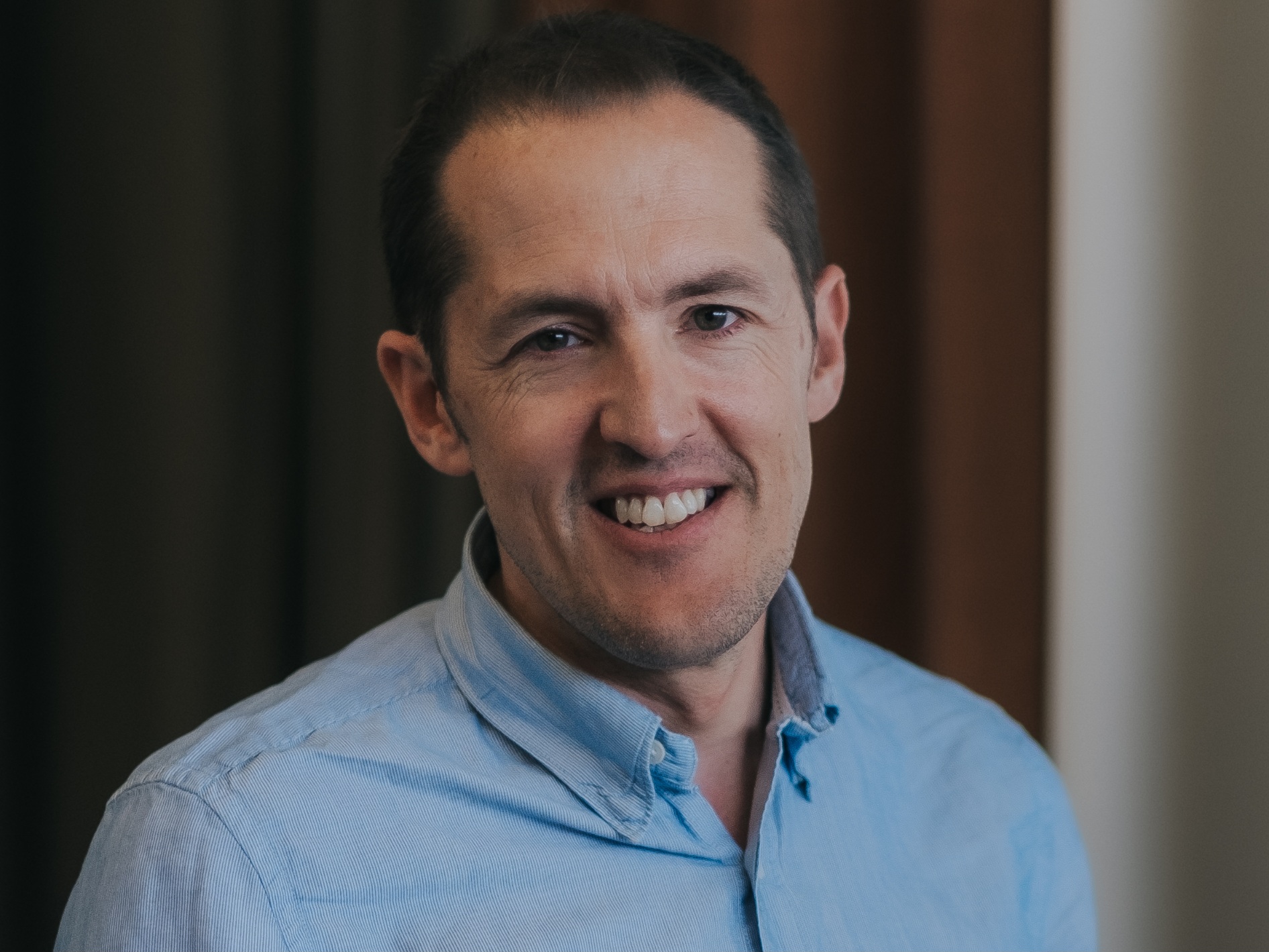
The ASMD Spain Association estimates that there are about fifty patients in Spain. Daniel de Vicente is one of them and also serves as the association’s president. His story reflects some of the main challenges faced by those living with this disease: symptoms that can affect various organs, significant variability among patients, and, in some cases, years before a diagnosis is reached.
“I’ve had symptoms since I was born,” Daniel explains. However, he wasn’t diagnosed until he was 36, after seeing numerous specialists and visiting many hospitals. Gastroenterologists, pulmonologists, nephrologists, and pediatricians had addressed different manifestations of his illness, but for years no one had been able to connect them. Finally, a specialist was able to put the pieces together and point the way toward a diagnosis. In just two days, after the necessary tests were performed, confirmation came.
A disease with three forms and a wide range of variations
ASMD encompasses three main forms: type A (infantile neurovisceral), type A/B (chronic neurovisceral), and type B (chronic visceral). The difference lies in the residual enzyme activity and the involvement of various organs.
Type A is the most severe form and usually begins in the first few months of life, with neurological involvement and a rapid progression. Type B progresses more slowly and generally does not affect the central nervous system. Between these two lies type A/B, a chronic form characterized by neurological involvement of varying severity.
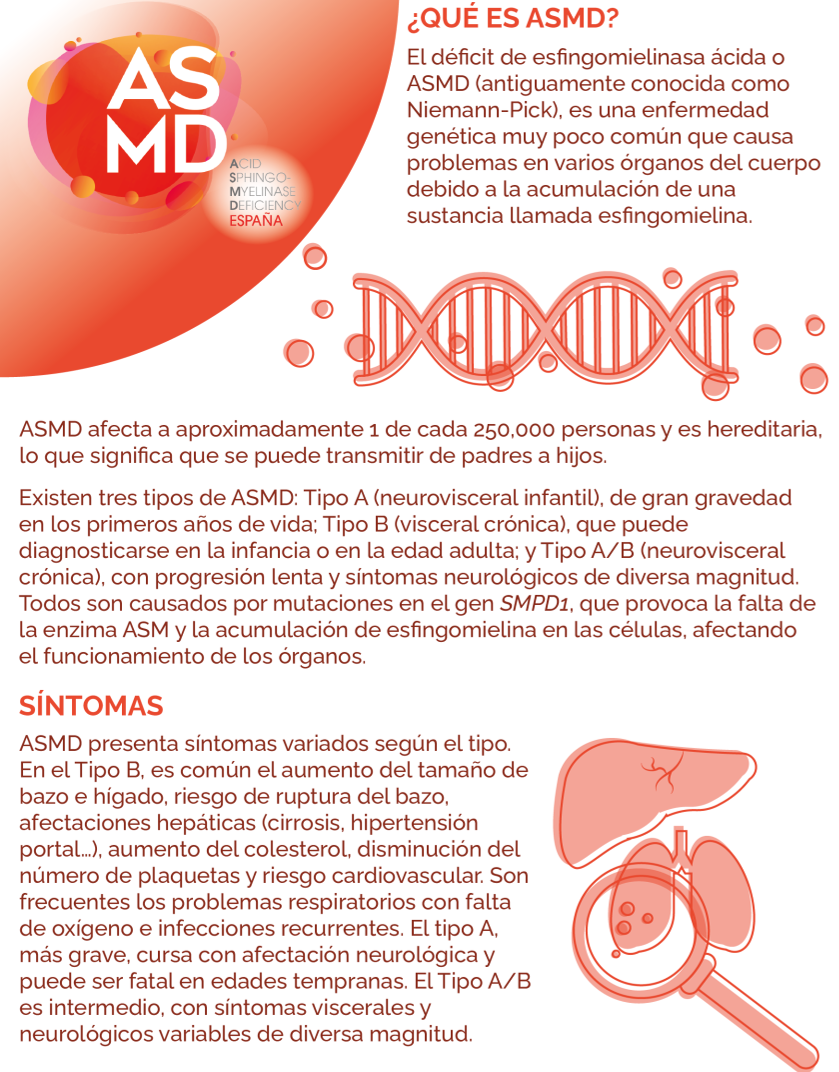
Because of this diversity, there is no single patient profile. In visceral forms, symptoms may include enlargement of the liver and spleen, liver dysfunction, thrombocytopenia, or lung involvement. In the most severe cases, complications such as cirrhosis, portal hypertension, or respiratory failure may occur. Forms involving neurological involvement may be associated with developmental, motor, swallowing, or feeding problems.
“It’s a highly variable disease,” summarizes Daniel de Vicente. Even within the same family, two siblings may have very different disease courses. While some patients develop significant symptoms as early as childhood, others may reach adulthood with much milder symptoms.
It is precisely this variability that can make diagnosis difficult. The slow progression of some forms and the limited understanding of these conditions can lead to their manifestations being addressed in isolation. Diagnosis is confirmed by measuring ASM enzyme activity and, when appropriate, through genetic testing of the SMPD1 gene.
A New Chapter with the Arrival of the Treatment
One of the major changes in recent years has been the availability of enzyme replacement therapy for certain patients with ASMD. The treatment replaces the missing enzyme and is administered via an intravenous infusion at an outpatient clinic.
Daniel receives treatment every two weeks. “The first few doses caused some side effects, but over time my body has adjusted. These days, my treatment day dictates my schedule, although afterward I can go about my day practically as usual,” Daniel says.
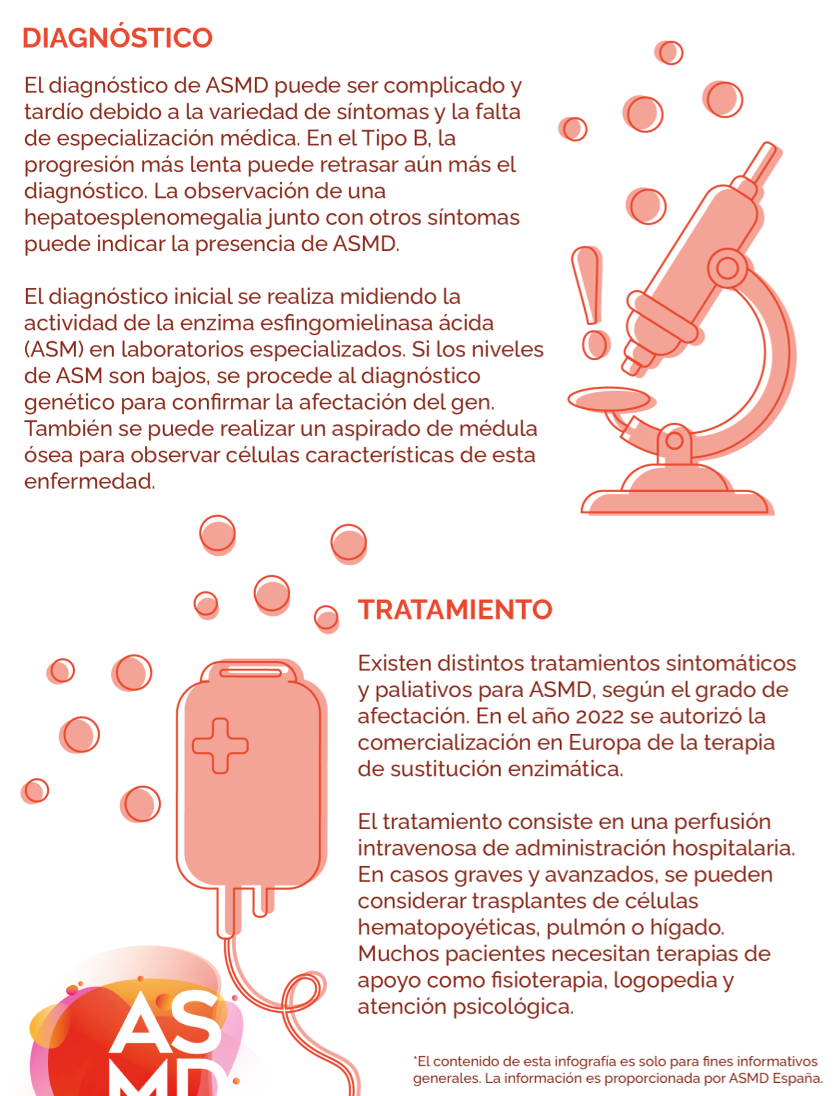
The therapy can reduce the accumulation of sphingomyelin and improve the function of organs that have not yet suffered irreversible damage. However, it is not a curative treatment and requires ongoing administration.
This therapy is particularly effective, and its effects are visible in a short time, especially in children.
“The deterioration of their organs is slowed, and since their organs aren’t particularly damaged yet, they can lead a practically normal life,” explains the president of ASMD.
However, there is one particularly significant limitation: the therapy does not cross the blood-brain barrier and, therefore, cannot treat neurological involvement. For patients with forms of the disease that affect the nervous system, there remains an unmet therapeutic need.
“The most severely ill patients have no choice,” says Daniel de Vicente. The development of treatments capable of addressing this condition is therefore among the top research priorities.
The treatment also poses new challenges
Access to a specific therapy has been a step forward, but its intravenous administration every two weeks requires regular trips to the hospital and can place a significant burden on patients and their families.
For this reason, one of the main demands of the ASMD Spain Association is to work toward making it possible to administer treatment at home. For those who live far from a hospital, each visit can involve long commutes and may even require spending the night away from home.
The association also calls for a more responsive approach in areas such as the recognition of disability and dependency, as well as greater social and psychological support from the moment of diagnosis. The disease can have consequences for family members’ work, education, the patient’s independence, and the organization of the entire family.
Another particularly challenging time is the transition from pediatric to adult care.
According to Daniel de Vicente, “it should not be viewed merely as a change of specialist, but rather as a process that must also address the patient’s autonomy, their personal, professional, or academic life, and their social relationships.”
Research to address what still needs to be done
The future for people with ASMD also lies in research. The association is working to promote alternatives capable of addressing neurological impairment and moving toward treatments that are less reliant on intravenous administration. Among the promising avenues are oral therapies and, in the longer term, strategies such as gene therapy.
International collaboration is essential for advancing our understanding of such a rare disease.
“The ASMD Spain Association is a member of the INPDA (International Niemann-Pick Alliance) of patients and participates in initiatives aimed at sharing information, promoting research, and avoiding duplication,” says Daniel de Vicente.
It also participates in the INPDR (International Niemann-Pick Registry), an international patient registry that provides a better understanding of the natural history of the disease and its progression.
In Spain, the association also works to connect patients, healthcare professionals, and researchers. Its initiatives include patient education and empowerment, conferences, projects to assess the impact of the disease, and tools designed to gather the experiences of those living with it.
Among these projects are ASMD Care, which incorporates specific questionnaires on patient-reported outcomes and experiences to identify which aspects of the disease have the greatest impact on patients’ daily lives, and the ASMD Educational Inclusion Guide, designed to promote the inclusion of pediatric and adolescent patients in school settings.
The evolution of ASMD thus reflects the progress made in recent years: from a disease that was difficult to recognize and had no specific treatment to a situation in which specialized diagnosis and enzyme replacement therapy have opened up new possibilities for certain patients. But significant challenges remain. Early diagnosis, ensuring comprehensive care, facilitating access to and administration of treatment, and developing alternatives for people with neurological involvement are still unresolved issues.
When it comes to ultra-rare diseases, making progress isn't just about finding a treatment. It also means ensuring that knowledge, specialized care, and solutions reach everyone who needs them.