
04/08/2025
Living with Familial Mediterranean Fever
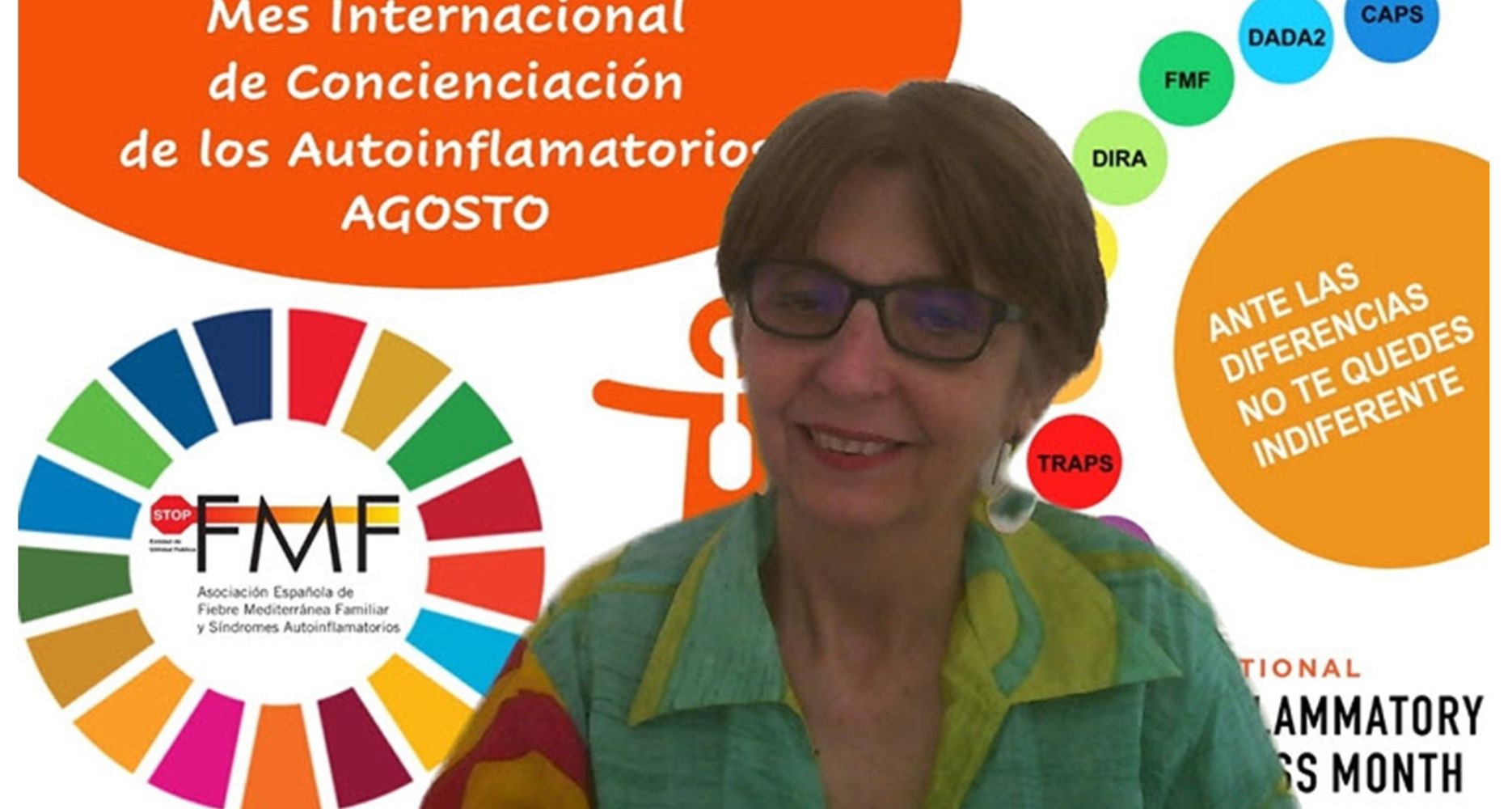
For Autoinflammatory Diseases Month, we spoke with Cuca Paulo, president of Stop FMF (Spanish Association of Familial Mediterranean Fever and Autoinflammatory Syndromes). More than a spokesperson, she is a patient and first-person witness of the challenges of living with these rare, often invisible, but deeply disabling diseases.
A diagnosis that changes everything
"Familial Mediterranean fever is a rare, genetic disease with an inflammatory symptomatology that affects the quality of life of those who suffer from it," explains Cuca. Belonging to the group of autoinflammatory diseases, this pathology manifests itself with recurrent outbreaks of fever, joint pain, abdominal inflammation, extreme fatigue and, in many cases, progressive organ damage. Despite its serious consequences, it remains largely unknown to many healthcare professionals.
"There is a basic problem: many professionals don't know about these diseases. And you can't diagnose what you don't know," he says. The direct consequence is a diagnostic delay that can last for years, an "obstacle course" that generates accumulated suffering in patients. "When they come to the association, many people come with many questions. After so long without a diagnosis or without anyone believing them, they have lost confidence in the system."
Childhood, school and an inflexible system
FMF usually has its onset in childhood. For children, this translates into constant absences from school, difficulty keeping up academically and social isolation. "It's not that they can't follow the course due to lack of intellectual capacity, it's that the system doesn't adapt to them. And the healthy physical appearance, which we often keep, makes people not empathize. You don't look sick, so they don't believe you."
The rigidity of the educational system often prevents these children from receiving the necessary support. "It's not a cognitive disability, it's an invisible disability, and that makes it very complicated to recognize," adds Cuca. "And what happens in childhood is then carried over into adulthood."
Adult life: more challenges, less understanding
As adults, the impact carries over into the world of work. Recurrent sick leave, unexpected flare-ups and chronic burnout make it difficult to maintain stable employment. "A small company can't afford to take a long absence. And often, the support regulations don't protect the worker or the employer either."
The cycle repeats itself: fewer job opportunities, greater dependence on social assistance, more stigmatization. But it's not just a medical problem. "This is social, educational, emotional and economic. Late diagnosis and lack of adaptation aggravate everything," he stresses.
Emotional invisibility
In addition to the physical pain, Cuca stresses a forgotten dimension: the emotional impact. "Every outbreak is a frustration, every canceled plan generates an emotional wound. You can't organize a vacation because you don't know how you're going to be. And that's also suffered by families." A birthday party, an outing or a family reunion can be canceled in seconds in the face of an outbreak. And with each cancellation comes a sense of loss that, if mismanaged, can lead to depression.
"Mental health is not attended to as it should be. Psychologists are scarce in the public system. From the associations we could offer this support, but there is no stable funding model that would allow it. We propose that these services be arranged with patient entities, just as MRIs or residences are arranged."
Stop FMF: sustaining what the system does not sustain
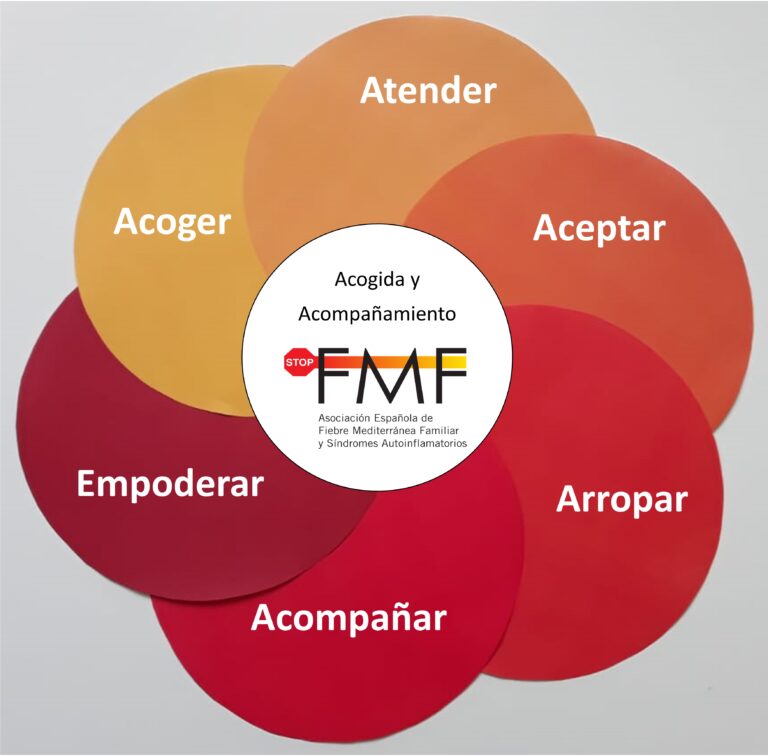
Stop FMF is not only a refuge for patients. It is a space for support, dissemination, guidance and training. "But the associative work, today, is unaffordable for a sick person. I am a patient, I cannot do the work of five professionals: management, communication, social care, project coordination..."
The president of the organization denounces the increasing pressure on patients' associations. "The administration demands more and more, but gives less and less. We have gone from submitting to five calls for proposals to get a budget, to submitting twelve to get the same thing. That is unsustainable."
And yet, they don't give up. Because they know that their existence makes a vital difference to those who are beginning that journey. "People arrive with basic questions: What is this? Am I going to die? Will I be able to live a normal life? And many times, doctors don't explain. Then the patient goes to Google, and there they find everything from unsubstantiated theories to dangerous advice. It's critical that the system recommends reputable associations."
The importance of research
In the scientific arena, FMF and autoinflammatory syndromes still have a long way to go. "Genetics has advanced, but it remains inconclusive in many cases. We don't know all the possible mutations. Sometimes the clinic clearly points to an autoinflammatory, but genetics does not confirm it. Then we talk about an 'undefined' diagnosis, which adds complexity to treatment."
As for treatments, most are shared between pathologies. "There are still no specific drugs for each disease. That's why we demand more investment in research. And not only for us. What has been learned with these pathologies has already been useful for others. For example, during COVID, knowledge about the cytokine storm came largely from autoinflammatory diseases. Doing research in rare diseases benefits society as a whole."
A call to those who are "well"
One of the messages most repeated by Cuca is the appeal to stable patients. "Associations are not only for when one is bad. We also need those who are well. If you are better today, collaborate, because tomorrow you may need that help yourself."
The problem of generational replacement, the lack of volunteerism and the scarce culture of associationism complicate sustainability. "Nowadays it is not fashionable to be a volunteer. But if the associations disappear, who takes care of the patient?"
"We don't want more, we want the same."
Stop FMF's demands, like those of so many rare disease organizations, do not ask for privileges. "We don't want more than anyone else, we want the same. The same rights, the same opportunities. We want our children to be able to go to school like everyone else, to be able to work, to have vacations, to live with dignity."
Concluye Cuca con una reflexión poderosa: “Somos pacientes complejos, sí. Pero también somos personas comprometidas, resilientes y agradecidas. Cuando un profesional sanitario sabe de nuestra enfermedad y nos trata con empatía, nos gana para siempre. Solo pedimos eso: comprensión, recursos y voluntad política para no quedar atrás”.