
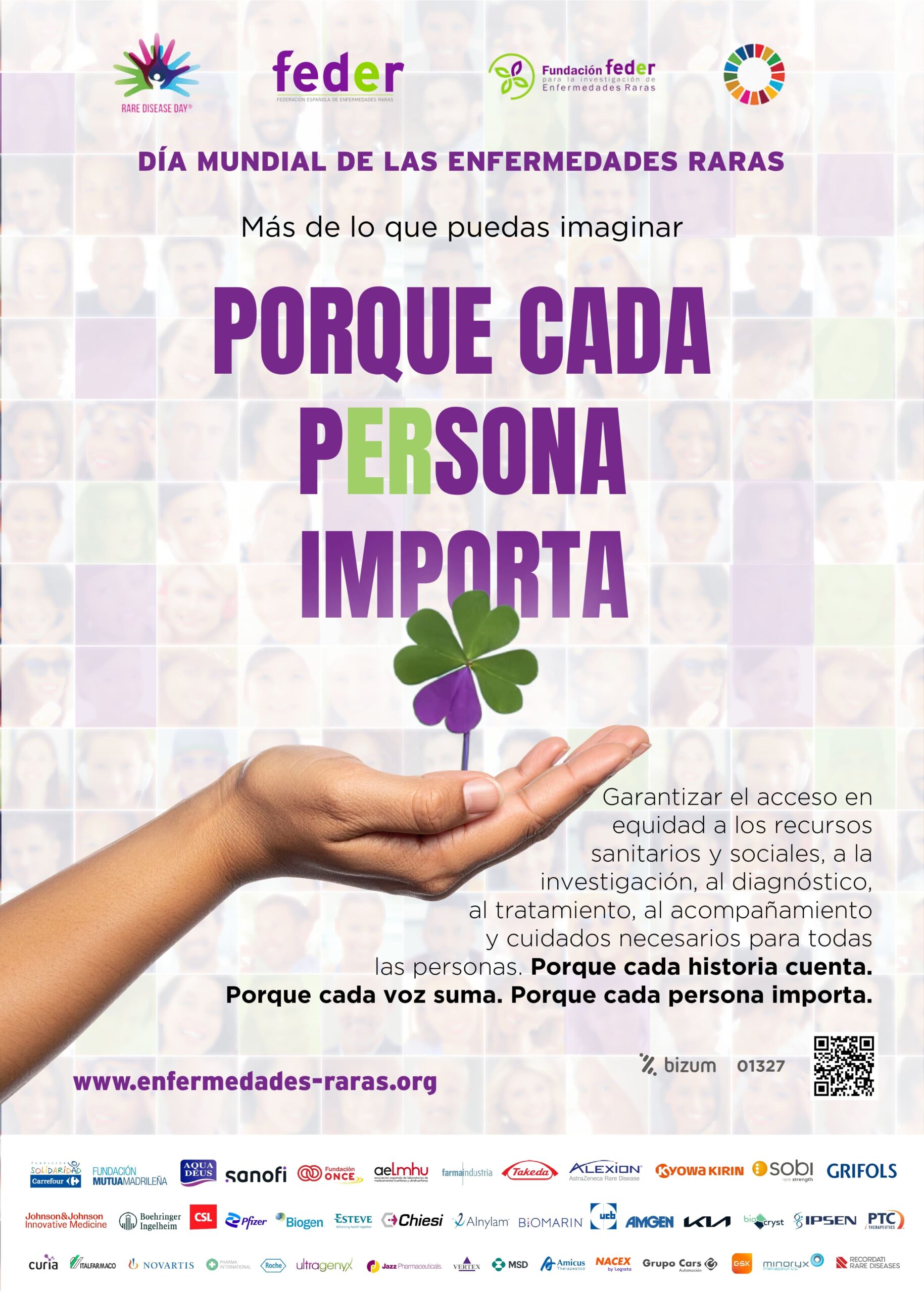
"Because every person matters.". That is the slogan of the Spanish Federation for Rare Diseases (FEDER) for its campaign for Rare Disease Day, which is celebrated every February 28, and which this year once again focuses on three essential pillars for the associative movement: research, diagnosis, and access to treatment.
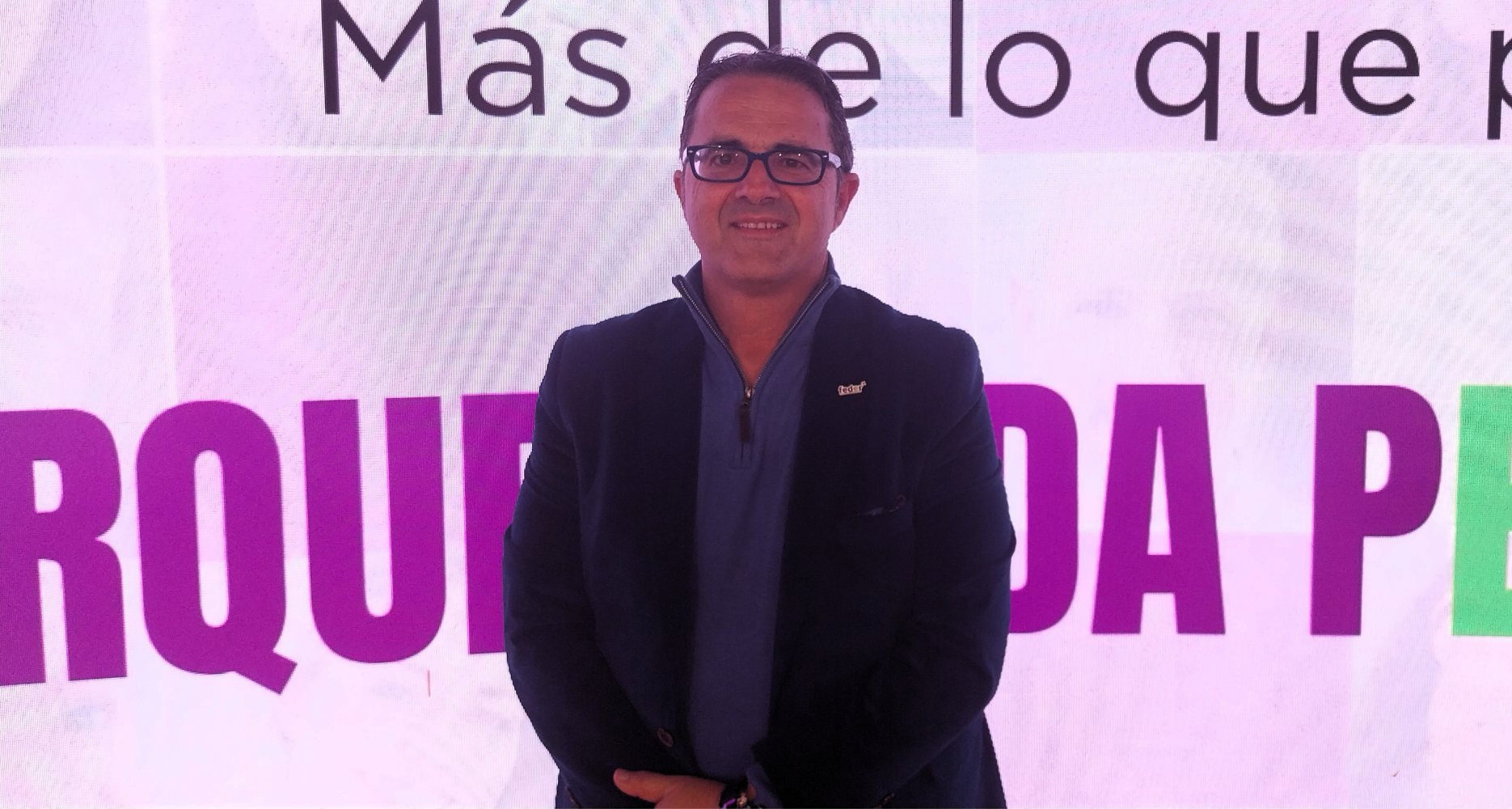
"With this slogan, we wanted to remind people of the importance of leaving no one behind. Behind every disease and every symptom there are patients and families. We want to remind people that we all matter and we all contribute, " explains Juan Carrión, president of FEDER, in an interview with AELMHU to address the main needs and challenges faced by the 3.4 million people with rare diseases in Spain.
For more than a decade, Juan Carrión has presided over FEDER, the organization that represents the rare disease association movement in Spain, with a total of 442 member organizations working to improve the quality of life of affected individuals and their families, defending their rights, and representing their interests before government agencies, institutions, and social and health care stakeholders. In addition, the Federation leads World Rare Disease Day in Spain every year.
For FEDER, one of the main challenges in improving patient care is ensuring equity: "Many patients continue to experience significant inequality depending on their zip code or where they are born." That is why Juan Carrión considers it essential to continue the work that marked the resolution of the World Health Organization (WHO) Assembly in May 2025, promoted by Spain and Egypt, to make rare diseases a global public health priority.
“We need to ensure early and equitable diagnosis throughout Spain.”
As a first step toward addressing inequality, FEDER points to diagnosis: "Right now, the average time from the onset of the first symptoms to the confirmation of a rare disease is six years. Our goal is to reduce the time to diagnosis to less than one year by 2027, as set by the Center for Biomedical Research Network (CIBER)."
Neonatal screening is another area where Juan Carrión observes significant inequalities. Although the Common Portfolio of Services of the National Health System (SNS) includes screening for 12 rare diseases, with plans to expand this to 22 by 2026, he regrets that the difference between autonomous communities remains significant. "There are autonomous communities that screen for between 10 and 20 diseases and others that screen for as many as 40, " he points out.
In this regard, Juan Carrión also calls for "political consensus and swift processing" of the bill to strengthen and standardize neonatal screening in the National Health System. "This law must not be left to gather dust in a drawer, " he argues.
For FEDER, there are three priorities when it comes to "guaranteeing early and equitable diagnosis throughout Spain": "Achieving standardization in the number of neonatal screening tests, ensuring that Spain implements the regulations on Medical Genetics and Laboratory Genetics specialties, and bringing genomic, personalized, and precision medicine to all those who need it."
Access to treatment, one of the major challenges
Beyond diagnosis, Juan Carrión identifies access to treatment as another major challenge in addressing rare diseases. In this regard, he points out, citing data from our Annual Report on Access to Orphan Drugs, that there are 156 authorized orphan drugs in the European Union, but in Spain they are funded, "which means that 34% are pending funding."
The Federation's president thanks the Ministry of Health for its efforts in recent years to incorporate innovation in Spain, but also draws attention to the difficulties patients face in accessing these drugs: "Many of these drugs have financing conditions and restrictions that reduce access, and these conditions make it difficult for many patients and families to benefit from them."
Added to this is the average waiting time between the assignment of the National Code and funding, which averages 23 months, "a period that is very long for patients." Another area in which there is regional inequality, according to FEDER, is access to treatment in special situations, which is why they consider it necessary to "update the Royal Decree to address this problem."
At the same time, Juan Carrión points out that 94% of people with rare diseases still do not have access to treatment. For them, he says, it is essential that services such as "physiotherapy, speech therapy, social and psychological care" are guaranteed "comprehensively and sufficiently" in the Common Portfolio of Services of the Spanish National Health System (SNS).
“Research is our future and our hope.”
Furthermore, research is, for FEDER, an essential condition for transforming the future of people with rare diseases. Juan Carrión urges Spain to take advantage of its role as a "leader and pioneer in clinical trials" to improve knowledge of these diseases.
Patients also play a key role in this area: "They flood our country with solidarity, raising funds that go towards research. Between 2021 and 2023, our association raised more than €7.3 million for biomedical research."
For Carrión, promoting research must be strategic for our country: "It is our future and our hope. Without science, there is no future for anyone." That is why he insists on the need to protect and retain scientific talent: "We have to protect research professionals to make research attractive in our country so that they do not have to leave to share their knowledge in other countries."
“Let knowledge travel, not the patient”
In terms of specialized care, Carrión points out that Spain is one of the European countries with the highest number of referral centers: "We have 386 designated CSURs." This model, he explains, must respond to one main objective: "The need for knowledge to travel, not the patient."
For this system to work properly, FEDER stresses the importance of optimizing referral routes "so that the different autonomous communities do not become an obstacle when referring a patient." The goal, he summarizes, is clear: "That any patient with a rare or undiagnosed disease can be referred to a CSUR if they need it."
In addition to this need, FEDER stresses the importance of streamlining the assessment and recognition of disability, which is present "in 80% of people with rare diseases," as a means of "advancing the educational, occupational, and social inclusion of all those affected and their families."
“Equity is not rare.”
In conclusion, Juan Carrión reminds us that the Federation's demands are not limited to a specific date such as World Day, but rather define the roadmap for the associative movement throughout the year. He thus emphasizes the principle that inspires both this campaign and the daily defense of the rights of the collective: "Equality is not rare. We must guarantee it and ensure that it is very much present in everything we do."
A demand that, in his opinion, will only have an impact if institutions, professionals, organizations, and society move in the same direction. That is why he emphasizes the power of unity: "Together we are a voice, we are strength, and we are the future for those who live with a rare disease or are still waiting for a diagnosis. Together we can have hope."