

Porphyria is a group of rare metabolic disorders caused by a deficiency in one of the enzymes involved in the synthesis of the heme group (a component of hemoglobin and other proteins), leading to a buildup of toxic substances known as porphyrins.
To mark International Porphyria Patients Day, celebrated on May 18, we interviewed Fide Mirón, president of the Spanish Porphyria Association (AEP), to learn about the challenges still facing the treatment of these conditions and the important role of patient advocacy groups.
Porphyrias are generally divided into two main categories based on where porphyrin accumulation occurs and how the disease manifests: acute porphyrias and cutaneous porphyrias.
The former primarily affect the nervous system and typically present as acute episodes, with symptoms such as severe abdominal pain, neurological abnormalities, and other nonspecific symptoms that make them difficult to diagnose. Cutaneous porphyrias, on the other hand, mainly manifest as skin lesions and severe photosensitivity, causing severe skin damage following exposure to sunlight.
Delays in diagnosis, training, and equity: key unmet needs
This clinical heterogeneity directly influences patients’ experiences. One of the main problems, therefore, remains diagnostic delay. Although cutaneous porphyrias are usually identified more quickly because they present with visible skin manifestations, acute forms continue to be associated with long periods of clinical uncertainty.
“There is a significant delay in diagnosis—sometimes ranging from 5 to 10 years—and I even know patients who have waited as long as 19 years to get an accurate diagnosis of what was happening to them,” explains Fide Mirón.
This delay has significant consequences for patients’ health and quality of life. According to the president of the AEP, many people undergo multiple visits to the emergency room and even unnecessary surgeries due to misdiagnoses. “If the healthcare professional does not suspect that they may be dealing with a patient with porphyria, they perform a host of tests that do not lead to a diagnosis but rather to a significant worsening of the disease, ” she warns.
For this reason, Fide Mirón stresses the importance of medical training and of raising diagnostic awareness in primary care and emergency departments. “For us, medical training is vital; we need primary care physicians—and especially those in emergency departments—to recognize the basic symptoms so they can refer patients and ensure a rapid diagnosis and appropriate care, ” he emphasizes.
Added to this is the need to ensure equitable access to treatment. For example, he laments that many patients with rare diseases—not just porphyria—continue to face regional disparities: “We always say that a patient’s ZIP code shouldn’t determine whether or not they can access an innovative therapy.”
The emotional and social impact of porphyria
Beyond the clinical approach, Fide Mirón focuses on the emotional, social, and occupational impact of living with the disease.
Porphyria also affects the daily routines and personal independence of those living with the condition. Everyday aspects such as sun exposure, planning activities, work life, and even leisure time can be limited by the need to prevent attacks or avoid triggers. “This reality forces many patients to constantly adapt their daily lives to the disease and to cope with a high degree of planning and uncertainty, ” he notes.
In acute porphyrias, the nonspecific nature of the symptoms can cause some confusion among healthcare professionals and in the general public: “There is often a great deal of misunderstanding. Doctors don’t know how to diagnose it and even think patients are making up their symptoms because the lab tests come back normal.”
This lack of answers can take a heavy psychological toll: “Seeing that you’re not well, that the disease is worsening your health, and not being able to identify the cause or take steps to improve the situation makes it very difficult psychologically.”
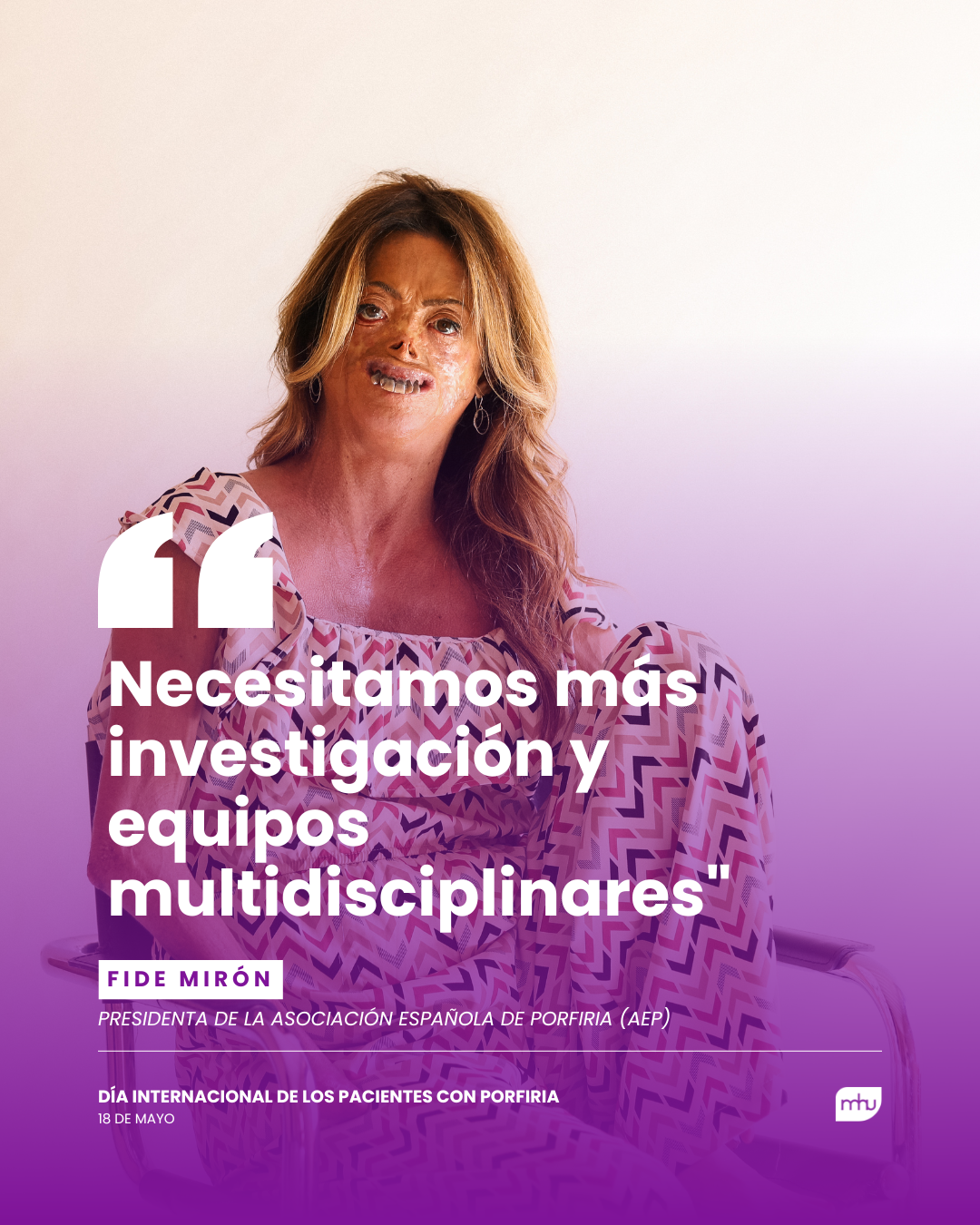
In cutaneous porphyrias, as in the case of Fide Mirón, the impact is closely linked to the visible effects of the condition and the associated social stigma. That is why she emphasizes the need to incorporate psychological support into healthcare: “We believe it is of the utmost importance that multidisciplinary teams also include a psychologist to support the patient throughout this journey.”
He also calls for greater public awareness: “We need a society that is much better prepared, much more empathetic, and one that helps us raise awareness of this disease and learn more about it.”
The Work of the Spanish Porphyria Association
The AEP works to raise awareness, provide training, and offer support to patients and their families. Its main areas of focus include organizing medical and scientific conferences, outreach and educational activities for patients, as well as advocacy efforts with government agencies.
“We try to raise awareness about the disease, organize awareness and educational events, and educate patients so they can better understand the condition and manage it more effectively, ” explains Fide Mirón.
The association also plays a key role in providing emotional and social support. “The association movement is like one big family, ” he sums up.
In addition, they serve as advocates with institutions and policymakers to promote improvements in research, access to treatment, and recognition of specific needs.
A Call to Action on International Porphyria Patients Day
International Porphyria Patient Day was established precisely to help raise social and institutional awareness of these conditions. For the AEP, such observances provide an opportunity to bring the reality of patients’ lives closer to healthcare professionals, public authorities, and the general public, as well as to remind everyone that, although these are rare diseases, their impact on daily life is profound and complex.
In this regard, Mirón emphasizes that raising awareness is not merely a matter of increasing public awareness, but has a direct impact on diagnosis and healthcare: “The greater the understanding of the disease, the greater the likelihood of identifying it early and avoiding complications resulting from an inadequate approach.”
He therefore stresses the importance of using this occasion to shine a spotlight on a disease that remains largely unknown. “We need a healthcare system that is prepared to provide the most appropriate care for all patients, ” he urges. Among his main requests are a push for research, the creation of multidisciplinary teams, and greater coordination of care.
“Research into porphyria is essential for the development of new treatments, and above all, we need better-trained teams,” concludes Fide Mirón.