
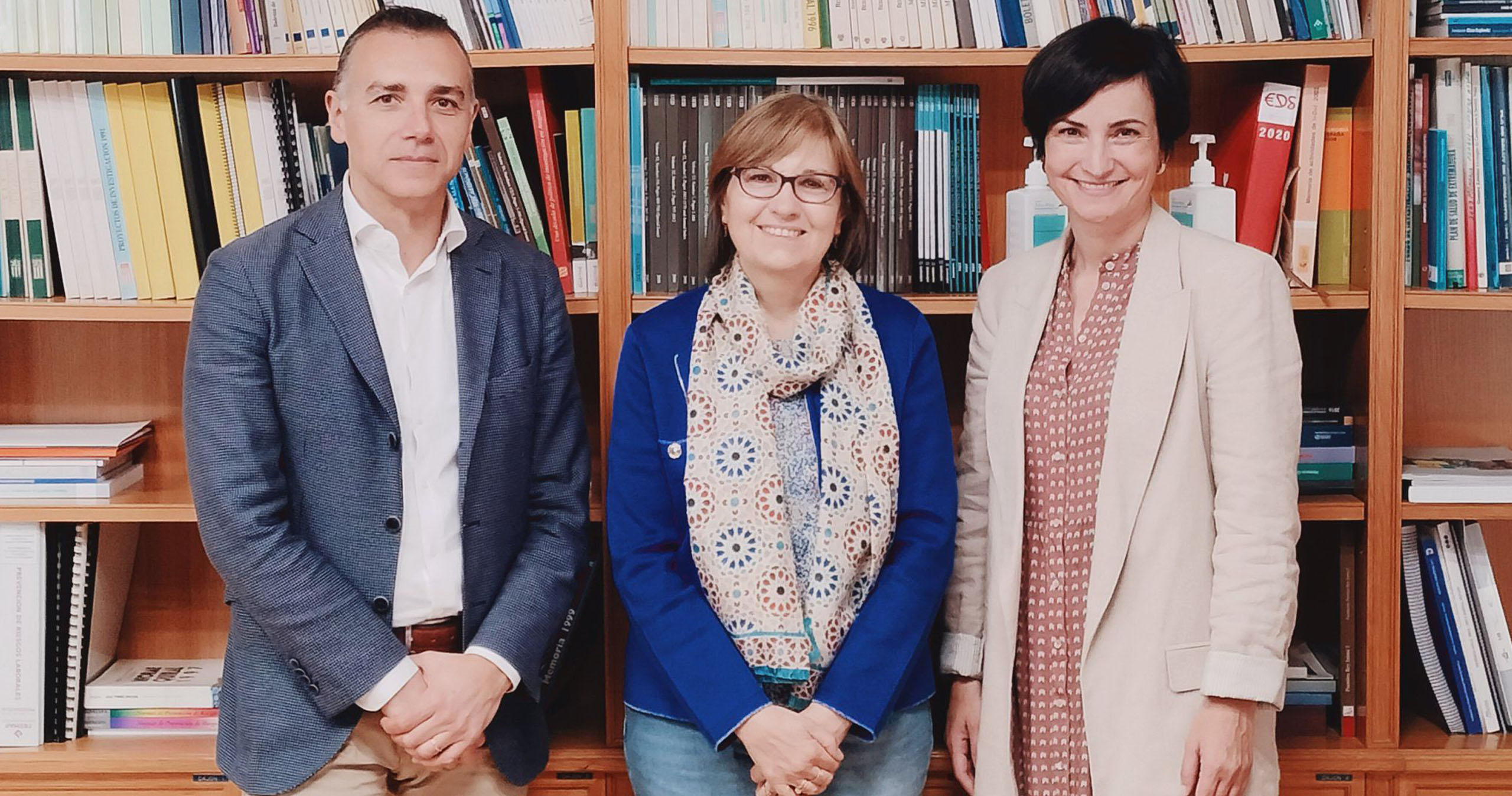
The Spanish Association of Orphan and Ultra Orphan Drug Laboratories has met with Marina Pollán, the new director of the Carlos III Health Institute.
During the meeting, the vice-president of the association, Jose Luis Moreno, and the director, Marian Corral, were able to present in detail the Spanish Medicines Association, as well as its mission, objectives and main activities. Together, they were able to explore lines of possible collaboration in order to achieve advances for patients.
The Instituto de Salud Carlos III (ISCIII) is a public research organization in Spain dedicated to the promotion and development of biomedical and health sciences research. Its main mission is to improve the health and welfare of the population through research, training and the provision of scientific-technical reference services.
Marina Pollán, its new director, is an epidemiologist with extensive experience in cancer research and public health. Specializing in cancer prevention and control studies, she has led numerous research projects in this field. As director of the ISCIII, she is expected to drive biomedical research and promote multidisciplinary collaborations to address public health challenges in Spain and beyond. Her profile combines solid scientific expertise with a strategic vision to advance health research and clinical practice.
For AELMHU, the Instituto de Salud Carlos III is a reference in health and recognizes its entire trajectory, the great talent and the commendable work that all its researchers, networks and research centers carry out in the field of rare diseases, as well as its fundamental role in the state registries of rare diseases and patients.
These patient registries, which are carried out in collaboration with CIBERER (Consorcio de Investigación Biomédica en Red de Enfermedades Raras), are very useful because they make it possible to draw up health plans by knowing how many patients are registered with a given disease, how they are distributed, and they serve as a disease surveillance system, since they have within their reach health indicators on their frequency and evolution. All in all, they are tools that facilitate the development of research because they make it possible to analyze the data of registered patients and involve them in research projects.