
Hereditary angioedema is a rare genetic disorder characterized by recurrent episodes of sudden, severe swelling, known as edema, which can affect the skin, airways, and gastrointestinal tract. These attacks can cause severe abdominal pain, swelling of the limbs and face, and, in the most severe cases, impair breathing when they affect the glottis.
Most cases are caused by a mutation in the SERPING1 gene, which is responsible for producing C1 inhibitor, a key protein involved in regulating various inflammatory processes in the body. A deficiency or malfunction of this protein leads to uncontrolled production of bradykinin, a molecule that increases the permeability of blood vessels and triggers the episodes of edema characteristic of the disease.
Attacks can occur in different parts of the body, particularly the face, limbs, abdomen, or trunk, and have a significant physical, emotional, and social impact on patients’ lives. Furthermore, it is an autosomal dominant disorder, which means that if one parent is affected, there is a 50% chance of passing the condition on to their children.
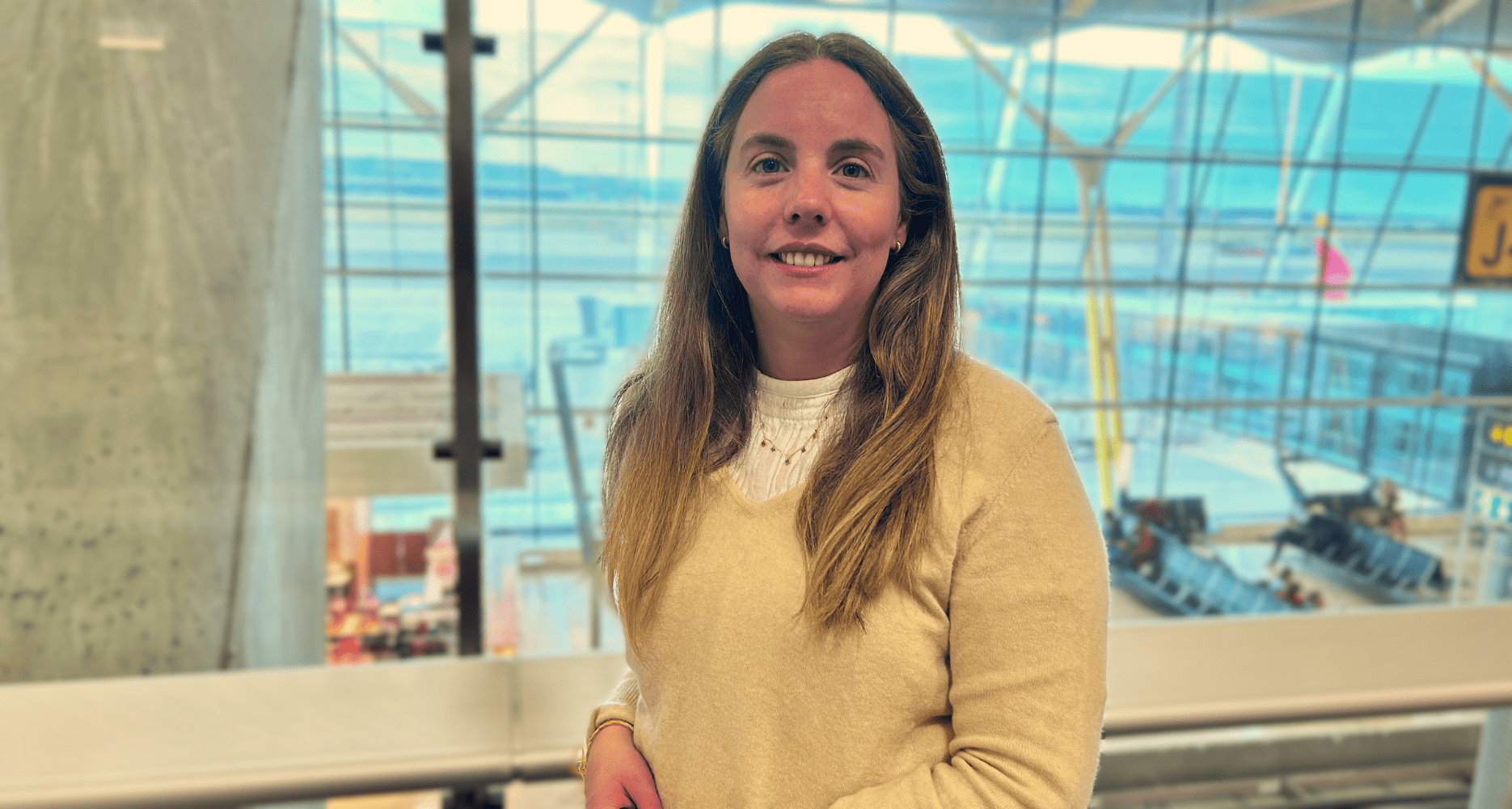
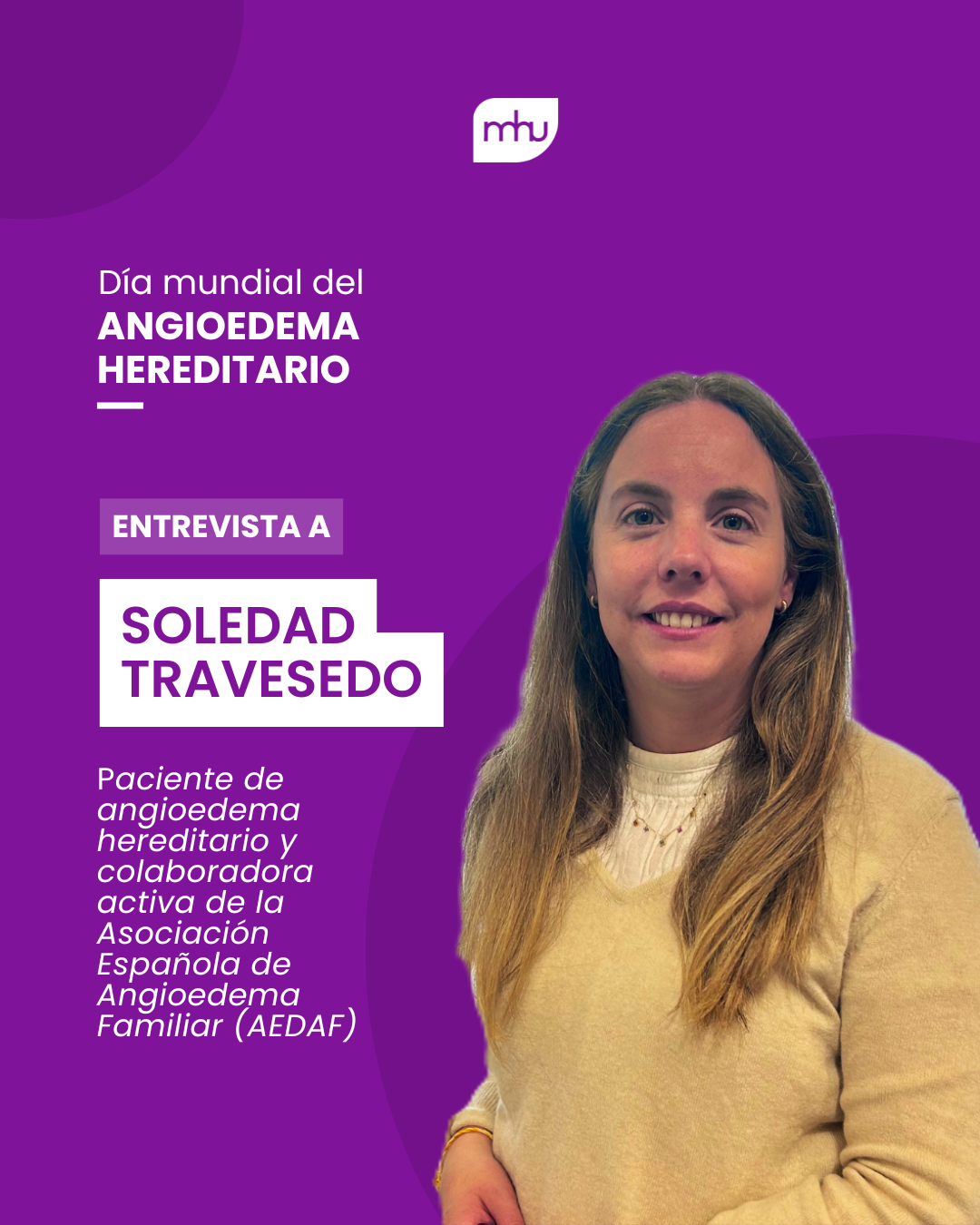
To mark World Hereditary Angioedema Day, the Spanish Association of Orphan and Ultra-Orphan Drug Laboratories (AELMHU) interviewed Soledad Travesedo, a patient with hereditary angioedema and an active member of the Spanish Association of Familial Angioedema (AEDAF), to learn firsthand what it is like to live with this rare disease.
Soledad has familial angioedema caused by C1 deficiency. The condition has been present in her family for generations, with frequent abdominal attacks affecting several family members, although for years it had no name. “We used to call it ‘the colic’ after my family’s last name, ” she recalls.
His first episode occurred when he was nine years old, with abdominal pain accompanied by facial swelling, one of the disease’s most characteristic symptoms. From that point on, he received a diagnosis and began specialized medical care, with a treatment regimen that today allows him to keep the disease relatively under control—something that was not always the case given the limited number of medications available at the time.
Even so, she explains that living with a rare disease means constantly learning to cope with uncertainty. For her, maintaining a positive attitude also requires a significant mental effort: “It’s very easy to say, and it sounds nice, but focusing on the good things when you’re missing out on plans or don’t know if you’ll be able to take an exam because you’re having a flare-up that day takes a lot of work.”
The impact on employment, mental health, and society
During his school and college years, he managed to lead a relatively normal life. However, a period of great emotional strain and stress led to a significant worsening of his condition. The episodes began to occur very frequently, even as often as every two weeks despite preventive treatments.
The impact also extended to her professional life. Soledad admits that she feels she hasn’t been able to fully pursue the career she had prepared for because of her illness. “It’s frustrating because you’ve studied hard, you’ve worked hard, and suddenly your career is cut short and hindered by the fact that, every now and then, you get sick, ” she says.
Motherhood was another of the most challenging periods of her life. Although she always knew she wanted to start a family and had the support of specialized professionals, she admits that she also had to deal with comments and doubts from others about whether it was wise to have children while living with a rare inherited disease. Today she is the mother of three children; the two oldest did not inherit the disease, but the youngest did test positive in the genetic screening.
“Psychologically, it’s a pretty heavy burden to know that she has this disease because of me,”, he acknowledges. Although his daughter has not yet shown any symptoms, he admits to living with constant worry about how and when the disease might manifest: “It doesn’t distress me that she has the disease; it distresses me not to be able to handle a serious situation.”
The Importance of Patient Organizations
The patient advocacy group has played a key role in this process. Although she has been a member of the patient advocacy group since her diagnosis, she acknowledges that for a long time she played a more low-key role.
Everything changed when she learned that one of her daughters had also inherited the disease. “That was the catalyst for me to start taking a more active role in the association,” she explains. Since then, she has come to understand firsthand the importance of the association’s work and patient advocacy: “From the outside, it seems like everything is taken for granted and the work isn’t appreciated as much.”
As he became more actively involved, he also began participating in national and international meetings, drawing on his professional experience and his fluency in English. That direct contact with other patients, doctors, and researchers changed his perspective: “I learned a great deal about the disease.”
In addition, he particularly highlights the human and educational value that these associations provide. He mentions, for example, the stories developed by AEDAF to explain hereditary angioedema to young children and help families address the condition from an early age.
Specialized care is key in hereditary angioedema
Her experience with the CSUR at La Paz University Hospital, led by Dr. Teresa Caballero Molina, has been equally pivotal. Soledad recalls that for many years she encountered healthcare professionals who knew very little about the disease. “You’d go to some places and they’d say, ‘I studied that disease in medical school, but I’ve never seen it, ’” she says.
In light of this, she emphasizes the peace of mind she feels from being treated at a specialized center where there is coordination among different services and a deep understanding of the condition. “In La Paz, no one looks at you like you’re some kind of freak,” she sums up. She has managed her pregnancies there and also received specialized care when one of her daughters was hospitalized as a newborn.
One of the episodes she remembers most clearly occurred during a severe abdominal crisis at a non-specialized hospital, when, at just 17 years old, she was on the verge of undergoing unnecessary surgery. “I had to ask for an ultrasound and explain that I didn’t need surgery, but rather the proper treatment, ” she recalls.
The role of the expert patient
It is precisely because of experiences like that one that he strongly advocates for the role of the “expert patient” in rare diseases. He believes it is essential for those affected to have a thorough understanding of their own condition, especially in the case of rare diseases where many healthcare professionals have little experience with clinical cases.
“When it comes to rare diseases, it’s important for patients to be experts on their own condition. You’re the one most interested in knowing how to treat yourself and in guiding those who aren’t as familiar with the condition,” he explains.
For Soledad, this knowledge not only improves patient care and independence but also offers hope. That is why she stresses the need for patients to actively participate in advocacy groups and organizations. “We are the ones most interested in ensuring that we are not forgotten. All of this has a direct impact on our quality of life and our future, ” she concludes.