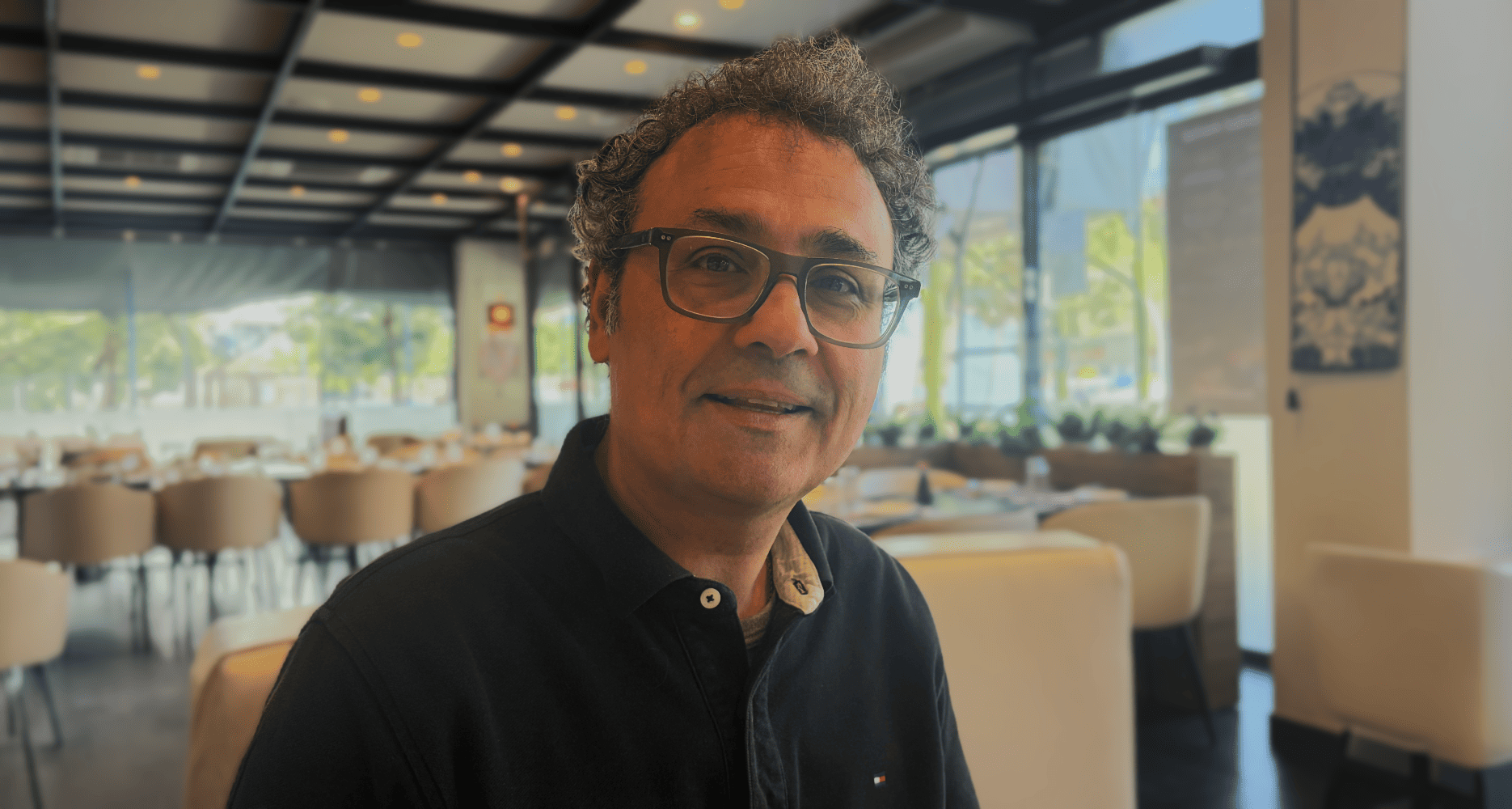
To mark World Pompe Disease Day, which is observed on April 15, AELMHU interviewed Manuel Cobos, treasurer of the Spanish Association of Pompe Patients (AEEPOMPE), who offers a comprehensive perspective—drawing on both personal experience and technical expertise—on the current challenges, the progress made, and future priorities for people living with this condition.
Pompe disease is a rare genetic disorder that causes progressive muscle damage and severely limits patients' mobility. Despite recent advances, this condition remains little known outside of clinical and patient advocacy circles.
Manuel Cobos explains that it was precisely this lack of visibility that led to the creation, in 2017, of the Spanish Association of Pompe Patients. Until then, patients had been part of the Spanish Association of Glycogen Storage Disease Patients, founded in 1999, where he himself continues to serve as a member of the Board of Directors.
According to him, the change was driven by a clear strategic need: “We realized that it was difficult for people to find Pompe, because the most visible term was ‘glucogenosis.’” This seemingly technical distinction had real consequences for patients’ ability to connect with one another, access information, and organize themselves.
Visibility is not a secondary issue, but a fundamental one for the association, insists Manuel Cobos: “It’s important to raise awareness on World Day, but we’re working to ensure visibility at all times. I believe that, over the past 15 years, these efforts have yielded tangible results, particularly in improving early diagnosis.”
Today, he says, it is hard to find a neurologist who is not familiar with the disease—a “significant change” from the situation Pompe patients faced a decade ago.
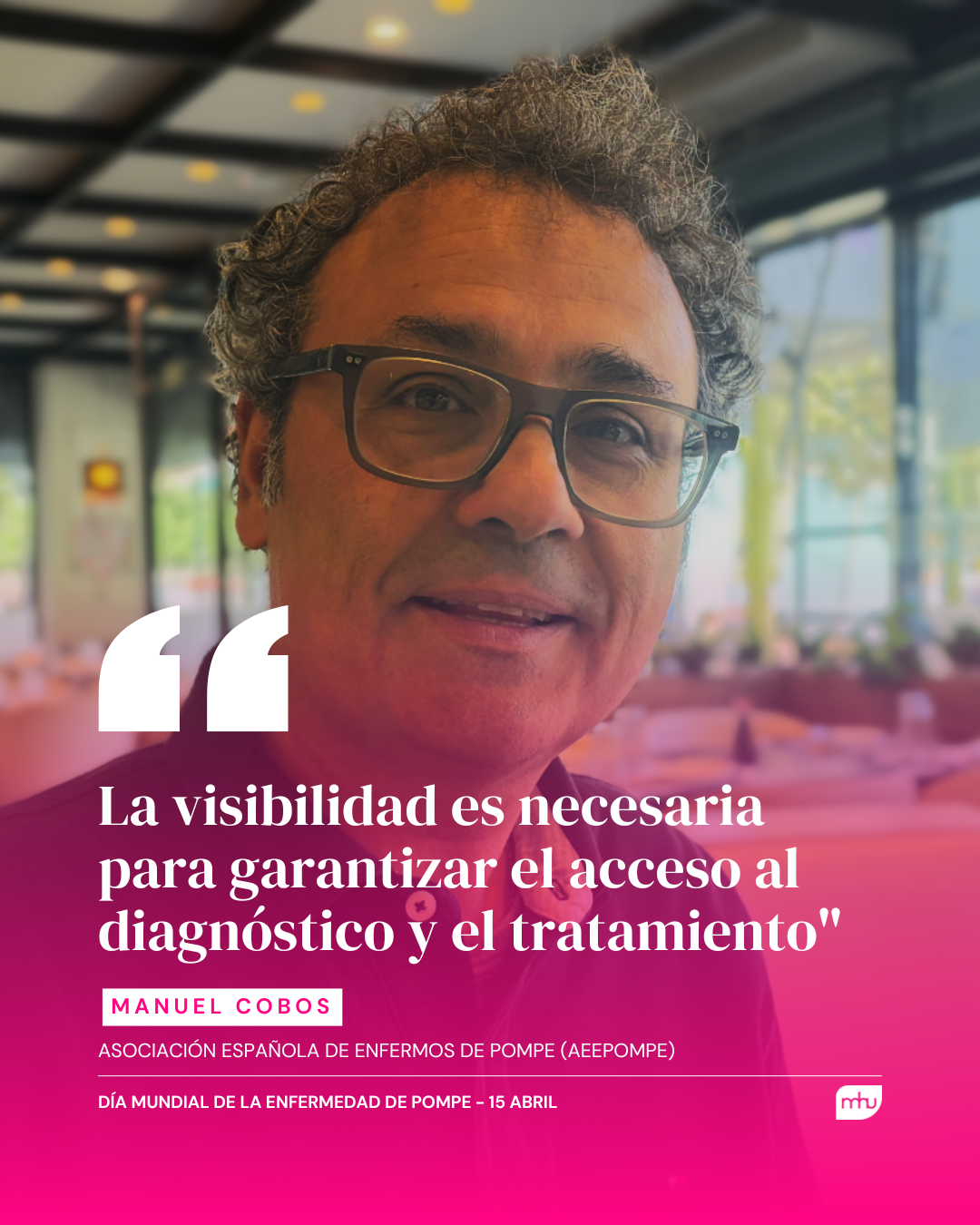
“Visibility is not just a tool for raising awareness, but a necessary condition for ensuring equitable access to diagnosis, treatment, and support. The first step is visibility—we need patients to find us so we can help them understand the disease and face the new challenges they must overcome,” summarizes the treasurer of AEEPOMPE.
Patient organizations: a place for people to come together
In this context, the association plays an essential role. According to Cobos, its main objective is to create a space where patients can come together to share experiences and access practical information for their daily lives.
“With rare diseases like Pompe, a diagnosis isn’t always followed by ongoing support. You get a diagnosis, you have a follow-up visit, but that’s about it,” she laments. In this “gap in care, ” the association acts as a bridge between patients, healthcare professionals, and other stakeholders in the sector.
This network of connections makes it possible to direct inquiries and provide answers when accessing the healthcare system is difficult: “It’s often hard to see a doctor, so it’s easier to come to the association and ask.”
Here, shared experience takes on special significance. Cobos, who has been living with the disease for more than 15 years, emphasizes the importance of offering a realistic view of the condition: “We explain the reality of the disease from the patient’s perspective—from the perspective of those who know it firsthand.”
Although the association does not provide direct services, it does play a key role in offering guidance. This guidance includes identifying available public resources, such as municipal services or supplementary benefits, which often go unnoticed by patients. In this way, the association helps empower those affected.
The treasurer of AEEPOMPE notes that access to information, especially online, “can cause anxiety in patients in the early stages.” However, he notes that contact with other patients through the association helps put the disease into context and offers a more realistic perspective. “We tell them that, if they are in the early stages of the disease, they will more or less maintain their functionality, ” he emphasizes, highlighting the association’s role in managing patients’ expectations.
The Value of the 'Expert Patient'
Cobos also reflects on the concept of the “expert patient, ” a role that is gaining increasing recognition within the healthcare system. Far from being merely knowledge gained through experience, he explains that it requires “structured training,” often provided by organizations such as the Spanish Federation for Rare Diseases (FEDER).
This training enables patients to navigate the healthcare system more effectively and participate in initiatives such as patient registries or working groups. “Professionalizing this role strengthens the associations’ ability to influence health policy and contribute to decision-making, especially in a field such as rare diseases, ” he notes.
The Big Challenge: Newborn Screening
Among the current challenges, Cobos identifies one as a priority:the implementation of neonatal screening for Pompe disease. As he explains, this advancement would make it possible to detect cases before symptoms appear, especially in late-onset forms, which can manifest during adolescence or adulthood.
“The most important challenge we face at the state level is implementing neonatal screening. While the disease is usually detected in children based on its clinical symptoms, in adults, diagnosis can be delayed for years, ” notes Manuel Cobos.
In this regard, he emphasizes that screening has a significant potential impact on patients’ prognosis and future: “Bringing the diagnosis forward by one year prevents the patient’s quality of life from deteriorating and keeps it stable. Early detection is a key tool for altering the course of the disease.”
Impact on patients' daily lives
Pompe disease exhibits a wide range of clinical presentations, resulting in very different experiences among patients. Cobos identifies two main profiles
The first type is when the disease manifests in childhood. In these cases, patients will be dependent and require significant assistance to develop, and in some cases, the disease can even be fatal.
In the second group—where the disease manifests in adulthood—the outcome will depend on: those who receive an early diagnosis and prompt treatment, and those who have had delayed access to medication and exhibit more severe symptoms.
In cases of late-onset Pompe disease, the impact may be limited: “There are patients who will not be unable to work or require assistance from others.” On the other hand, when diagnosis is delayed or the disease progresses, the consequences “can be significant, including physical disability and inability to work.” However, he notes that many patients choose to continue working, not only out of financial necessity but also because of its positive impact on mental health.
The emotional aspect is another important factor in dealing with the disease. Although many patients manage to adapt, the process is not without its challenges. For example, Manuel Cobos warns of a common phenomenon in debilitating illnesses: the gradual narrowing of one’s social circle. “Your circle keeps getting smaller, ” he notes, pointing to both physical limitations and psychological barriers.
On the other hand, Manuel Cobos laments that access to resources such as physical therapy—which is essential for many patients—remains “unequal” and, in many cases, depends on the patient’s individual efforts or family support. “Activities such as adapted exercise or swimming can help maintain functional ability, but they are almost never covered by the healthcare system, ” he explains.
He also emphasizes the importance of self-care, including diet and adapted exercise.“In the case of Pompe disease, the approach must be tailored to the condition, since muscle damage does not heal in the same way as it does in people without the disease,” he explains.