Early diagnosis remains one of the major challenges in the field of rare diseases. In this context, newborn screening has established itself as one of the most effective tools for identifying certain conditions from the first days of life and facilitating early access to treatment and specialized follow-up care.
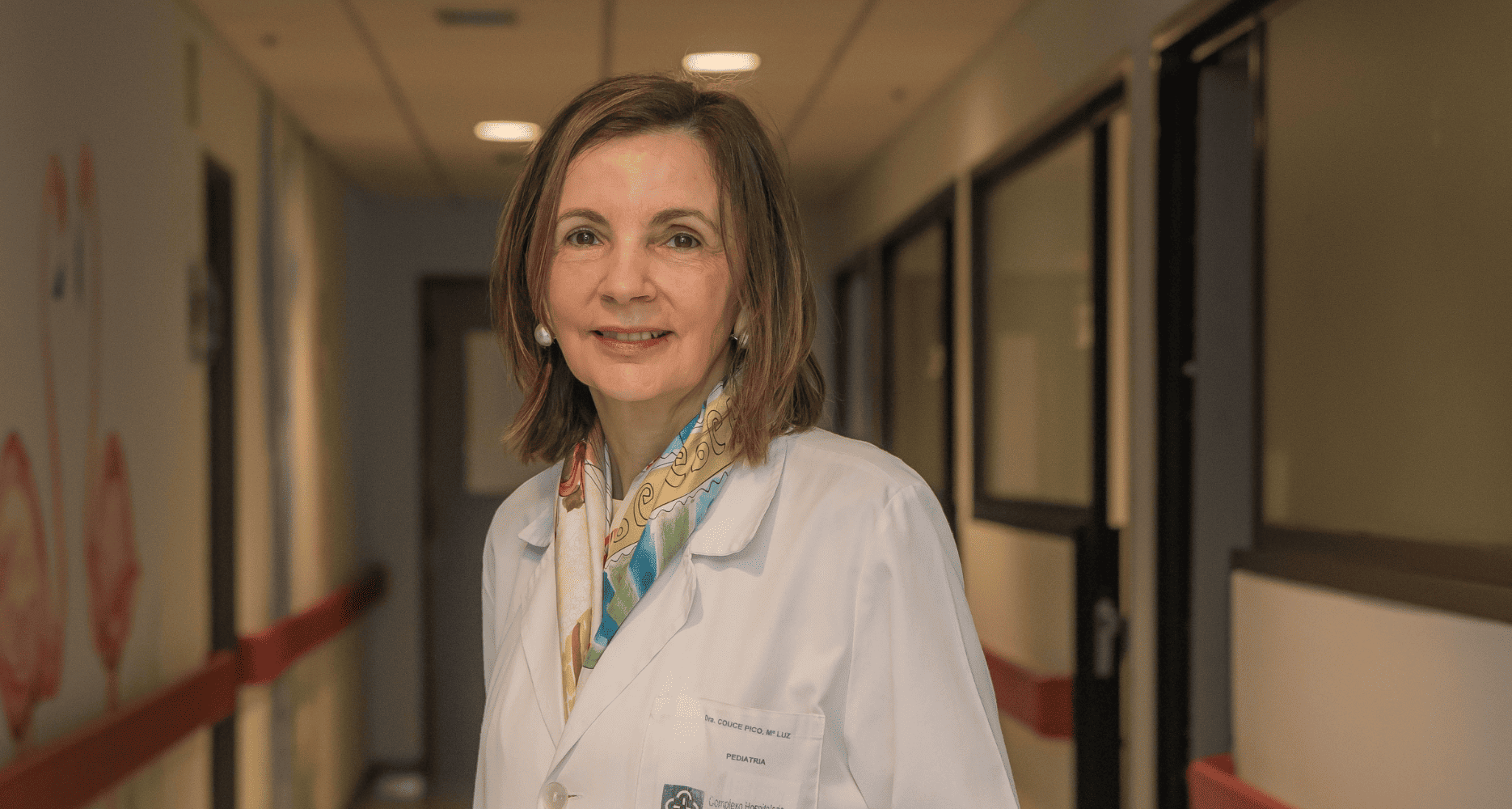
To coincide with World Neonatal Screening Day, observed every June 28, we at AELMHU interviewed Dr. María Luz Couce, a national and international leader in inherited metabolic disorders and one of the most authoritative voices in this field.
The expert, who is the scientific director of the Santiago de Compostela Institute for Health Research (IDIS), takes stock of the current state of neonatal screening in Spain, reviews the progress made in recent years, and analyzes the challenges that will shape the future of a tool she considers “essential for improving the prognosis of thousands of patients.”
For Dr. Couce, the importance of newborn screening is “indisputable.” Its impact has been so profound that it ranks among the major health milestones of recent history: “I have no doubt that newborn screening has been one of the greatest achievements in public health in the 20th century—not only in public health, but also in pediatrics and neonatology.”
Its origins date back more than six decades, when the development of new techniques made it possible to detect diseases such as phenylketonuria at an early stage. Since then, technological and scientific advances have greatly expanded diagnostic capabilities, making newborn screening an essential tool for identifying rare diseases even before the first symptoms appear.
The significance of these programs is reflected in the numbers. As Dr. Couce explains, it is estimated that since their implementation worldwide, some 750 million newborns have been screened through neonatal screening programs, and that more than half a million children have benefited from the transformative impact of treatments initiated in the very early stages of the disease.
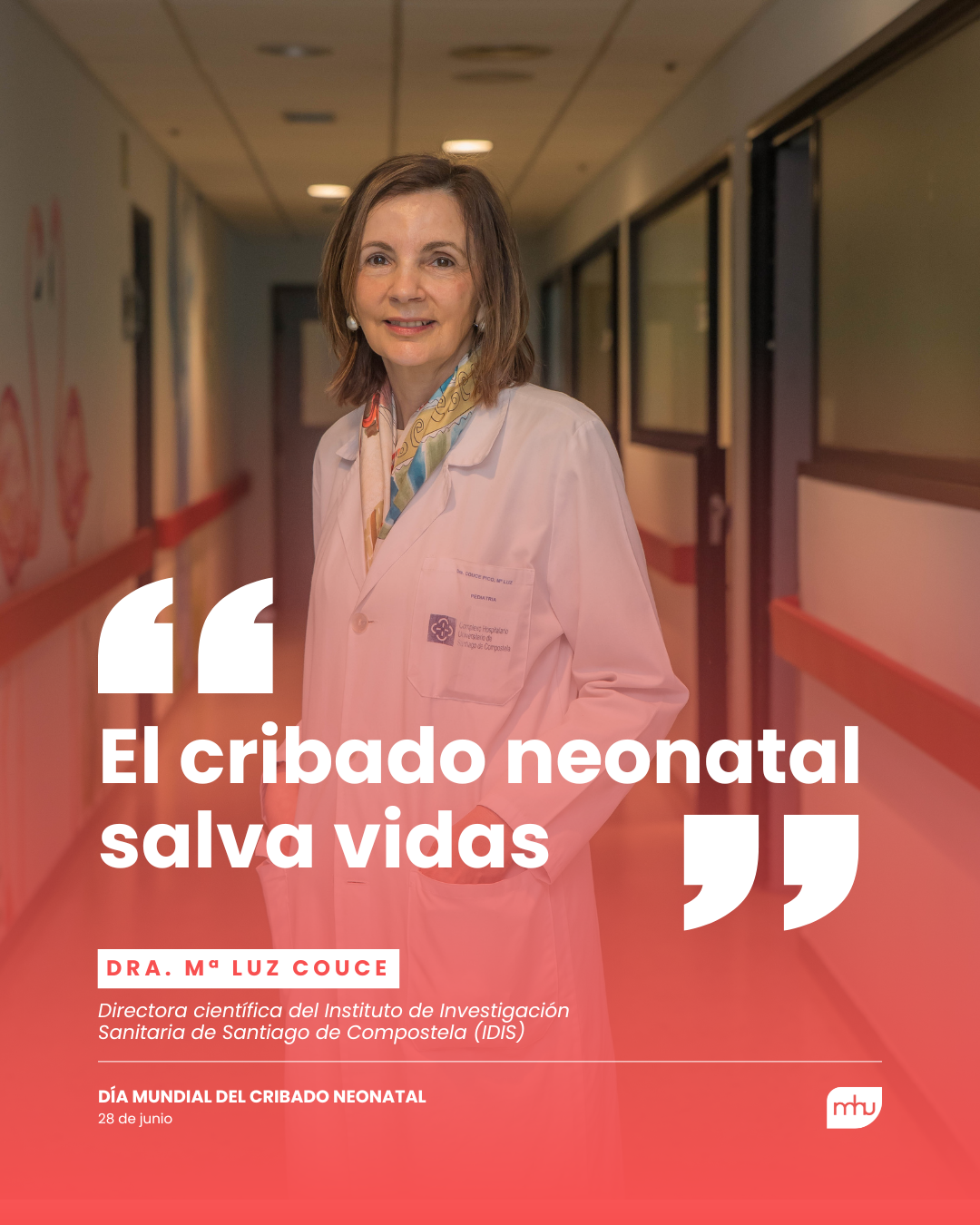
“Newborn screening saves lives. It’s something we need to move forward with and continue to improve,” the expert concludes, based on these global figures.
Continuous progress driven by innovation
The evolution of newborn screening has been closely linked to scientific and technological advances. One of the most significant milestones occurred during the 1990s, with the introduction of tandem mass spectrometry, a technology that revolutionized the diagnostic capabilities of these programs.
Thanks to this method, it became possible to screen for multiple diseases using a single dried blood spot sample obtained through a heel prick test. This advance made it possible to significantly expand the number of detectable conditions and paved the way for today's expanded screening programs.
Dr. Couce notes that the first national regulation establishing a standard panel for expanded newborn screening was approved in 2013 and included only seven conditions. “For years, progress was relatively slow, although some autonomous communities decided to expand their programs by including a greater number of diseases, ” she adds.
In this context, the expert believes that the recent expansion approved by the Ministry of Health represents a significant step forward. “The National Health System’s portfolio has taken a major quantitative leap forward, ” the doctor notes.
The update, approved in April, adds 21 conditions to the Portfolio, thereby strengthening equity in access to early diagnosis throughout the country. However, the specialist notes that “many regions already conduct more extensive screening programs, and the exact number of diseases detected may vary depending on the criteria used to count them.”
Precisely for this reason, she considers the work currently underway to harmonize procedures, definitions, and criteria across regions to be particularly important. Dr. Couce herself participates in the working groups launched by the Ministry to move toward greater standardization of programs, a measure she considers essential for consolidating and strengthening the system.
Changing the prognosis from the first days of life
Beyond the statistics or regulatory advances, for Dr. Couce, the true value of newborn screening lies “in its ability to transform the lives of patients and their families.”
“Early detection makes it possible to begin treatment before the disease causes irreversible damage,which in many cases alters the natural course of the disease,” he explains.
Dr. Couce has observed this trend over decades of clinical experience. Among the examples she recalls most clearly are cases of phenylketonuria that were diagnosed late years ago, when many children developed severe intellectual disabilities due to the lack of an early diagnosis.
The reality today is very different: “I feel proud when I now teach students at the medical school who were diagnosed with phenylketonuria during the neonatal period. Seeing that their development is completely normal fills me with a deep sense of pride. This change exemplifies the potential of early disease detection. What was once considered a disability can now be managed thanks to early diagnosis and appropriate treatment.”
The specialist also emphasizes that neonatal screening not only saves lives and prevents serious complications, but also helps us better understand the progression of many rare diseases.
By identifying patients from birth, healthcare professionals can conduct more accurate follow-ups and gather valuable information about the natural history of these conditions. This makes it possible to “optimize treatments, identify new care needs, and continue to improve the long-term clinical approach.”
“Anything that can improve our children’s prognosis through diagnosis and treatment, we must do it now,”, he argues in this regard.
The heel test: the first step in the entire process
Neonatal screening is often associated exclusively with the heel prick test. However, Dr. Couce emphasizes that this test is merely the starting point of a much broader care process.
The purpose of screening is not to establish a definitive diagnosis, butto identify at an early stage those newborns who are at high risk of developing a particular disease. “Screening detects, it does not diagnose, ” he explains.
Following that initial alert, a diagnostic confirmation process begins to verify the presence of the disease and initiate the necessary interventions. “This ability to anticipate is precisely one of the great strengths of neonatal screening and explains why it continues to be considered one of the fundamental pillars of care for rare diseases, ” he reflects.
The Future of Neonatal Genomic Screening
If biochemical screening has transformed the present, the big question is what the next step will be. For Dr. Couce, the answer is clear: the future lies in the gradual implementation of neonatal genomic screening.
Currently, most of the diseases included in screening programs are detected using biochemical biomarkers. However, there are numerous rare diseases for which suitable biochemical markers are not yet available, even though treatments or interventions capable of significantly improving patients’ prognosis already exist.
In this context, genomic analysis opens up a new avenue for detection. As the doctor explains, this strategy would make it possible to expand the scope of conventional screening and identify diseases for which there are currently no sufficiently effective biochemical detection tools.
She insists that the goal is not to replace the current model, but to complement it. “I believe—and am firmly convinced—that the next step forward today, and the direction we need to take, is toward neonatal genomic screening, complementary to biochemical screening, ” she insists.
The specialist currently leads CRINGENES, one of the most ambitious projects undertaken in Spain in this field. Funded by the Carlos III Health Institute (ISCIII), the study analyzes the feasibility of performing genomic analysis on 2,500 newborns and evaluates its potential for detecting more than 350 rare diseases with pediatric onset.
The preliminary results are “promising” and suggest a diagnostic capability “far superior to that of conventional screening for certain conditions.” However, Dr. Couce emphasizes that more evidence is still needed before considering widespread implementation in the National Health System.
Among the main challenges, he identifies the management and interpretation of genetic data, as well as the assessment of the model's cost-effectiveness. Even so, he remains optimistic about the potential of this new tool.
Visibility, yes, but accompanied by action
To mark World Neonatal Screening Day, Dr. Couce is also sending a message about the importance of continuing to raise public awareness about rare diseases.
He believes it is essential for society to understand the value of early diagnosis and the impact it can have on patients' lives. However, he cautions that awareness alone is not enough.
“I think visibility is very positive, and it’s essential, but we shouldn’t settle for visibility alone, ” he argues.
According to the expert, any awareness campaign must be accompanied by concrete measures that will help continue to improve health care, promote research, and accelerate access to new diagnostic tools. “Visibility is important, but it must be followed by action, ” she says.
In this regard, Dr. Couce highlights the role played by patient organizations, healthcare professionals, researchers, government agencies, and the pharmaceutical industry.
“Only through close collaboration among all stakeholders will it be possible to continue making progress in early diagnosis and improving the prognosis for people with rare diseases. We have a very strong critical mass; we have the foundation to do this. We must keep moving forward, not let our guard down, and always work together, guided by the principle of equity,” he concludes.