
07/11/2025
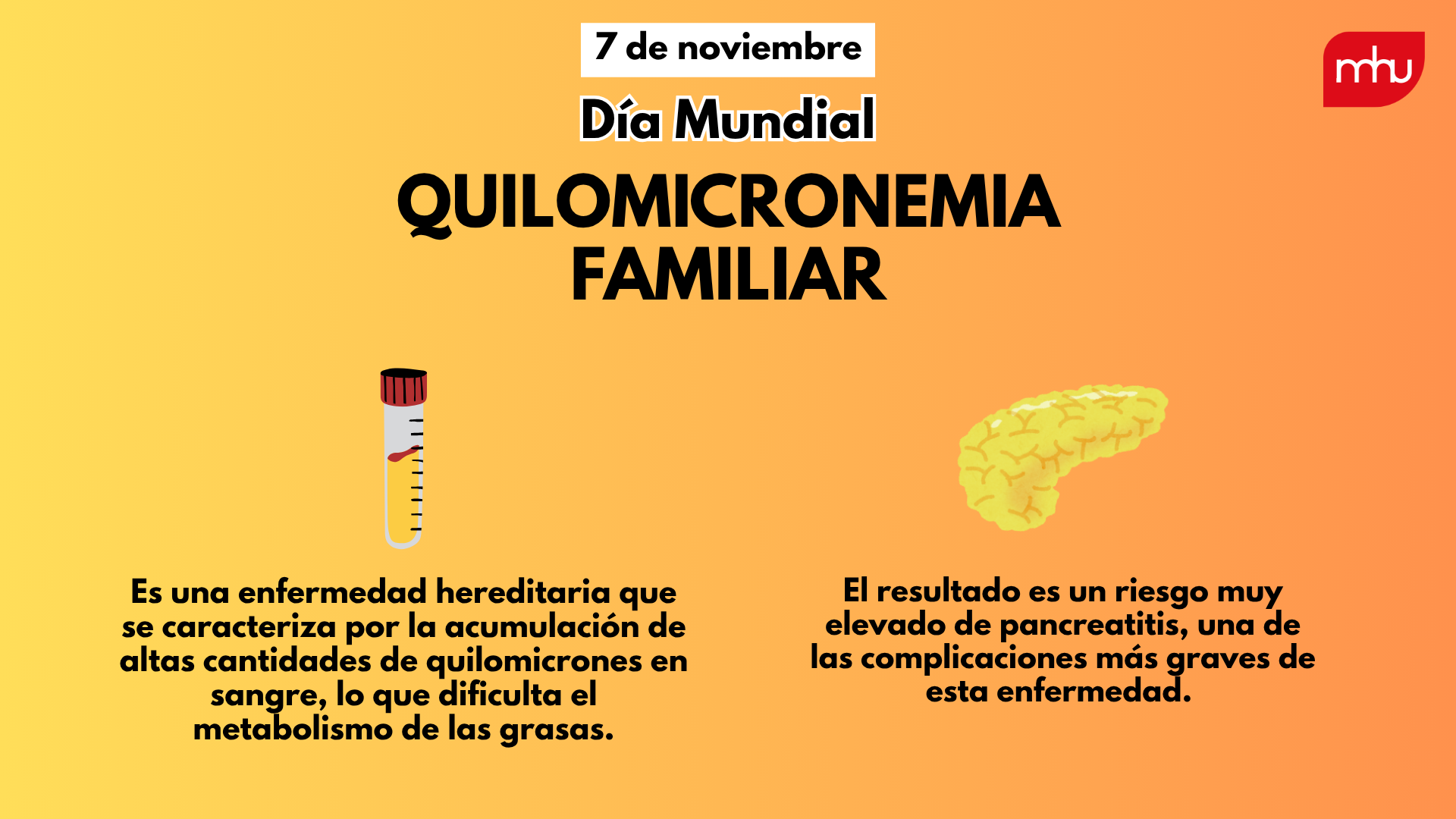
Familial chylomicronemia chylomicronemia syndrome (FQS) is an inherited disease characterized by the accumulation of high amounts of chylomicrons in the blood, which impairs fat metabolism and can cause abdominal pain and pancreatitis.
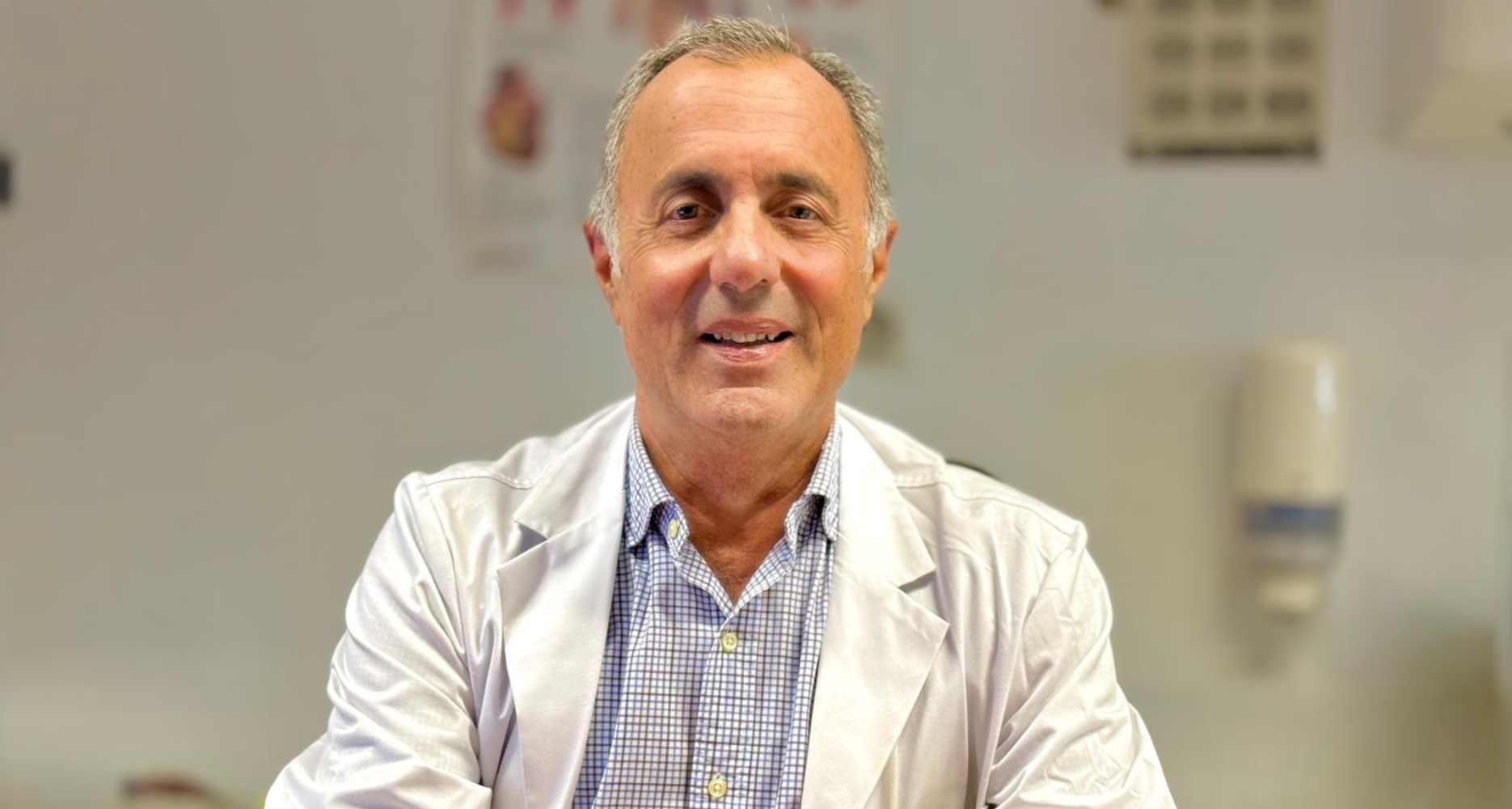
To learn more about this disease on the occasion of its World Day, which is celebrated this Friday, November 7, the Spanish Association of Orphan and Ultra-Orphan Drugs(AELMHU) has interviewed Dr. Ovidio Muñiz, assistant physician of the Internal Medicine Department and head of the Lipids and Vascular Risk Unit of the Virgen del Rocío Hospital in Seville.
Despite its high impact on the quality of life of patients, familial chylomicronemia is a disease unknown to a large part of society, and is considered ultra-rare, affecting only one or two out of every million inhabitants worldwide.
"The fact that it is recessive, that is, that both parents have to be carriers of the mutations in the gene that causes the disease for it to manifest itself, makes the pathology extraordinarily rare, very rare," explains Dr. Muñiz.
In most cases, the gene involved in this pathology encodes lipoprotein lipase (LPL), the key enzyme that allows triglycerides to be metabolized. "Parents who transmit the variant do not have the disease, but simply carry it, but do not express it," Muñiz explains. "The person who receives that variant from both parents does express the disease and what it implies is a permanent failure in the clearance of chylomicrons."
For those who suffer from it, its rarity does not alleviate the burden of living every day with a metabolic disorder that conditions diet, social life and even mental health. The expert, a national reference in the study of this and other similar related diseases, precisely details the keys to this genetic syndrome characterized by an extreme elevation of triglycerides transported in chylomicrons, fat-rich particles that come from the intestine.
"Chylomicronemia is a syndrome based on an extreme elevation of triglycerides that are transported in the chylomicrons, since these particles are not capable of yielding triglycerides to the peripheral tissues and continue to circulate for much longer than normal," the doctor points out.
What happens in the organism
Under normal conditions, chylomicrons are eliminated a few hours after a fatty meal. In healthy people, "chylomicrons disappear from the circulation a few hours after the last fatty meal," says Muñiz. However, in those suffering from chylomicronemia, the particles "continue to circulate" in the blood for much longer, causing high levels of triglycerides in the blood. high triglyceride levels which can easily exceed 2,000 or 3,000 milligrams per deciliter on an empty stomach.
The problem does not distinguish between types of fat: "It doesn't matter what type of fat is ingested. It is not just saturated vegetable or animal fats. Any fat, including fat from oily fish or olive oil, increases triglyceride levels in these patients."
The result is a very high risk of pancreatitis, one of the most serious complications of this disease. "Pancreatitis is a big deal because an episode of pancreatitis could be compared to a fire," warns the doctor. "It can become devastating."
Recurrent abdominal pain and hospital admissions thus become part of the story for many patients. "Abdominal pain and pancreatitis accompany these individuals virtually their entire lives, unless they go on an extraordinarily difficult diet," he comments.
Diagnosis: suspecting the invisible
As in many rare diseases, diagnosis begins with clinical suspicion. Persistently high triglyceride levels and a history of pancreatitis from an early age are the first warning signs. "Before doing any tests, the physician has to suspect this disease," Dr. Muñiz stresses.
Other characteristic signs are eruptive cutaneous xanthomas, small yellowish deposits that appear on the skin when triglyceride levels are very high.
Definitive diagnosis, however, requires a genetic study. "With modernization and access to genetic studies, we go straight to studying genetics," he explains. If pathogenic variants are identified in any of the five genes involved, the diagnosis is confirmed.
When the variants detected are not described in the medical literature, functional tests for lipoprotein lipase activity are performed. "This is a complex technique that is done at a few sites. When a patient, after administering heparin, is not able to increase his lipoprotein lipase activity, we can say that his activity is decreased or null," he details.
In even rarer cases, variants in different genes may coexist, known as double heterozygotes, which may also produce familial chylomicronemia syndrome in some patients.
A very difficult diet to follow
If in the Mediterranean culture "everything is celebrated by eating", as the specialist reminds us, life on a fat-free diet becomes a continuous challenge. People with familial chylomicronemia should limit their fat intake to less than 10% of daily calories, which is equivalent to less than 20 grams of fat per day.
"When you say low-fat diet, people think it's a low-fat diet, like the ones that are sometimes prescribed for weight loss. But this is a virtually fat-free diet," Muñiz clarifies. "Our Mediterranean diet has between 40 and 45% energy from fat. These people have to take less than 10%."
The specialist illustrates with examples what this means in practice: "These people can have eggs, yes, but they cannot have a fried egg. They can't have an omelet either, because you have to use oil or butter. They have to have a boiled or soft-boiled egg. Nor can they have legumes as they are usually prepared in Spain, nor gazpacho or salmorejo with olive oil. All of this can be done one day. The problem is that it has to be done every day".
Strict adherence to the diet is not optional. Skipping restrictions, even slightly, can trigger severe abdominal pain or pancreatitis. "Patients know that if they skip the diet they are automatically going to have abdominal pain or, even worse, pancreatitis. It's a really hard life," the expert laments.
Complications and burden of disease
Pancreatitis not only causes pain and hospital admissions; it can leave permanent sequelae. "A person who loses the tail of the pancreas, where insulin is synthesized, often becomes insulin-dependent diabetes in a short time," he explains. In the most severe cases, it can lead to exocrine pancreatic insufficiency, inability to digest fats or even death.
"We have patients who have had more than 30 pancreatitis, and that's not the record," he says. "Some don't even go to the hospital anymore for the first episodes of pain because they know what it is and stay home, dieting and taking painkillers."
Over time, recurrent pancreatitis can lead to calcifications and chronic damage to the pancreas, affecting both digestion and glucose control. "The pancreas is a very important organ not only in insulin secretion, but also in fat digestion," reminds the doctor.
A life of restrictions
Beyond the clinical aspects, familial chylomicronemia has an enormous impact on daily life. Dietary restrictions not only limit eating, but also social life.
"These people are very limited in their sociability, in their mood, in their way of living day to day," Muñiz sums up. "I sometimes say that it is more difficult to change their diet than their religion, because it is truly a very hard life for these people."
Patients must plan every outing, every meal away from home and often bring their own food to avoid risks. "They have to look long and hard at a restaurant menu; many times they can't take anything that's there. Or they can't go to someone else's house unless they bring their own food," he explains.
Psychological and social support is also essential. Many patients face frustration, isolation or anxiety when faced with the impossibility of participating in daily activities related to food. "It is important that they do not face the disease alone," notes the doctor, who highlights the work of associations and support groups that help to share experiences and practical advice.
"Having multidisciplinary teams that include nutritionists, psychologists, etc. is essential to improve adherence and quality of life," he adds. The specialist insists that knowledge and dietary education can make a difference: "The better they understand their disease, the more tools they will have to live with it".
Even so, the doctor stresses the importance of hope and research. Knowing the disease, diagnosing it correctly and advancing in new approaches is, he says, "a right that patients have". And he adds: "Knowing about this ultra-rare disease is also a reason to encourage research and give some light and hope to these patients and their families.