29/04/2025
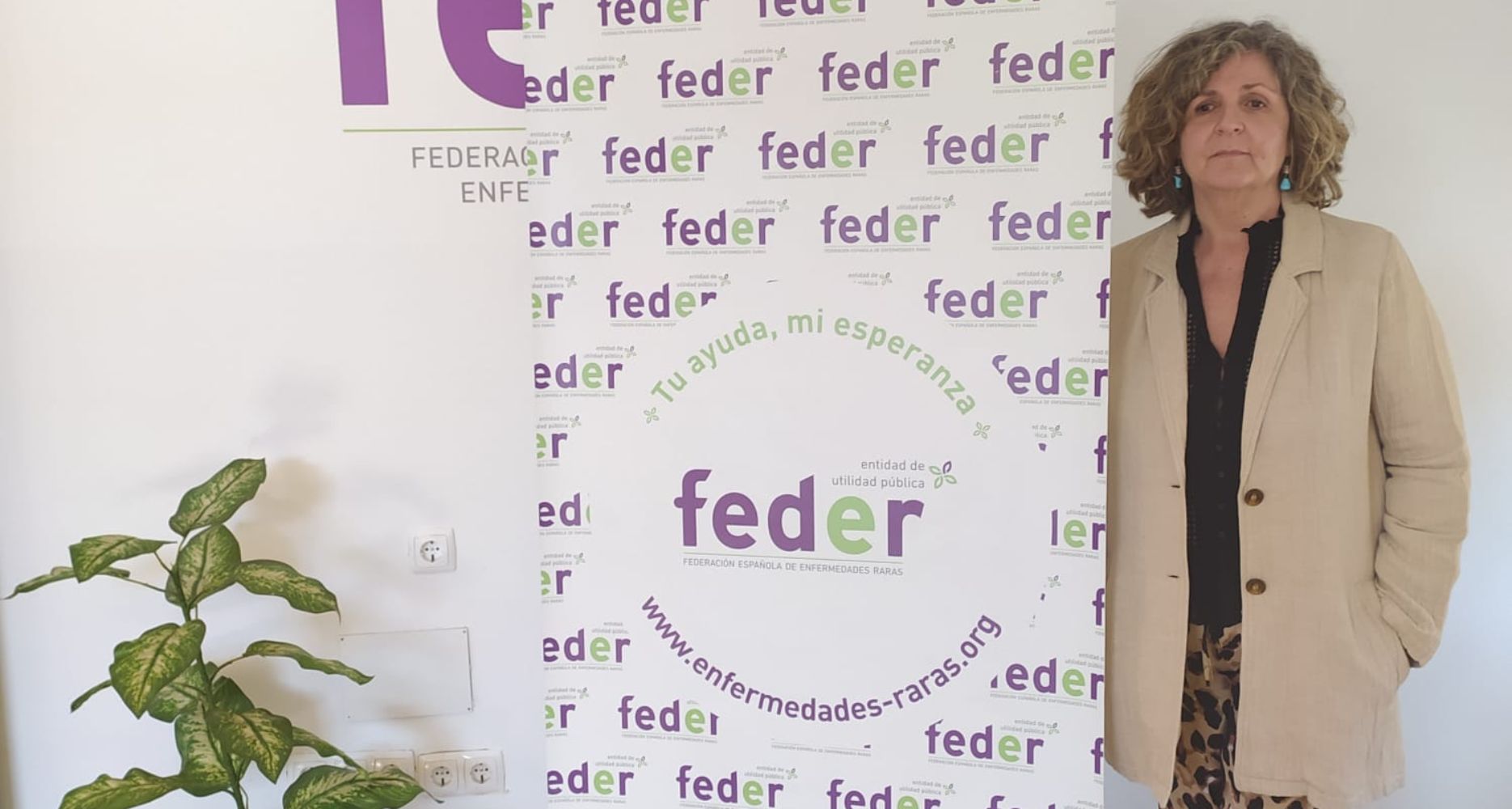
The World Day of People without Diagnosis wants to make visible the difficulties faced by the thousands of people around the world who still do not have a clear diagnosis for their condition. In this context, we spoke with Estrella Mayoral, social worker and head of the direct care axis at the Spanish Federation of Rare Diseases(FEDER), about the crucial role of the organization in the care of these cases. She has been with the Federation for almost 25 years and has been instrumental in the creation of the Information and Guidance Service on Rare and Undiagnosed Diseases.
Requests from FEDER
FEDER’s work with undiagnosed individuals focuses on two key areas. First, social transformation, which seeks to change the way society, government agencies, and healthcare professionals approach rare diseases, delayed diagnosis, and treatment. “One of the key points in our ten-point plan is early diagnosis, which not only advocates for improved identification of rare diseases but also includes the push for a neonatal screening program that covers many more conditions and ensures equity nationwide,” explains Estrella.
Neonatal screening, a test performed on newborns, can detect metabolic diseases such as phenylketonuria. This test prevents children from developing disabilities, such as intellectual disability, or experiencing worsening of their disease through specific treatment from birth.
Although the Ministry of Health has begun to make progress in this area, implementation remains uneven across the various autonomous communities. Mayoral emphasizes the importance of “broader and more uniform screening,” which would enable the early detection of rare diseases in all regions of Spain. “The current system is inefficient because it relies too heavily on the willingness and budgets of each autonomous community,” he laments.
Another important development promoted by FEDER is the creation of the ORFA code 616874, which identifies cases that remain undiagnosed after a thorough investigation. “This code is essential for determining how many undiagnosed cases there are in each autonomous community and for studying them properly. If it is not applied, we cannot identify and address these cases efficiently,” Estrella emphasizes. “That is why we ask all clinicians to please start using this code in their reports.”
Second, Direct Care, which through its services seeks to promote the diagnosis of those who consult with the Federation; to this end, since 2004, FEDER has worked to create a database that includes people without a diagnosis, with the goal of “bringing these cases together and promoting the attainment of a diagnosis for these individuals.” Over the years, the organization has assisted nearly 4,000 people without a diagnosis.
The lack of knowledge about the scale of the problem is one of the biggest barriers. “Without data, we can only make estimates, which makes it difficult to plan effective health policies,” he adds.
But in this mission, FEDER does not act alone in its fight to secure diagnoses for people without a diagnosis. “We work closely with medical professionals and researchers through programs such as those at the IIER (ERv Research Institute), Spain UDP, and the IMPACT program, which are focused on accelerating diagnoses,” and ENOD, CIBERER’s program for undiagnosed cases, explains Estrella. In addition, the organization collaborates with ORPHANET by providing diagnostic support tools to people in Ibero-America, who often face greater difficulties than those in Spain. FEDER also has a Scientific Advisory Committee that assists with undiagnosed cases referred to the organization.
Diagnosis and gender
In fact, regarding the time it takes for a person to receive a diagnosis, Estrella highlights an alarming statistic: “The average diagnostic delay in Spain is six years, according to the latest study conducted in 2023, ‘Determinants of Diagnostic Delay.’” We’re already talking about a diagnostic delay as early as the first year after symptoms begin, but six years is an unsustainable length of time given the progression of the disease and the psychosocial consequences this situation causes for the affected person, their family, and their immediate circle.”
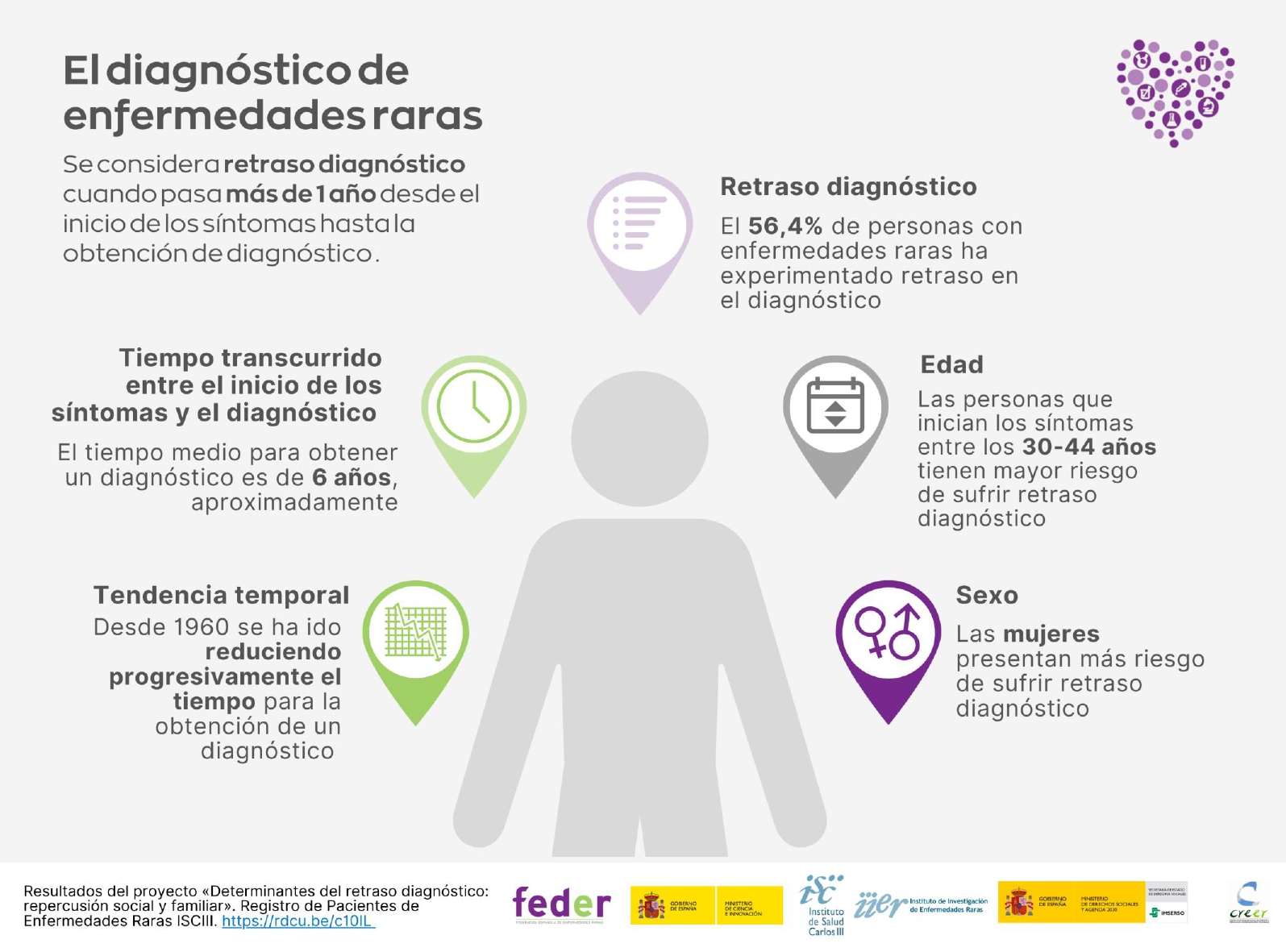
This delay has a devastating impact on people’s lives. “When someone doesn’t have a diagnosis, they experience a sense of loneliness and uncertainty; they don’t understand why they can’t get answers from the healthcare system and can’t access appropriate treatments. This can even lead to treatments being administered that worsen their condition because they’re the wrong ones,” explains Estrella.
FEDER, as part of this same effort to promote research and improve diagnostics, also advocates for more inclusive and equitable research. “In research on rare diseases, the male body has always been the standard of reference, which leads to inequality in the diagnosis and treatment of diseases that primarily affect women,” she says.
“Once again, we are faced with the same gender gap that, unfortunately, continues to exist in medical diagnosis. It takes longer for women to be diagnosed than for men, even though a woman’s body is much more complex—both hormonally and because it gives life—yet the male body has been used as the reference point in research.” This observation—as clear as it is troubling—highlights the disparities women face in the healthcare system, which result in delayed diagnosis, as is also evident in the study “Determinants of Diagnostic Delay.”
Disability
The situation worsens when we talk about disabilities related to rare diseases. Mayoral explains that “the degree of disability is not necessarily linked to a disease, but rather to the difficulties a person faces in carrying out basic and instrumental activities of daily living.” This is a crucial concept that is often misunderstood: “A person who, for example, suffers an accident and loses a leg is not sick, but does have a disability that limits their daily life.”
As for the possibility of obtaining a disability rating without a diagnosis, the answer is yes. “It is not necessary to have a diagnosis to obtain a disability rating. If a person has difficulty performing basic activities, they can be recognized as a person with a disability.”
A clear example of this is the metabolic disorder known as “fish odor,” or trimethylaminuria. People with this condition have no difficulty performing daily activities, but they face significant social discrimination due to the strong body odor they emit, which limits their participation in society, both in the workplace and in social settings. “These individuals face a clear limitation in their participation, something that until now had not been taken into account when assessing their disability,” notes Mayoral.
FEDER's fight does not stop there.. The organization offers support not only to those seeking a diagnosis, but also to those who have been diagnosed with a low-prevalence disease and require psychological care, social care, education, legal guidance or support in applying for disability status. "FEDER's direct care services are public utility services that are available to affected people, their families, professionals, students who need support, guidance and / or information," says Estrella.
On this World Day for People Without a Diagnosis, FEDER—through Estrella—calls on society to “be respectful of those who are struggling to obtain a diagnosis and not to be swayed by prejudice or uninformed opinions.” Furthermore, it advocates for greater empathy toward those facing these complex situations, urging people to “listen with understanding and without judgment, just as we would like to be treated if we were the ones affected.”
If you have any questions, FEDER's support team is at the disposal of affected people and their families through these emails:
sio@enfermedades-raras.org psicologia@enfermedades-raras.org