

24/09/2025
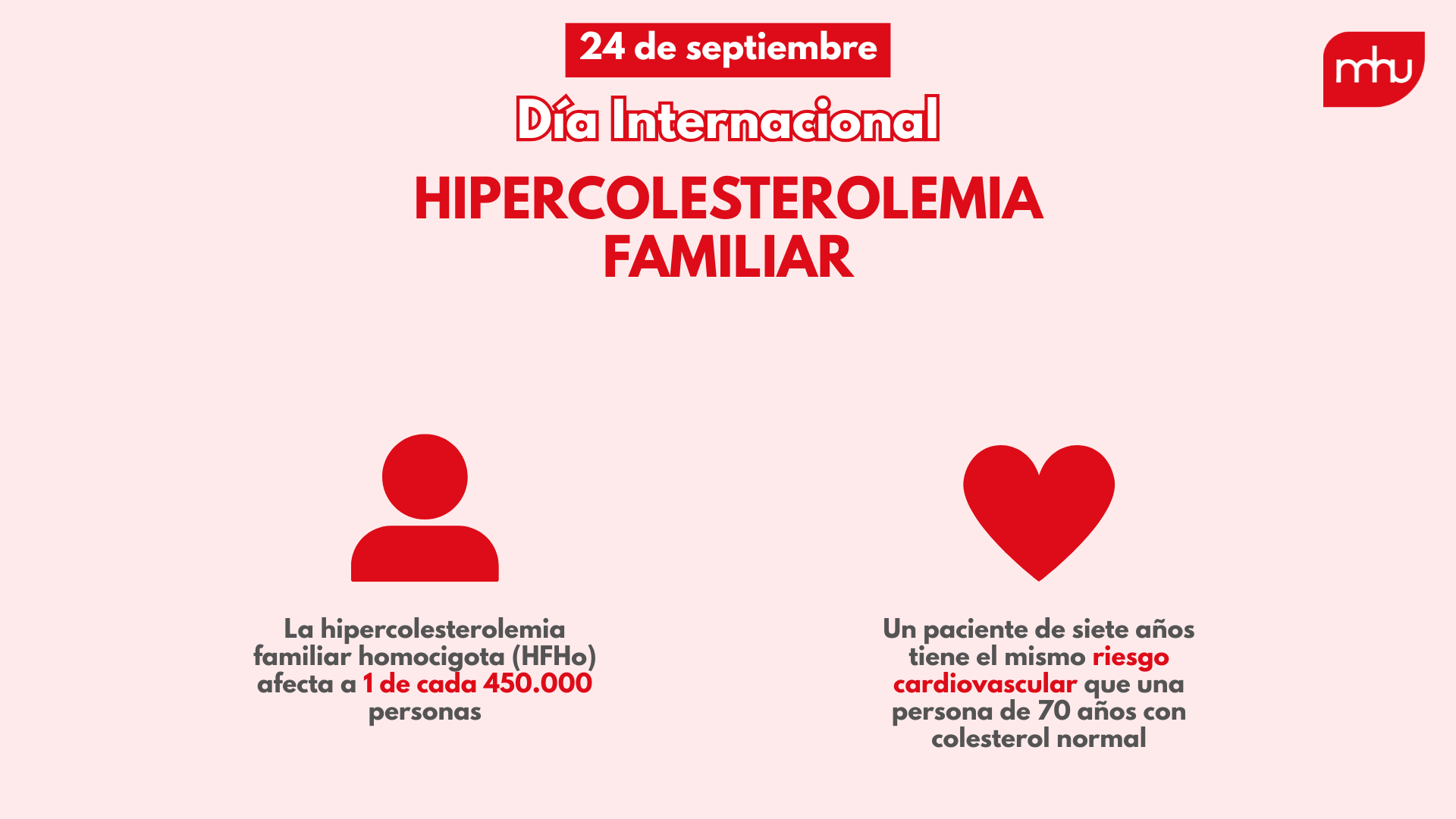
September 24 marks the commemoration of the International Day of Familial HypercholesterolemiaThe most common genetic disease, which affects some 30 million people worldwide. However, this pathology has an even more serious and less well known and common variant, the homozygous variant, which is considered an ultra rare disease with a prevalence of 1 in 450,000 people.
The main difference between the two lies in the number of defective copies of the gene that causes the disease, explains Dr. Lluis Masana Marín, one of the most important scientists in the study of this disease both in Spain and internationally, in an interview with AELMHU.
In homozygous familial hypercholesterolemia, known as HFHo, both parents pass on a defective copy of the gene, resulting in two defective copies; while in the more common heterozygous, only one is inherited. This genetic difference results in higher blood levels of LDL cholesterol (the so-called "bad cholesterol"), as well as a more severe clinical situation from an early age.
"This excess, caused mainly by the absence or dysfunction of the LDL receptors responsible for eliminating cholesterol from the circulation, manifests itself from very early stages of life. While the heterozygous form affects 1 in 250 people and involves a partial decrease in the receptors, the homozygous form, much less frequent, involves the inheritance of mutations from both parents, resulting in an almost total lack of these 'exit doors' of cholesterol," explains Dr. Masana, emeritus professor of Medicine at the Universitat Rovira i Virgili and former director of the Vascular Medicine and Metabolism Unit at the Sant Joan de Reus University Hospital.
Very high cholesterol since childhood
In these patients with the homozygous form, very high cholesterol remains in the plasma for a long time, accumulating chronically. The consequence is a rapid development of atherosclerosis from infancy. To exemplify this, the expert recalls a recent case: a girl barely three months old who had total cholesterol levels above 1000 mg/dl, an "extraordinarily high" figure, since at that age they are usually in a range below 100 mg/dl.
The consequences of this early accumulation are life-threatening, with cases of infarction even during childhood, due to occlusion of the coronary arteries, which prevents normal blood flow to the heart muscle (myocardium), or aortic stenosis (narrowing of the left ventricular outflow of the heart).
“As a result , the cardiovascular risk that a person with normal cholesterol accumulates by age 70 is reached by a patient with FH at age seven. In fact, there are documented cases of deaths from heart attacks before the age of 10,” explains Masana, author of numerous publications and consensus guidelines in this field and former president of the Spanish Society of Arteriosclerosis (1999–2004).
In this context, awareness of the school and family environment is key. "Although these children do not present visible symptoms on a day-to-day basis, they must rigorously comply with treatment and be monitored regularly, as serious events, even sudden death, can occur in patients in apparent good health," warns the doctor.
Physical exercise, not smoking and a healthy diet also play a fundamental role in the good control of the disease: "Although the direct impact on cholesterol in these children is limited due to the strong genetic component, it should be remembered that a healthy diet, such as the Mediterranean diet, is cardioprotective, both for those affected and for the general population".
Early diagnosis is key
One of the biggest challenges of the disease remains early diagnosis. In fact, it is frequently misdiagnosed, and is currently underdiagnosed and undertreated: "One of the things we experts in this disease are very clear about is that the sooner treatment is started, the better it is for the patients. Every year that is lost is a delay in improving the situation of these children".
Although it is a pediatric disease, it is often not detected until adulthood, by which time irreversible damage has already occurred. This is due, in part, to a lack of awareness about cholesterol management in childhood. According to Dr. Masana, cholesterol testing in children is sometimes even discouraged—as is the case in Catalonia—out of fear of overburdening the healthcare system, a stance he describes as a “tremendous mistake.”
To reverse this situation, the specialist advocates carrying out cholesterol controls in children, especially in those whose parents have very high cholesterol and are receiving treatment, as this can be a warning of the disease.
He also considers the implementation of screening programs to be key, whether universal, measuring cholesterol in all children at around 9 years of age, or opportunistic, requesting the analysis when a child goes to the pediatrician for any reason. The expert points out that, in both cases, the detection of elevated levels should lead to a more in-depth investigation of each case.
The first symptom of very high cholesterol, even in patients with homozygous familial hypercholesterolemia, is usually very severe disease. But the expert recalls that in these more severe patients, an early warning sign may be the appearance of skin lesions. According to Dr. Masana, many children with HoFH come for consultation after being referred by dermatologists who detect yellowish spots on elbows, buttocks or knees. These lesions, known as xanthomas, appear because cholesterol, unable to be eliminated, is deposited in tissues such as the skin or tendons.
A promising future
For a long time, the standard treatment has been LDL-apheresis, a kind of cholesterol 'dialysis'. It consists of drawing the patient's blood, filtering it to remove LDL particles and returning it to the body. This procedure, although effective in reducing cholesterol in a timely manner (60-70%), must be repeated frequently, in some cases on a weekly basis.
Its impact on the quality of life—both for the children and their families—is significant. “For some patients, more than two sessions a month are required, which has a massive impact on their daily lives, ” the specialist acknowledges.
Fortunately, recent scientific advances have opened up new therapeutic avenues that have brought about a “paradigm shift .” “With the current approach, it is possible to achieve acceptable cholesterol levels that allow patients to lead normal lives. Although treatment must be maintained for life, affected children can fully develop their physical, cognitive, and social abilities, provided that lipid levels are adequately controlled,” says the doctor.
For Dr. Masana, the outlook for this pathology is "hopeful", both in terms of patients' quality of life and in terms of research. "Advanced therapies, such as gene therapy, are emerging as a possible long-term solution. The possibility of directly correcting the genetic defect responsible for the disease is being explored by many research groups," he adds.
Homozygous familial hypercholesterolemia remains an extremely complex disease, but scientific knowledge and clinical resources have advanced significantly in recent years. According to Dr. Masana, however, the challenges remain the same: to detect the disease as early as possible and treat it without delay to offer patients the opportunity for a long, full and healthy life.