
27/10/2025
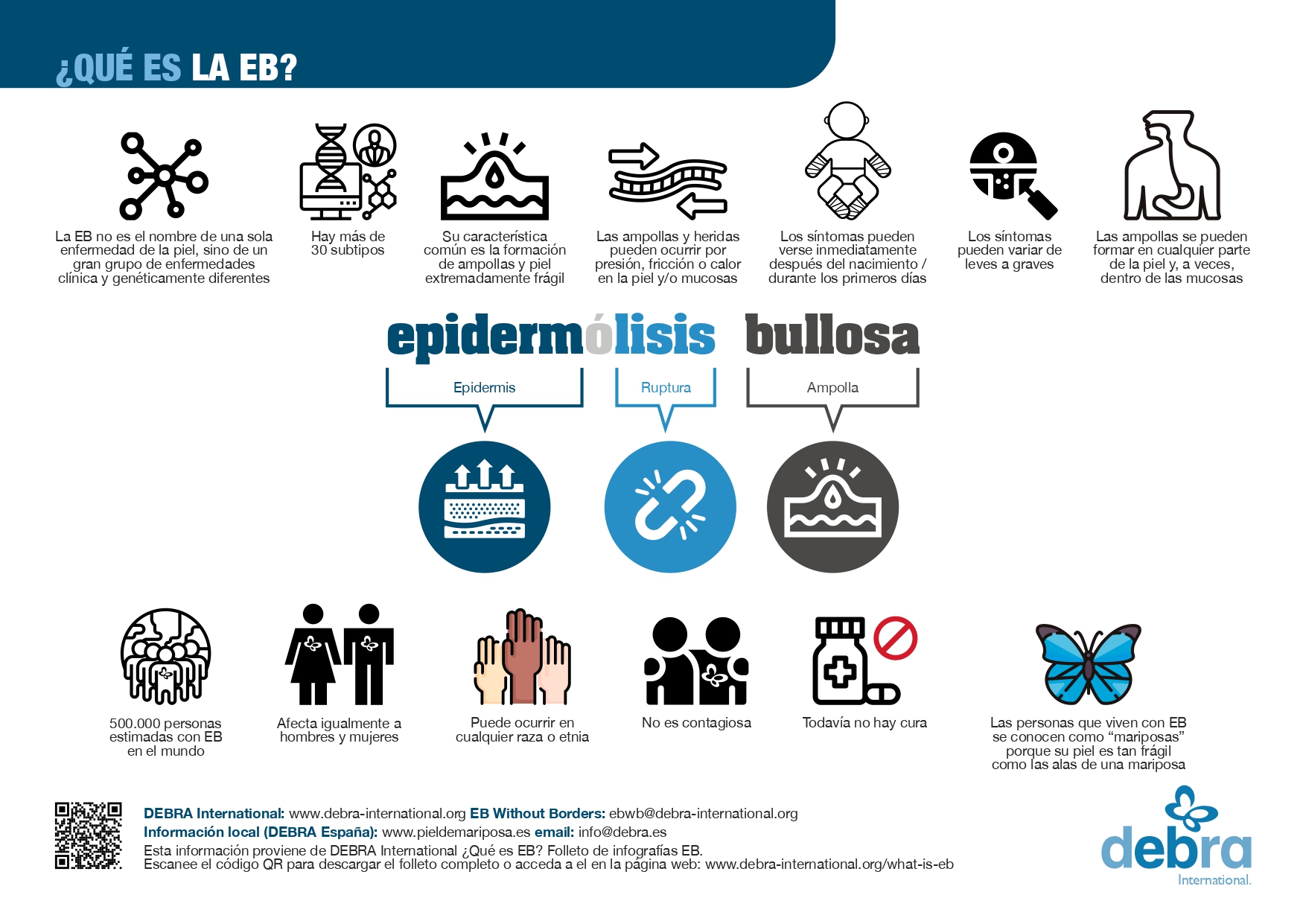
The epidermolysis bullosaalso known as "butterfly skin", is a rare disease characterized by extreme fragility of the skin and mucous membranes. In affected individuals, a simple rubbing, minimal pressure or even clothing can cause blisters and painful wounds.
In Spain, it is estimated that around 500 people live with this pathology, which is part of the group of so-called rare or infrequent diseases, and which profoundly affects not only the patient, but also his or her family environment.
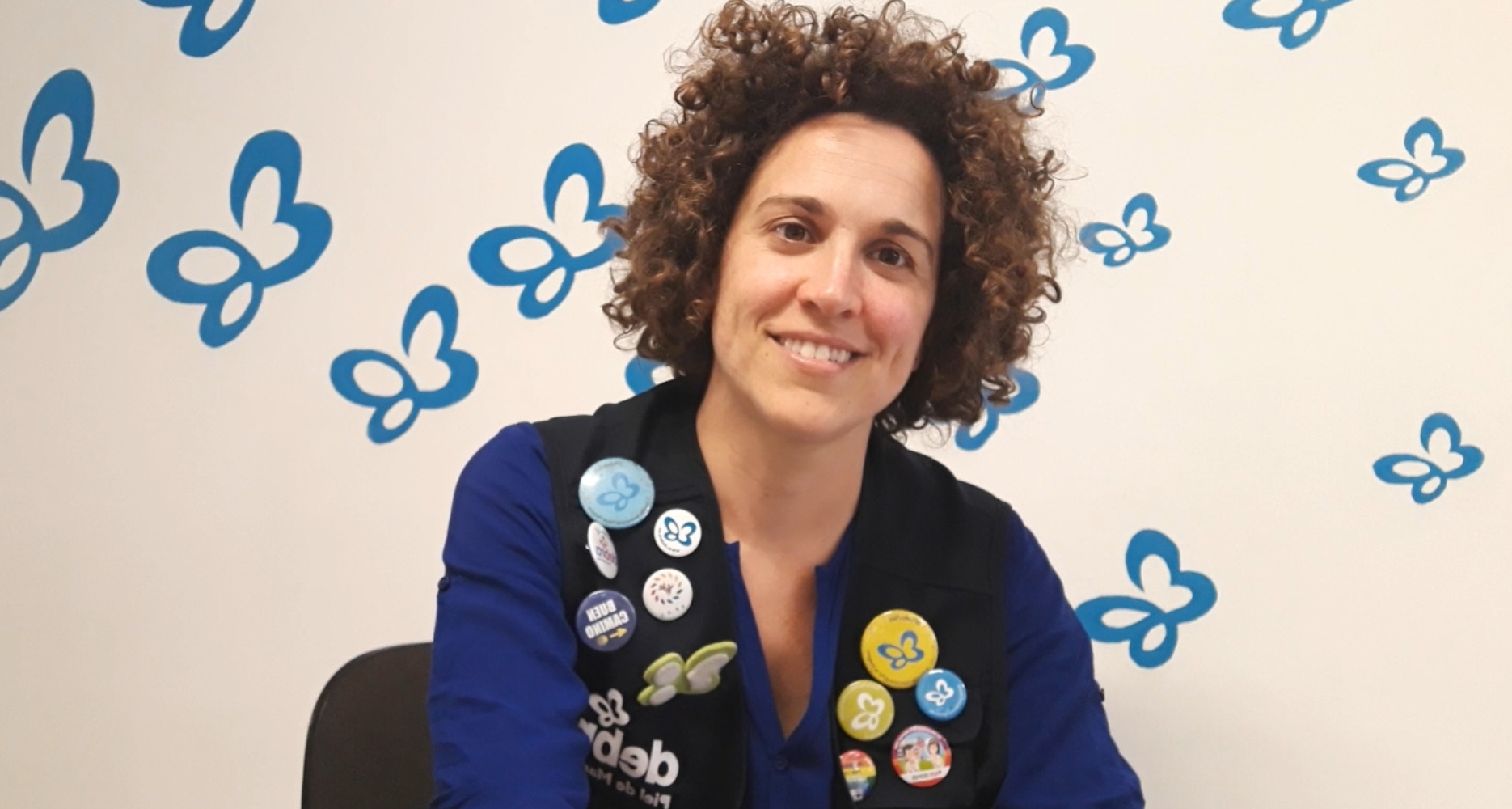
On the occasion of the World Day of this pathology, and to understand the reality of those living with epidermolysis bullosa and the work carried out by the DEBRA Butterfly Skin Association, we have interviewed Natividad Romero Haro, nurse and coordinator of care and training activities of the entity.
For more than 17 years, she has been accompanying more than 300 affected families throughout Spain, combining assistance, training and public awareness. Her involvement with butterfly skin was almost accidental. "I started DEBRA in 2008, right after finishing my nursing degree. I didn't know about the disease. I fell in love with the cause from the very first moment. I learn day by day from our families, and for me it is a gift to be here," she recalls.
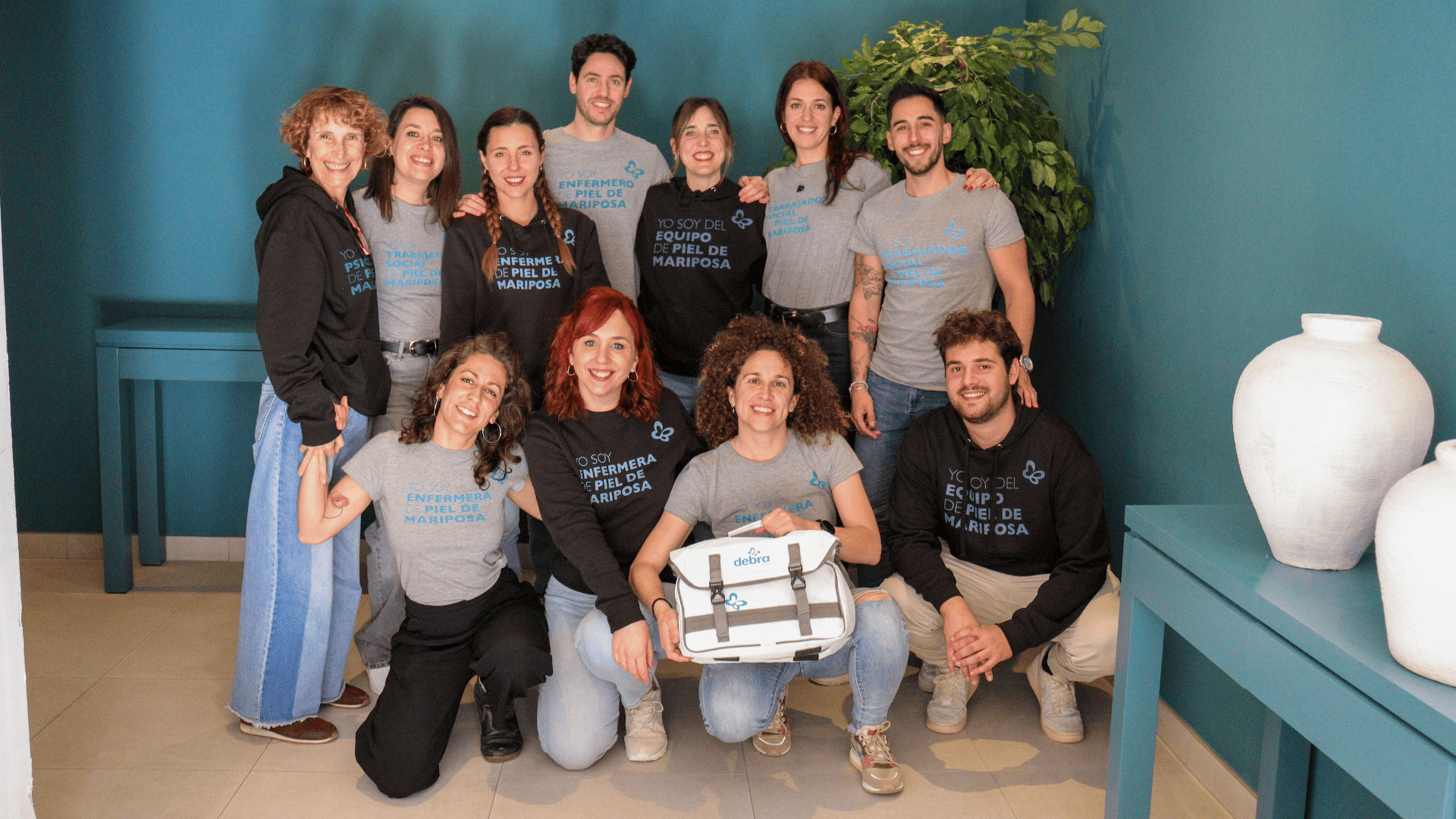
Since then, she has developed her work as a nurse and, in recent years, as coordinator of a multidisciplinary team formed by nurses, psychologists, social workers, etc. in which they address all aspects of this genetic and chronic disease.
Butterfly skin: what is it and what causes it?
The skin has different layers and, between them, there are proteins that act as glue, making the skin resistant to shocks and friction. However, people with butterfly skin lack some of these proteins, so they must bandage their body almost daily to protect wounds and blisters caused by the slightest friction.
Genetics and heredity also play a major role in epidermolysis bullosa. If both parents are healthy carriers, there is a 25 % chance of passing on the mutated gene to their child, but if one parent has butterfly skin the risk rises to 50 %. However, a 'de novo' mutation can also occur, in which it arises spontaneously even though neither parent is a carrier or has the disease.
The pathology has different types (simple, junctional, dystrophic and Kindler) and more than thirty identified subtypes, which makes the severity vary greatly among affected individuals. In most cases, the disease manifests itself from birth, with the appearance of spontaneous blisters or after minimal contact. These visible signs lead to early diagnosis, although the approach is still palliative.
"In the most severe cases, complications can go beyond the skin: joint retractions, fusion of the fingers, esophageal stenosis or nutritional difficulties can occur. As children grow older, new challenges are added," Natividad explains.
Other manifestations of the disease include: anemia, syndactyly (fusion of fingers and toes), difficulty swallowing, malnutrition, constipation, cardiomyopathy, renal failure, carcinomas, among others.
A disease that marks everyday life
For all these reasons, the daily life of a person with butterfly skin is very conditioned: "The cures, which can last two hours a day, require specific materials and very careful handling. The wounds hurt and the process is long and demanding, both for the patient and the caregivers."
Adaptations are also necessary in school and in nutrition. Some children cannot do physical education or eat certain solid foods because they cause internal injuries. "Every detail is measured and adapted. It is a disease that affects the whole family," Natividad stresses.
Likewise, the arrival of adulthood poses new challenges: "The difficulties for labor market insertion are important, especially in severe cases. They have to focus on very specific sectors, without significant physical activity, perhaps in more administrative tasks. And even then, the job has to be adapted because of the resulting limitations".
In milder types, the problem can be social misunderstanding: "Sometimes the disease is not seen, but the pain and limitations are there. There are people who cannot walk or work standing up because of the blisters, and the lack of understanding from the environment causes them great suffering. Many times people feel rejected because the environment does not understand their situation. They tell them: 'you can't see anything,' but maybe their feet are full of blisters and that day it is impossible for them to walk or to stand up in a store.
Natividad Romero sums up this reality clearly: "There are many things to take into account, and the disease has a big impact on the family's daily life". In addition, there are hospital admissions due to infections or surgery. "It really conditions the whole life of those who suffer from it," he says.
Comprehensive support from birth
Because of these problems of various kinds, DEBRA's mission is not only to take care of, but also to to accompany, educate and raise awarenessWe want patients to have access to dignified and adapted care, but also for society to understand what it means to live with such fragile skin.
In this regard, one of the association's most emblematic projects is "Nacer con piel de mariposa" (Being born with butterfly skin), which guarantees immediate support when a baby is born with the disease in any hospital in Spain. The aim is twofold: on the one hand, to offer support and guidance to the newly diagnosed family; on the other, to advise healthcare professionals who are faced with such a case for the first time.
"Since this is a disease of low prevalence, in most cases the professionals have never seen a previous case, and the management is complicated. A nurse and a psychologist from our team travel to accompany the family and advise the professionals, since handling the newborn requires extreme care, as a simple gesture, such as picking up the baby in the usual way, can cause blisters or wounds," explains Romero.
Support continues at home after discharge from the hospital and throughout the different stages of life. "At school, for example, we train teachers and students to understand the disease and know how to act. It is essential for the well-being of the children and their families that they can integrate and feel safe," she adds.
DEBRA also intervenes at key moments such as surgery or hospital admissions, advising medical teams on how to adapt standard procedures - from an electrocardiogram to the placement of an IV - to avoid further injury.
Another fundamental part of the association's work is training healthcare professionals: "Many doctors and nurses have never treated a person with epidermolysis bullosa. We teach them how to act, how to give the best support to patients and their families."
Patient needs
Beyond direct care, DEBRA plays a fundamental role as an agent of representation and defense of the needs of the collective: "We try to have a political line of action to defend the rights of patients".
Among the association's main demands are the shortcomings in public healthcare. "In dentistry, it is not covered beyond the basic regional programs, and we are talking about a disease that causes serious dental problems," he warns.
Something similar happens with physiotherapy: "There are severe complications, such as contractures or syndactyly (fusion of one or more fingers), and there is no coverage beyond early care. After the age of six, families are forced to look for private options, if they can afford it."
Another critical area is mental health. "There are international guidelines that point out the anxiety, isolation or depression disorders suffered by families, yet there are not enough resources," she laments. For this reason, the association calls for greater psychological coverage and a comprehensive approach that takes into account both medical and emotional and social needs.
Raising awareness against ignorance
Raising awareness is an essential part of DEBRA's mission. Natividad Romero insists that talking about butterfly skin "helps to combat ignorance and improves the quality of life of families." Visibility, she says, is key to generating empathy and for society to understand the daily difficulties involved in living with a rare disease.
"Thanks to this type of action, we raise awareness of epidermolysis bullosa, the association and the work we do. We combat the lack of knowledge and ensure that the population has more information about this disease and about rare pathologies in general," he says.
For her, social knowledge brings not only understanding, but also hope. "That knowledge of everyone means an improvement in the quality of life of families, no doubt," she concludes.