
Cushing's syndrome is a systemic hormonal disorder caused by a prolonged excess of cortisol in the body. This syndrome has a specific form known as Cushing's disease, caused by a benign tumor in the pituitary gland that leads to excessive production of adrenocorticotropic hormone (ACTH). It is a rare condition with a very low prevalence, but it has a profound impact on the health and quality of life of those who suffer from it.
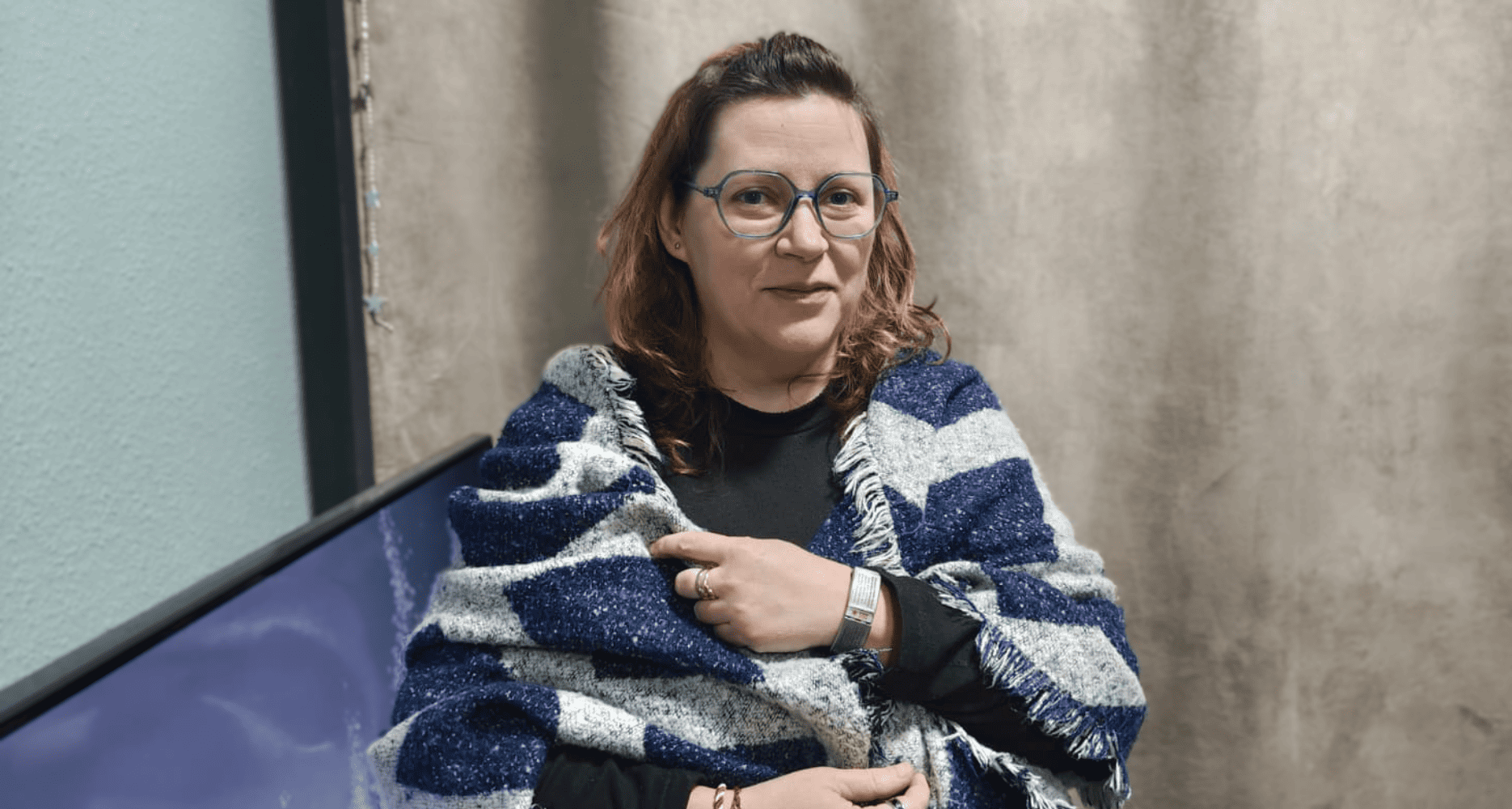
As part of World Cushing’s Day, observed annually on April 8, we spoke with Florina Tudorache Serbanica, 46, who describes the disease as “an invisible thief” that stole her former life. Here is what she said: “For me, Cushing’s has been like an invisible thief who stole the life I had before the surgery”.
Her story began long before the diagnosis. She started noticing physical and emotional changes she couldn’t explain. Together with her husband, she began keeping track of symptoms that gradually accumulated: abdominal swelling, high blood pressure, ankle swelling, muscle and joint pain, extreme fatigue due to insomnia, and constant hyperactivity that was difficult to control. In fact, she recalls that her own pace of life became overwhelming: she was living in a “loop” marked by excess cortisol that was pushing her “to the brink of burnout.”
One of the hardest parts of the process was the lack of a clear diagnosis. For eight years—which she herself describes as “a time of uncertainty, insecurity, exhaustion, mistrust, and fear”—she consulted numerous medical specialists without receiving any conclusive answers. During that time, she recalls experiencing “tears and a great deal of physical and emotional pain, ” as well as a feeling of not being understood.
Over time, and following a total abdominal hysterectomy with salpingectomy in 2020—performed with the aim of improving her hormonal status— her symptoms not only failed to subside but actually intensified and diversified. Characteristic signs of Cushing’s syndrome appeared, such as a “buffalo hump,” a rounded face, skin changes, loss of muscle strength, cognitive problems, and insulin resistance.
These physical changes affected not only her health but also her sense of self. The emotional impact was profound: she no longer recognized herself in the mirror or in her own mental processes. As she explains, the disease “changes not only what patients see, but also how they feel inside.” Added to this was the gradual loss of her ability to perform everyday tasks: difficulties getting dressed, walking, or even holding objects.
Despite the severity of his condition, a lack of knowledge about the disease made it difficult to diagnose: “There isn’t much information available within the healthcare system. There is a significant lack of awareness about Cushing’s disease.” This lack of information, he notes, not only delays diagnosis but also leaves patients feeling neglected.
The turning point
The turning point for Florina came in 2023, when a surgeon ruled out other causes and urgently referred her to an endocrinologist. That same day, the specialist identified the possibility of a disorder related to excess cortisol.
Florina highlights the key role played by the endocrinologist, who offered her not only a rigorous clinical approach but also genuine support: “I felt truly supported in a very human way. It gave me the confidence to keep going until the very end.”
After numerous tests, the diagnosis was confirmed: Cushing's disease caused by a tumor in the pituitary gland, located in the skull behind the nose and responsible for regulating hormone levels in the body.
For Florina, putting a name to what was happening to her brought a mixture of relief and fear. On the one hand, it confirmed that “something was definitely wrong”; on the other, she was facing a rare, complex, and potentially serious illness.
The Importance of Reference Centers
Due to the complexity of her case, she was referred to a specialized center. This step marked a turning point in her experience. Florina describes it as “being reborn, ” not only because of the care she received, but also because of the confidence the medical team instilled in her.
There, she was treated by a highly specialized multidisciplinary team. Coordination among the departments of Endocrinology, Neurosurgery, and Otolaryngology made it possible to develop a treatment plan based on transsphenoidal surgery to remove the tumor. This comprehensive approach proved crucial for a condition that requires specific expertise and knowledge.
The surgery marked a turning point after years of uncertainty. However, far from being the end of the process, it marked the beginning of a new phase that was just as challenging: recovery.
The first few months were marked by a high degree of physical and cognitive dependence. She could barely walk, remember things, or perform basic tasks. She describes this period as a time of extreme vulnerability: “I found myself alone with a box of medications, uncertainties, and many questions.”
After the tumor was removed, her body underwent a drastic change. Among the most significant aftereffects were memory loss, language difficulties (to the point of forgetting several languages she had mastered), extreme fatigue, widespread pain, sensory disturbances, and episodes of adrenal insufficiency. Recovery, he explains, is not linear: “The body reacts in phases, with very intense changes that really scared me.”
The emotional impact has also been profound and long-lasting. After the surgery, Florina began to experience anxiety and depression, which may have previously been masked by high cortisol levels. Florina describes episodes of crying, a feeling of emptiness, and difficulty recognizing herself: “It’s like finding another person inside the same body.”
She is currently undergoing psychological and neurocognitive therapy to regain her abilities and cope with the emotional impact, and she acknowledges that asking for help has been “a difficult but necessary step.”
Living with Cushing's
Despite her improvement, Florina acknowledges that the disease still lingers like a “shadow.” Although she is tumor-free, she continues to cope with physical and emotional aftereffects from which she is still recovering: “Cushing’s is still my shadow; it hasn’t let go of me and occasionally gives me flashes of the ‘old me.’”
Their testimony reflects a complex reality: even after treatment, the quality of life of people with rare diseases can be affected for years, with persistent physical and psychological comorbidities.
Despite everything, she maintains a resilient and hopeful attitude: “I will continue to give it my all so as not to give up, even though Cushing’s disease robs you of hope.” She also expresses deep gratitude to the healthcare professionals who have supported her, whom she describes as her “angels.”
A call for greater visibility and training
Beyond her personal experience, Florina sends a clear message about the need to raise awareness of this disease:“We must give a voice to this condition and to the people who suffer from it, because we go through a difficult journey—one that is often long—both in terms of diagnosis and the entire healing process, which requires not just one procedure, but many other treatments throughout our lives.”
Similarly, he considers it essential to strengthen training for healthcare professionals and to create informational resources and support networks. He emphasizes that the problem is not only clinical but also structural, since “the lack of information delays diagnoses and exacerbates the impact on patients.”
Florina also has a few words for those who are going through the same thing. She acknowledges how difficult it is to offer encouragement based on her own experience, but she stresses the importance of not giving up and adapting to a new reality. She encourages them to take control of their lives, be patient with themselves, and accept the time it takes to recover: “There is nothing more important than yourself, and that is nothing to be ashamed of”.