
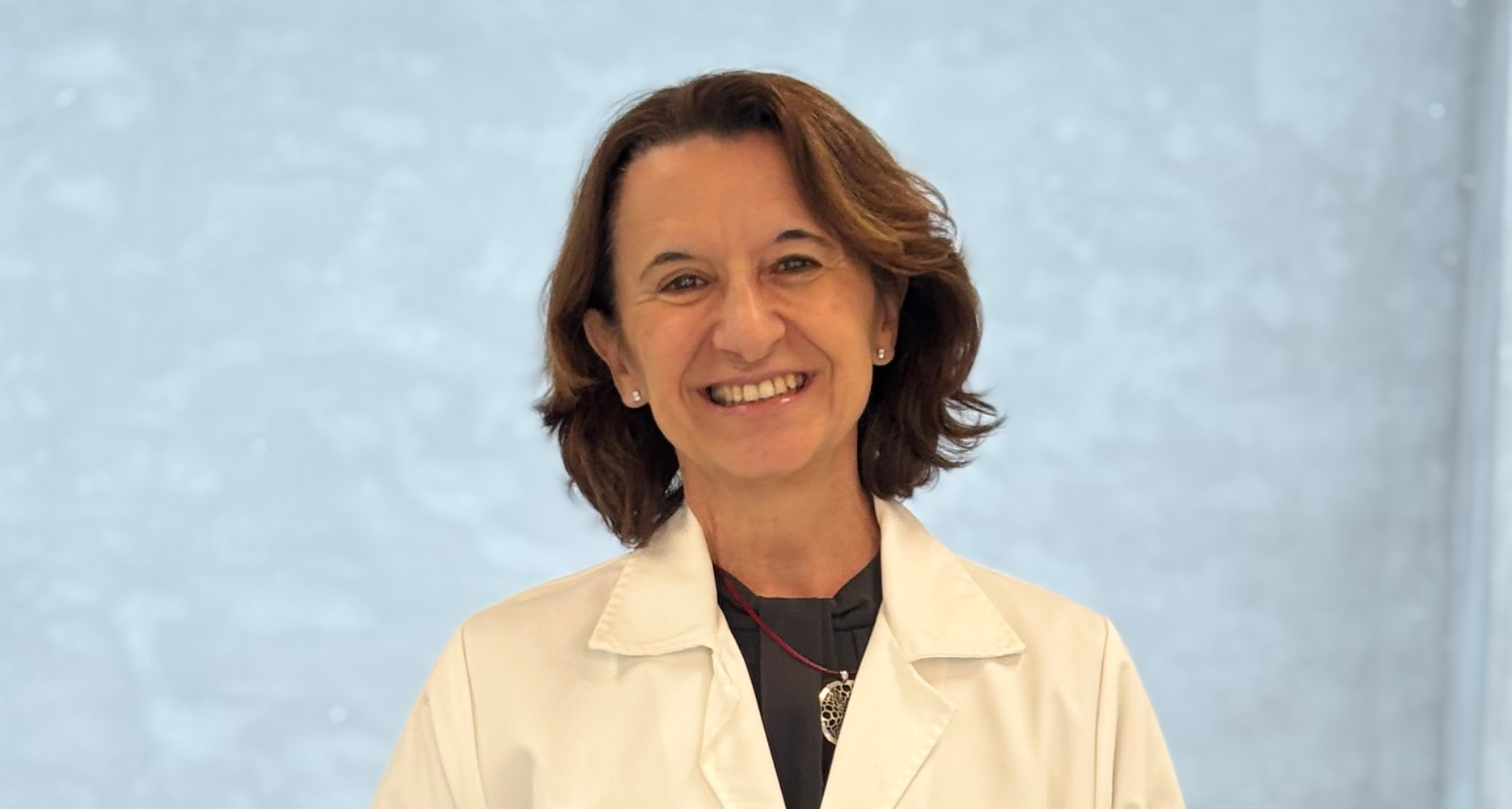
Despite recent advances in our understanding of and treatment for Fabry disease, significant challenges remain that affect patients’ prognosis and quality of life. To mark Rare Disease Awareness Month, which is observed every April, we interviewed Dr. Roser Torra, president of the European Renal Association (ERA), head of Clinical Nephrology and coordinator of the Hereditary Kidney Diseases Unit in the Department of Nephrology at the Fundació Puigvert in Barcelona.
Fabry disease remains, in the words of Dr. Torra, a condition of high clinical and organizational complexity. It is a rare genetic disorder linked to the X chromosome and characterized by a lysosomal storage disorder that affects the body systemically. “It affects the entire body, but with a particular impact on key organs such as the heart, kidneys, and brain, ” notes the doctor, one of the leading national experts on this condition.
However, its clinical presentation extends far beyond these major systems. Neuropathic pain, skin and eye abnormalities, and other multisystemic manifestations contribute to a broad clinical picture that is often difficult to identify early on. “This diversity of symptoms is one of the first major challenges in managing the disease, ” he explains.
The specialist also emphasizes that there is no single profile for a patient with Fabry disease. On the contrary, she stresses the need to understand the disease as a set of distinct phenotypes. “You can’t speak of ‘the Fabry disease patient’ in general terms,”, she warns, noting that there are substantial differences between men and women, as well as between the classic and late-onset forms. “They are actually four distinct diseases,”, she adds.
Diagnostic delay: a persistent barrier
Among the main unmet needs, delayed diagnosis stands out as one of the most significant problems. Although awareness of the disease has increased in recent years, particularly in specialized settings, Dr. Torra notes that identifying it “remains challenging in more general healthcare settings.”

According to the expert, this delay is largely due to a lack of awareness in primary care, where it is difficult to maintain a sufficient level of suspicion regarding a disease with low prevalence. “At the primary care level, it is almost impossible to raise awareness about this disease, ” she notes.
Added to this challenge is the changing profile of diagnosed patients. Today, more and more late-onset forms of the disease are being identified, which do not present the classic signs traditionally associated with Fabry disease. “Many cases of Fabry disease diagnosed today are late-onset and do not exhibit the typical features of the disease: neither the characteristic appearance nor the skin or eye lesions,” the doctor states.
These clinical variants, which often present with cardiac involvement, can easily be confused with other more common conditions. “It presents like other heart diseases, ” notes Dr. Torra, which makes it essential for specialists—in this case, cardiologists—to maintain a high degree of diagnostic suspicion.
In this context, a definitive diagnosis relies on genetic testing, although in males it can also be established by measuring enzyme activity. However, reaching this point remains, in many cases, “a long and complex process.”
This reality underscores the importance of early diagnosis: “The sooner the disease is identified, the greater the chances of intervening effectively and preserving the function of the affected organs. However, this goal remains difficult to achieve in clinical practice.”
The lack of biomarkers: a structural limitation
Beyond diagnosis and treatment, Dr. Torra highlights another major unmet need: the lack of reliable biomarkers that can be used to monitor the progression of the disease and assess the response to treatment.
According to the expert, this shortcoming has profound implications for both clinical practice and research: “In a slowly progressive disease like Fabry, the lack of objective indicators makes decision-making extremely difficult.”
As he explains, the effectiveness of treatments is currently assessed based on the patient’s clinical progress, a process that requires long periods of observation. “There is no objective way to gauge the effect of the medication other than by observing the patient’s clinical progress. But this takes years and is complicated, ” he laments.
He therefore argues that identifying robust biomarkers would make it possible “not only to improve clinical monitoring, but also to accelerate the development of new therapies and optimize the design of clinical trials.”

A necessarily multidisciplinary approach
The complexity of Fabry disease requires a coordinated, multidisciplinary approach to care. In most cases, patient management involves the participation of multiple specialties, including nephrology, cardiology, neurology, dermatology, and ophthalmology.
“The approach is multidisciplinary,” confirms Dr. Torra, although she notes that in some late-stage forms with predominantly cardiac involvement, follow-up may fall primarily to the cardiologist.
In this context, specialized units play a key role. However, the expert notes that organizational challenges persist in Spain that limit their “optimal functioning.”
At the national level, the expert acknowledges that some centers have more experience in managing the disease, but notes that this specialization is neither formally recognized nor regulated: “We know that some centers are more experienced than others, but the lack of a regulatory framework makes it difficult to refer patients in a structured manner.”
“Since it is neither regulated nor recognized, patients cannot be formally referred from one autonomous community to another,” the doctor continues. In her view, this situation creates “inequalities in access to specialized care and can affect the quality of clinical management.”
Technological innovation: an opportunity for improvement
In light of these challenges, technological innovation is emerging as a tool with great potential for improving the diagnosis and management of Fabry disease. Dr. Torra particularly highlights the use of artificial intelligence in the treatment of hereditary kidney diseases.
At the Puigvert Foundation, projects are underway that use natural language processing to analyze electronic health records and identify undiagnosed cases. The goal is to detect clinical patterns that might go unnoticed in routine practice.
He also mentions the development of machine learning tools based on databases that have been specifically refined and curated to reflect the clinical reality of the disease. In this regard, he notes that current databases on the condition have significant limitations: “For example, the symptoms and signs attributed to Fabry disease do not truly reflect reality or distinguish between the classic and late-onset forms.”
Another innovative area is the use of synthetic patients, a strategy that helps overcome the inherent limitation of rare diseases: the small number of available cases. “With rare diseases, you’ll never have thousands and thousands of patients. That’s why these tools are so useful—they allow us to generate simulated data that’s valuable for research, ” the doctor concludes.